For most Americans, the best first golf trip Europe has to offer is a week in Portugal’s Algarve: a seven-hour flight to Lisbon or a summer nonstop to Faro, more than 30 courses close together, and green fees of roughly €100 to €300 ($115 to $350). Spain’s Costa del Sol is the step up, England has the famous names, and a week costs about $3,000 to $8,500 per golfer with flights.
Shopping for golf in Europe from the US is a slightly odd experience, because almost everything you’ll read was written for the British. To a golfer in Manchester, Portugal is what Florida is to a golfer in New Jersey: a cheap flight south for sunshine, five rounds and a long lunch. The prices are in pounds, the flights leave from Gatwick, and “all inclusive” tends to mean unlimited lager. That’s worth knowing, because it explains why the Algarve and the Costa del Sol are so good at handling visiting golfers. It also means you have to translate.
This page does the translating for an American group. It compares the main European golf countries on the things that decide a trip from here: how you get there from US hubs, what golf costs in dollars, when to go, whether to fly your clubs, and what changes once you’re on the first tee. England and Wales get full treatment, because they’re a different trip from a golf trip to Scotland or a golf trip to Ireland, and those two have their own guides. This is also the hub for our Europe guides, so each section points to a deeper page when you need one.
On money: we convert at $1.16 per euro and $1.35 per pound, the x-rates.com rates for January 1, 2026, which we use across the site so prices compare. English and Welsh green fees come from the National Club Golfer table of summer 2026 fees. Continental prices come from club and booking-site listings, and we say so where we couldn’t confirm a figure with the club itself. Treat every number here as a 2026 price that is more likely to go up than down.
At a glance
- Best first trip: Portugal. The Algarve for an easy resort week, Lisbon’s coast for golf plus a great city, or both.
- Flights: about 6½ to 7 hours to Lisbon or London from New York. United flies Newark to Faro nonstop in summer (from May 15 in 2026).
- Green fees (2026): Algarve roughly €100–€300 ($115–$350). Valderrama €600 ($700) plus a €70 forecaddie. England’s Open venues £400–£495 ($540–$670). The best Welsh links £125–£275 ($170–$370).
- What a week costs: about $3,000–$5,000 per golfer for a value week in Portugal or Spain with flights; $5,000–$8,500 for a premium Algarve week or England’s famous courses.
- Best months: March to May and late September to November in Portugal, Spain and Turkey. May to September in England, Wales and France.
- Getting round: buggies (golf carts) are normal in Spain, Portugal and Turkey. In England and Wales you walk, pulling a trolley (pull cart).
- Paperwork: a passport for the EU, where the ETIAS travel authorization isn’t live yet. A UK Electronic Travel Authorisation (ETA, £20) for England and Wales.
What is the best country in Europe for a golf trip?
Portugal, for most American groups. Lisbon is a short overnight flight from the East Coast, most of the Algarve’s 30-plus courses sit within an hour of each other, and spring and fall are reliably mild. Spain has more variety and England more history. Scotland and Ireland still own links golf.
The longer answer depends on what your group is actually buying. Here’s how we’d sort it:
- The easiest week, with the least planning: the Algarve. Fly in, pick up a car, and play a different course every day without driving more than 30 minutes.
- Golf plus a great city: Lisbon and its coast, or Seville paired with the Costa del Sol.
- Famous courses and championship history: England, which has four courses on the current Open rotation and the best inland golf in Britain.
- Links golf without the Scottish price tag: Wales.
- One price for everything: Belek in Turkey, where golf, room, meals and drinks come in a single package.
- The non-golfers are planning the week: France. Paris, the Normandy beaches and Bordeaux wine come first, and the golf fits around them.
If what you really want is links golf, wind and a pint afterward, Continental Europe is the wrong continent. It has a few links-style courses, but it is mostly resort and parkland golf, often very good, rarely wild. Go straight to Scotland or Ireland for that. Everything else is compared below.
| Destination | Fly into | Flight from New York | Typical green fees (2026) | Getting round | Best months | Our take |
|---|---|---|---|---|---|---|
| Algarve, Portugal | Faro, or Lisbon + 2½–3 hr drive | About 7 hr (Faro, summer) | €100–€300 ($115–$350) | Buggy common | Mar–May, late Sep–Nov | The easiest first trip |
| Lisbon coast, Portugal | Lisbon | 6½–7 hr | Similar to the Algarve (estimate) | Buggy or walk | Mar–Jun, Sep–Nov | Golf plus a great city |
| Costa del Sol, Spain | Málaga, usually with one connection | 7 hr + connection | €100–€300 at most courses; Valderrama €600 ($700) | Buggy common | Mar–May, Oct–Nov | The most variety, one famous splurge |
| London heathland, England | Heathrow | About 7 hr | £350–£450 ($470–$610) at the big names | Walk with a trolley | May–Sep; plays well year-round | Golf you can’t find at home |
| England’s Golf Coast | Manchester or Liverpool, or 3 hr by train from London | 7–8 hr | £315–£495 ($425–$670) | Walk; caddies on request | May–Sep | Open venues close together |
| Wales | Heathrow + 2½ hr (south) or Manchester + 1½–3 hr (north) | About 7 hr + drive | £125–£275 ($170–$370) | Walk | May–Sep | The value links |
| Paris and Normandy, France | Paris (CDG) | About 7½ hr | Varies; check each club | Mixed | May–Sep | Golf with the trip, not the trip |
| Belek, Turkey | Antalya, via Istanbul | About 10 hr + 1½ hr | Usually sold in hotel packages | Buggy common | Mar–May, Oct–Nov | All-inclusive, long haul |
Continental prices are ranges from club and booking-site listings rather than a single verified rate card, and they move with the season and the time of day. Flight times are approximate nonstop times from the New York airports.
Portugal: the easiest first golf trip in Europe
Portugal is where we’d send a group that has never golfed in Europe, and the reasons are boring and decisive. TAP Air Portugal flies nonstop to Lisbon from a long list of US cities, most of them in the East, and United, Delta and American fly there from their hubs, at least seasonally. United also runs a summer nonstop from Newark to Faro, the Algarve’s airport, which started its 2026 season on May 15. The courses are used to visitors, English is spoken everywhere you’ll need it, and dinner with a good bottle of wine costs noticeably less than it would in a US resort town.
There are really two Portugal golf trips, and they suit different groups.
The Algarve is the south coast: more than 30 courses between Lagos and the Spanish border, roughly 300 sunny days a year by the usual count, and a long run of golf resorts that started going up in the 1960s. The heart of it is the so-called Golden Triangle of Vale do Lobo, Quinta do Lago and Vilamoura, 15 to 25 minutes from Faro airport, where about a dozen courses sit within 20 minutes of each other.
The names to know:
- Quinta do Lago South, a former Portuguese Open venue, with umbrella pines and lakes, and the North and Laranjal courses on the same estate.
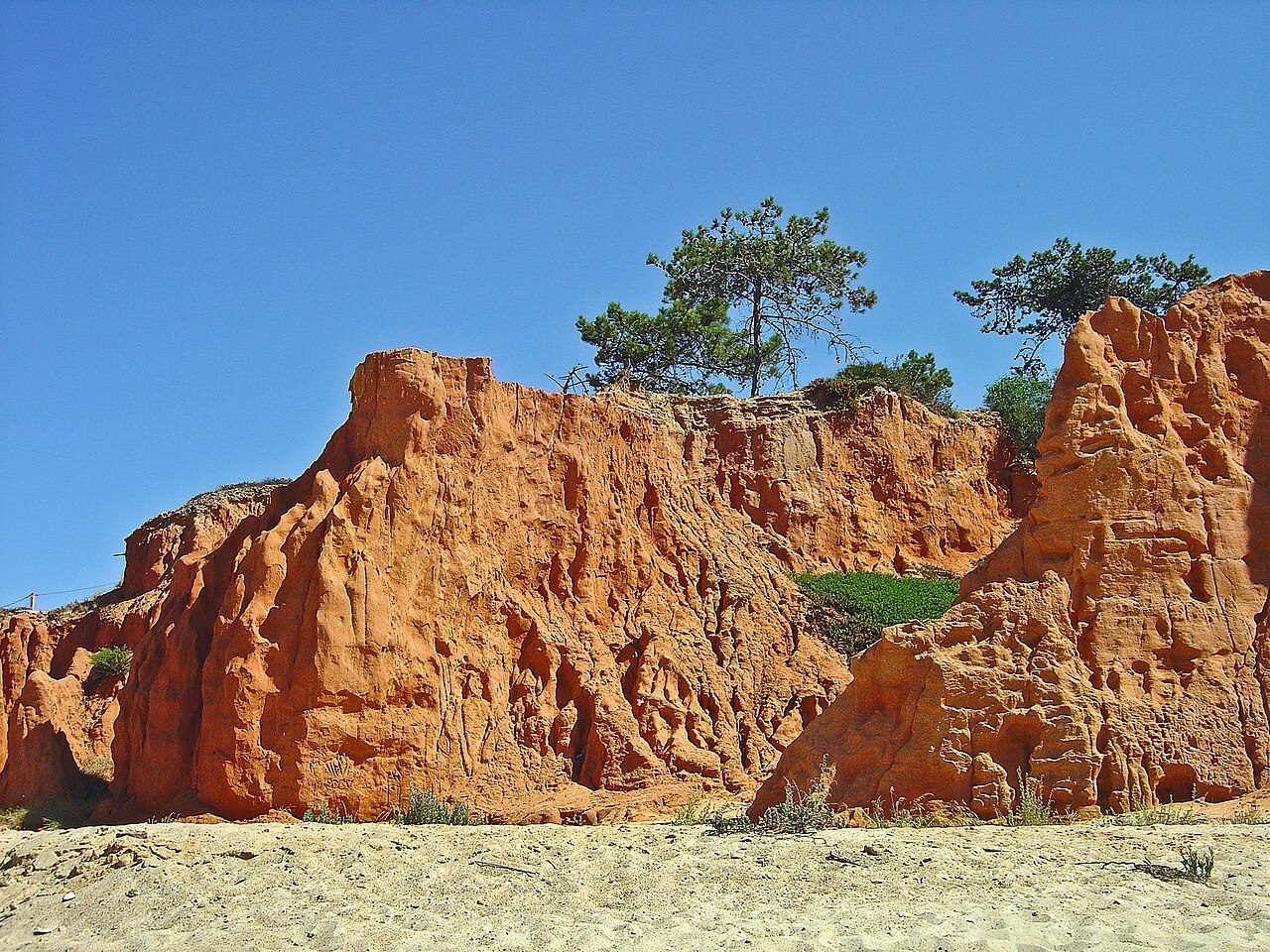
- Vale do Lobo’s Royal Course, whose par 3 across the ochre cliffs is probably the most photographed hole in the Algarve.
- The Old Course at Vilamoura, a pine-lined layout from 1969 that plays more like a classic parkland than a resort course, and Victoria next door, which hosted the Portugal Masters for years.
- Monte Rei, the Jack Nicklaus design 40 minutes east of Faro that most rankings put first in Portugal. Booking sites list it at about €220 ($255) in high season, including a shared buggy, and it asks for a handicap certificate.
- Ombria, which opened in the hills above Loulé in April 2023 and is the newest name worth knowing.
- Penina, Henry Cotton’s 1966 course near Portimão, and Palmares, reworked by Robert Trent Jones Jr. above the bay at Lagos, if you base yourself in the western Algarve.
The Algarve’s weakness, in our view, is that it’s resort golf. The courses are well kept and pleasant to play, but only a handful are great, and the routine of buggy, cart path, villa, repeat can start to feel like Florida with better wine. For a first trip that’s fine. For a group that has already done Scottsdale and Pinehurst, it may feel familiar.
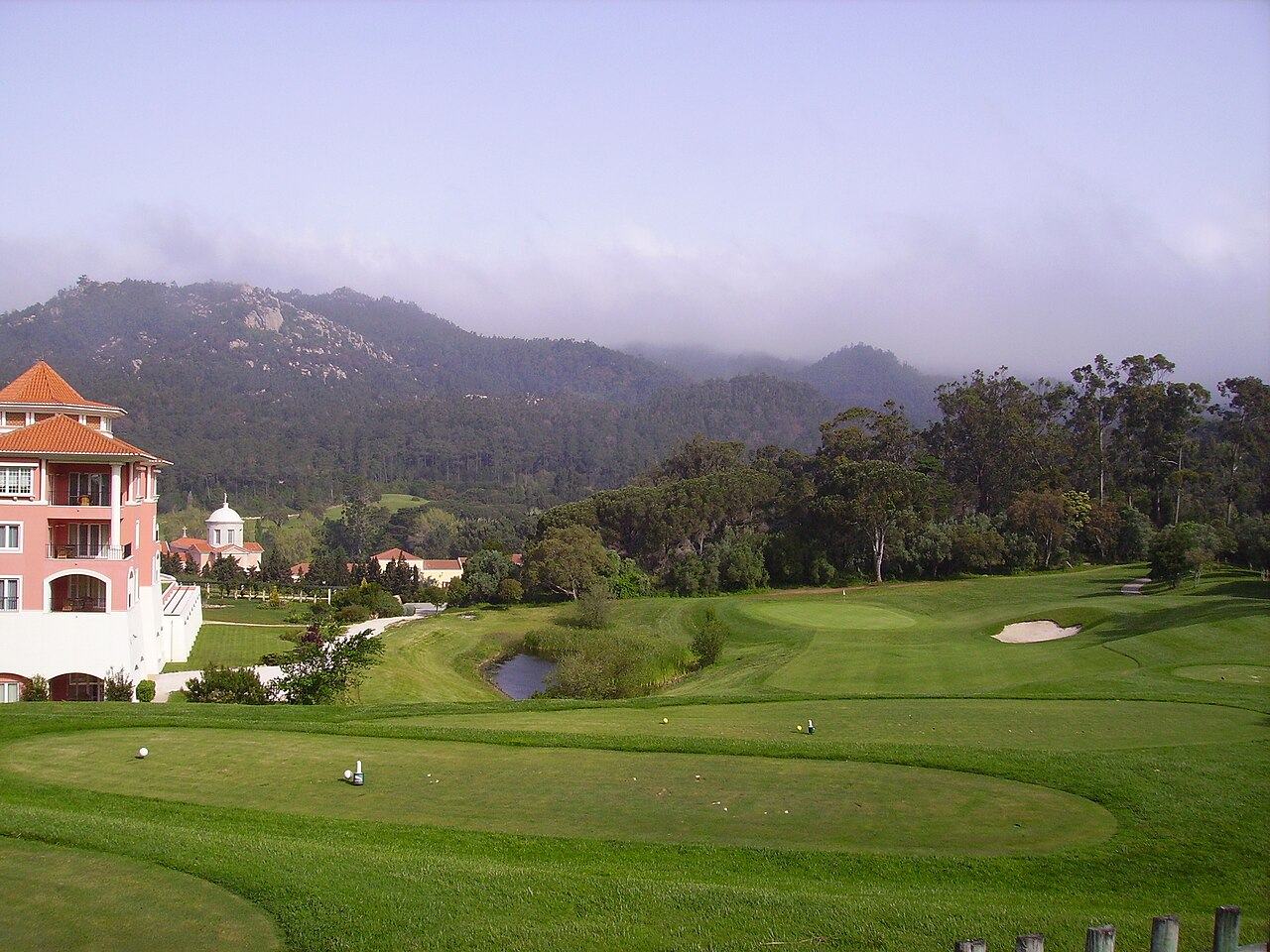
Lisbon’s coast is the better trip if you’d rather have a city than a beach. Oitavos Dunes, an Arthur Hills design among dunes and umbrella pines on the edge of Cascais, is the pick, and the Atlantic wind keeps it honest. Penha Longa sits in the hills near Sintra. West Cliffs, Cynthia Dye’s 2017 clifftop course near Óbidos, is about an hour north. South of the Tagus, Troia (Robert Trent Jones Sr.) and the David McLay Kidd–designed Dunas course at Comporta play through sand and pine. Everything is within about 90 minutes of Lisbon, and Lisbon itself is one of the best cities in Europe for a long dinner.
Our suggestion for a first Portugal trip: three nights in Lisbon or Cascais playing Oitavos, Penha Longa and West Cliffs, then the 2½-hour drive or three-hour train to the Algarve for four nights. Fly home from Faro, either through Lisbon or on United’s Newark nonstop in summer. If you drive, note that the Algarve’s A22 highway uses electronic tolls only, so rent a car with a toll transponder.
Porto, Madeira and the Azores all have good golf too, but for a first trip they’re detours. Our golf trip to Portugal guide compares the Algarve, Lisbon and Comporta in detail, the best Algarve golf courses ranks the south coast with 2026–27 green fees, and golf near Lisbon covers Oitavos, Troia, West Cliffs and Comporta.
Spain: Costa del Sol, Catalonia and the islands
Spain has more golf than Portugal and more kinds of it, which is both its appeal and its problem on a one-week trip. You have to choose a region, because the good ones are a day’s travel apart.
The Costa del Sol, the coast running west from Málaga, is where most visiting golfers end up. Spaniards and Brits both call it the Costa del Golf, and there are dozens of courses between Málaga and Sotogrande, from cheerful resort courses to some of the best golf in continental Europe. The best are at the western end.
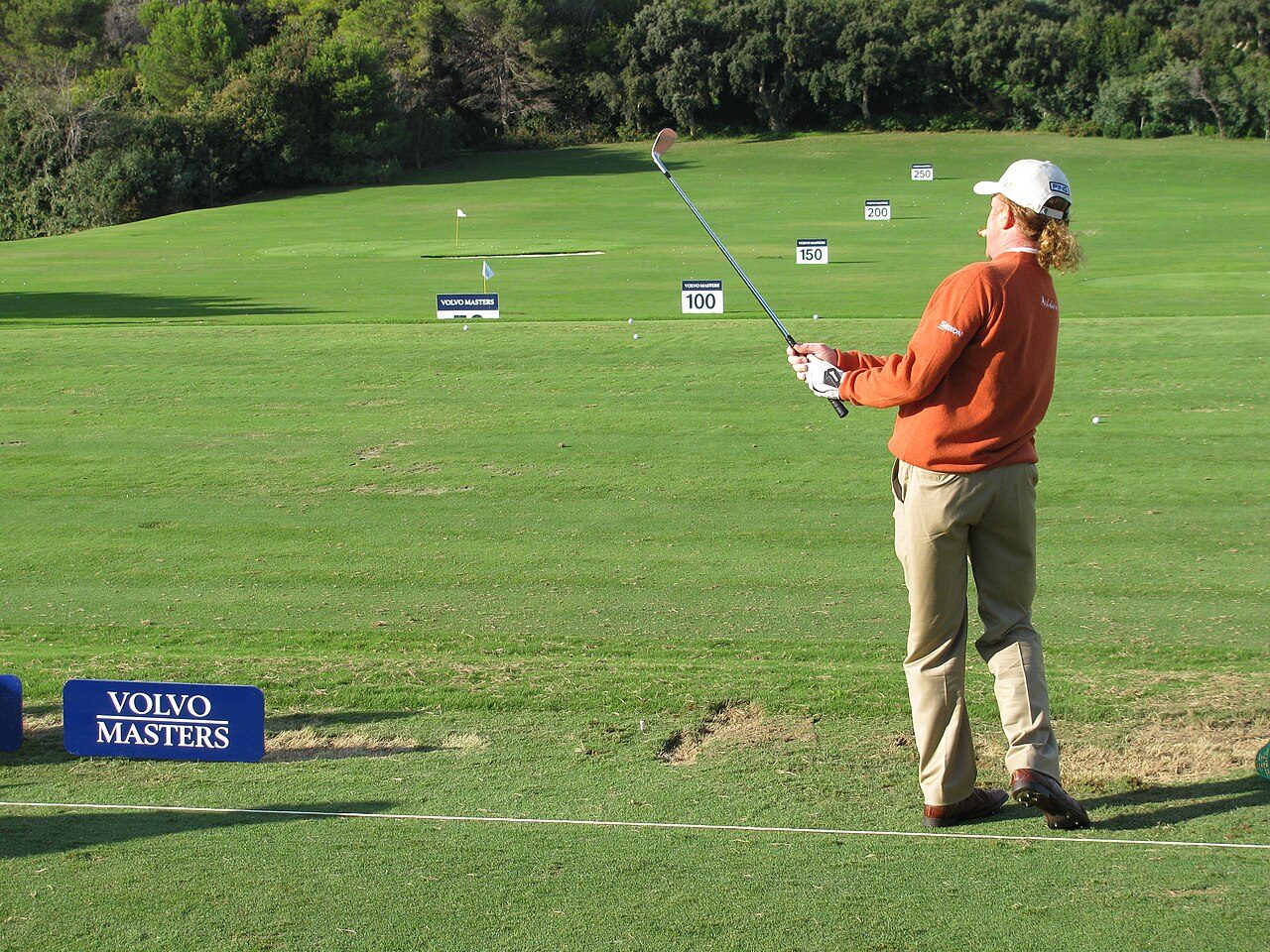
Real Club Valderrama is the famous one. Robert Trent Jones Sr. designed it, and it hosted the 1997 Ryder Cup, the first played in continental Europe. Golf in Spain reports a 2026 visitor fee of €600 ($700), plus a mandatory forecaddie at €70 and a cash tip on top. Visitor tee times run Monday to Thursday and get very scarce in summer. Next door is Real Club de Golf Sotogrande, another Trent Jones course from the 1960s, plus La Reserva. Half an hour east, Finca Cortesin hosted the 2023 Solheim Cup.
Is Valderrama worth €600? It is if the 1997 Ryder Cup or the old Volvo Masters mean something to you, and if you can get a Monday-to-Thursday time that fits the rest of your week. If they don’t, the same money covers two or three very good rounds elsewhere on the coast, and nobody at home will know the difference except you.
Getting there takes a little more effort than Portugal. There are few nonstops from the US to Málaga, so most Americans connect through Madrid, Lisbon or London, then drive 45 minutes to Marbella or about an hour and a quarter to Sotogrande. The good news is that Andalusia rewards a split trip: Seville is about two hours from Sotogrande, and two nights there for the Alcázar and the tapas bars make the golf week better.
Catalonia suits a golf-and-Barcelona trip. PGA Catalunya’s Stadium Course, about an hour north of the city near Girona, is regularly ranked among Spain’s best, and Barcelona has nonstops from several US hubs. Spend three nights in the city and three at the resort.
The islands are for the off-season. Mallorca has a good spread of courses led by Alcanada, a Robert Trent Jones Jr. layout beside a lighthouse on the bay of Alcúdia. The Canary Islands, off the coast of West Africa, have the most reliable winter weather in Spain, and Real Club de Golf de Las Palmas on Gran Canaria, founded in 1891, is the oldest golf club in the country.
Madrid has good golf as well, though few Americans fly to Spain for it. Our golf trip to Spain guide compares the Costa del Sol, Catalonia, Mallorca and the Canaries, and the Costa del Sol golf courses guide covers Valderrama, Finca Cortesin, Sotogrande and Marbella course by course.
England: heathland, the Golf Coast and Open venues
England is the European golf trip Americans forget to consider, because Scotland gets the romance and Ireland gets the welcome. It deserves better. England has four of the courses on the current Open rotation, the best inland golf in Britain, and London, which you can fly to nonstop from more US cities than anywhere else in Europe.
It isn’t cheap. The National Club Golfer table puts summer 2026 visitor fees at £495 ($670) for Royal Birkdale, £460 ($620) for Royal Lytham & St Annes, £450 ($610) for either course at Sunningdale, £400 ($540) at Royal Liverpool and Royal St George’s, £380 ($515) at The Berkshire and £350 ($475) at Walton Heath. Formby (£315, $425) and Hillside (£335, $450) are the relative bargains. A week on England’s famous courses costs about what a week on Scotland’s does.
English golf trips come in three shapes.
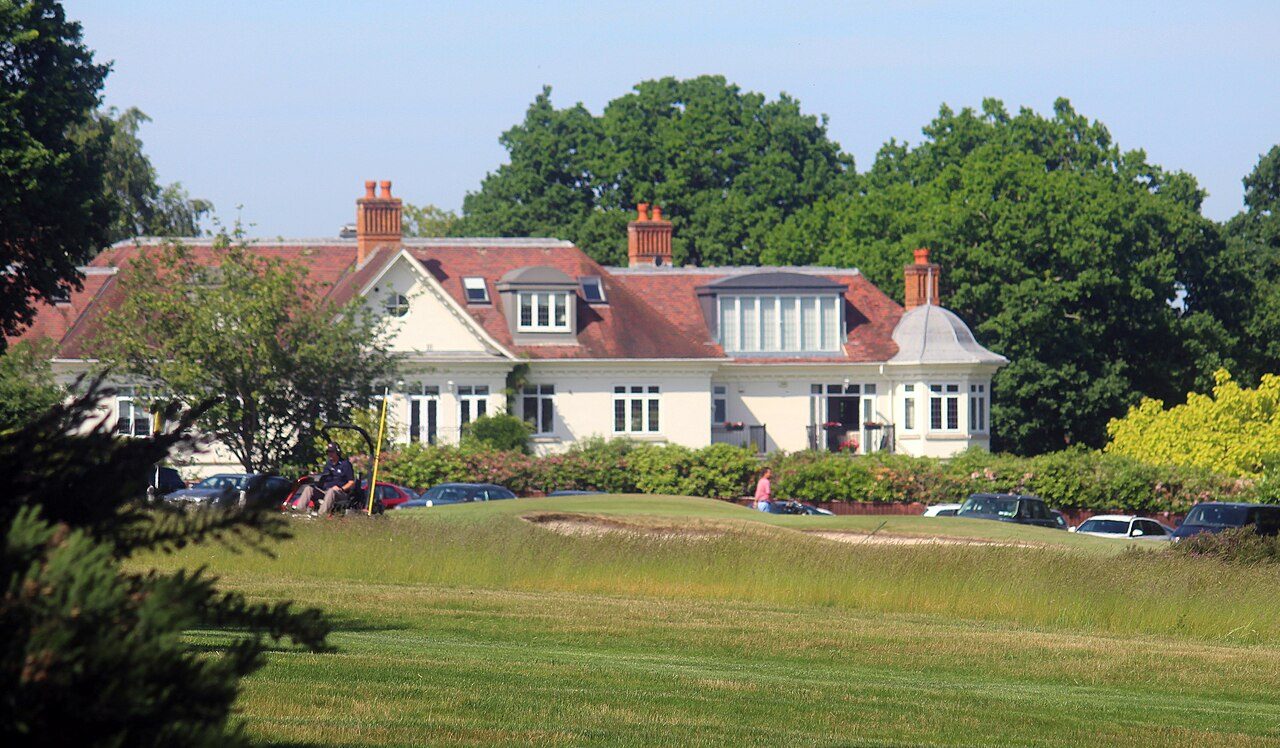
London heathland. South and west of London, on sandy soil that drains like a beach, sits a ring of heathland courses: firm, fast golf through pine, heather and birch that has more in common with Pine Valley than with a links. Sunningdale’s Old Course (Willie Park Jr., 1901) is the most famous, with Harry Colt’s New Course alongside it. Walton Heath and The Berkshire were both laid out by Herbert Fowler. These are private members’ clubs that take visitors, not resorts, so you book well ahead, turn up in a collared shirt and follow the house rules. The traditional English golf day here is 36 holes with a proper lunch in between, and Sunningdale’s halfway-hut sausage sandwich has a following of its own. Sunningdale is about 25 minutes from Heathrow, which makes the heathland a good way to spend the first two days of a trip while your body clock is still on Eastern time.
The Golf Coast. Between Liverpool and Blackpool runs England’s best stretch of links. Royal Birkdale hosted the 2026 Open, and Hillside and Formby are a few minutes down the road. Royal Lytham & St Annes is about 45 minutes north, and Royal Liverpool at Hoylake, the 2023 Open venue, is across the Mersey to the south. You can play five days here without driving more than an hour on any of them. One local operator says Birkdale fills four to eight weeks ahead in peak season, and the club asks for a handicap certificate; assume the others will too. Base yourself in Southport, the Victorian seaside town closest to Birkdale, or in Liverpool, which has better restaurants, the Beatles and a 40-minute drive to the first tee.
Kent. Royal St George’s at Sandwich, the 2021 Open venue, takes visitors only on set days: Tuesdays and Wednesdays from April to October (Tuesdays only in August) and Tuesdays in winter. The club fills its tee sheet, so a pair may be matched with another group. Prince’s, where Gene Sarazen won the 1932 Open, is next door, and Royal Cinque Ports is just up the coast at Deal. That makes Sandwich a good two- or three-day stop, about two hours from London.
Further afield, Woodhall Spa in Lincolnshire (heathland, and the home of England Golf), Ganton in Yorkshire and St Enodoc on the north coast of Cornwall are each worth the detour if you’re already in that part of the country. St Enodoc’s little church sits in a hollow in the dunes beside the course, and the poet John Betjeman is buried there.
England won’t save you money over Scotland. What it gives you is two kinds of golf you can’t play at home, heathland and championship links, in one week, with a train ride of about two hours and 15 minutes from London to Liverpool in the middle. Our England golf trip guide routes a week across the heathland, the Golf Coast and Kent, and golf courses near London covers Sunningdale, Walton Heath, The Berkshire and Swinley Forest, including how visitors actually get on.
Wales: links golf at about half the English price
Wales has the best-value links golf in Britain, and remarkably few Americans go. Royal Porthcawl, on the Bristol Channel west of Cardiff, charged £275 ($370) in summer 2026, a little over half of Royal Birkdale’s fee. It hosted the 1995 Walker Cup, when a 19-year-old Tiger Woods played for the US team, and it has since hosted the Senior Open twice.
The rest of the Welsh list reads like a clearance sale on great golf, using the same 2026 table. Pennard (£145, $195) is the “links in the sky,” high above the Gower Peninsula, with a ruined castle and grazing ponies on the course. Royal St David’s (£145) sits under the walls of Harlech Castle. Aberdovey (£135, $180) runs beside the railway on the west coast, and Conwy (£125, $170) is on the north coast.
Celtic Manor, the big resort outside Newport, built its Twenty Ten Course for the 2010 Ryder Cup. It’s a resort parkland course rather than a links, and a comfortable base if you want a spa and room service between links days.
The geography splits neatly. South Wales (Porthcawl, Pennard and Celtic Manor) is about two and a half hours from Heathrow by car. North Wales (Royal St David’s, Aberdovey, Conwy and the clifftop course at Nefyn) pairs naturally with the Golf Coast, since Conwy is about an hour and a quarter from Liverpool.
In our view, if you’re going to England anyway, adding two days of Welsh links is the best-value move in this guide. Our golf in Wales guide has the routes, the courses and Celtic Manor’s resort option.
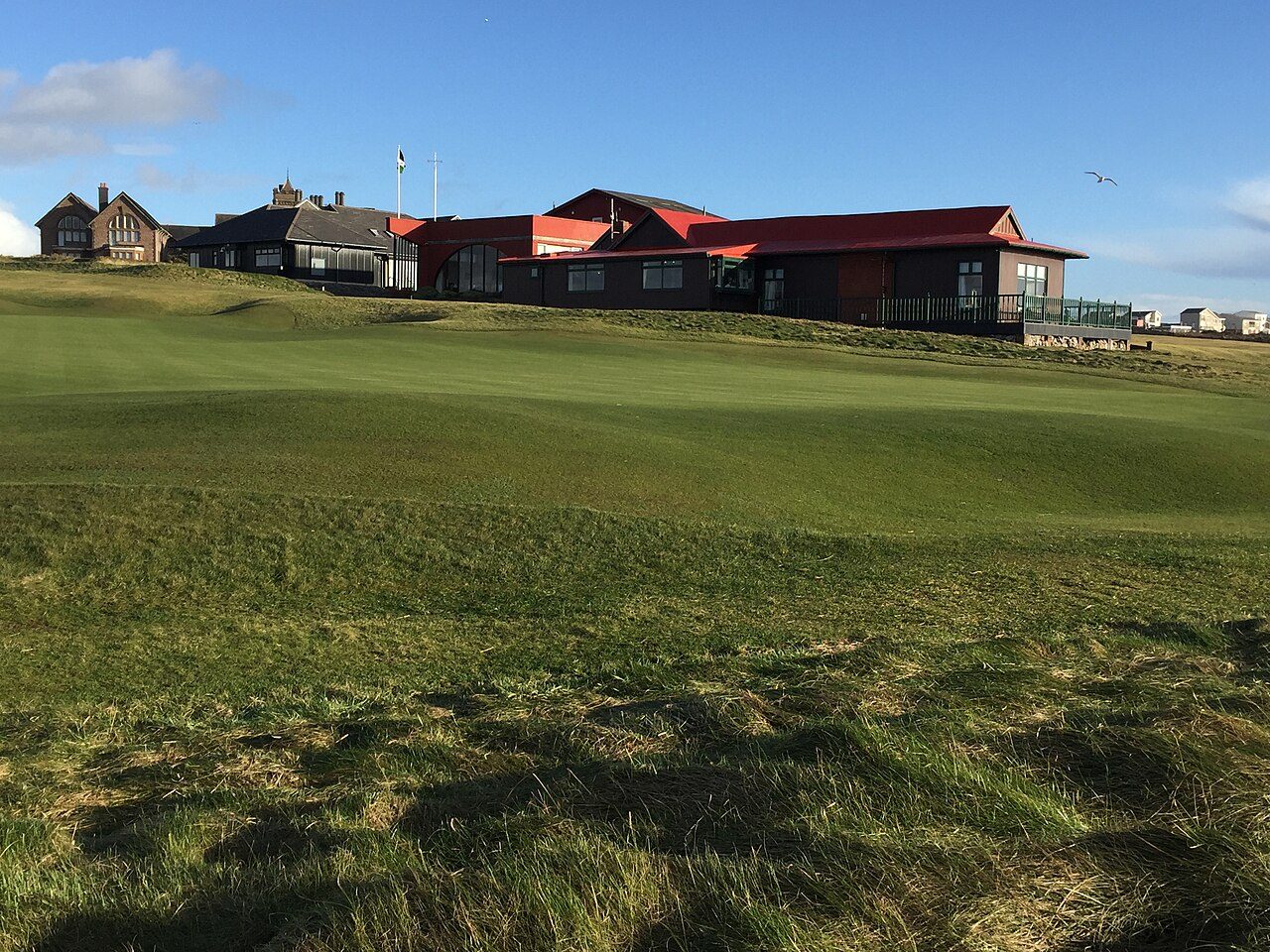
France: Paris, Normandy and Bordeaux
France has a lot of golf and a few great courses, but many of the best are private, and the country doesn’t market golf to visitors the way Portugal and Spain do. For Americans it works best as golf alongside something else: Paris, the Normandy beaches or Bordeaux wine.
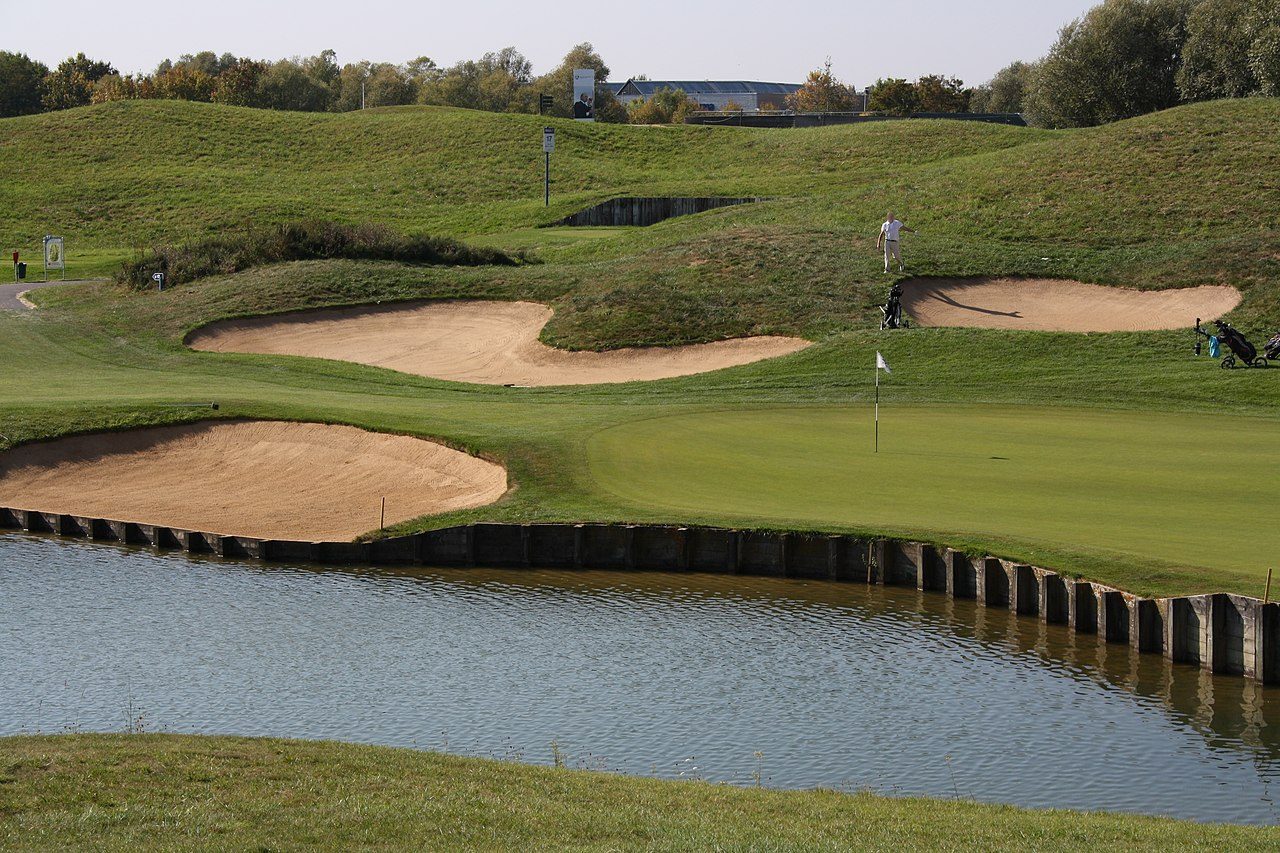
Le Golf National, about 20 miles southwest of central Paris near Versailles, is the obvious first round. Its Albatros Course hosted the 2018 Ryder Cup and the golf at the Paris 2024 Olympics. It’s owned by the French golf federation and open to visitors, and its closing stretch, with water on three of the last four holes, is every bit as stressful as it looked on television.
In Normandy, Omaha Beach Golf Club sits on the bluffs above the D-Day landing beaches, a short drive from the Normandy American Cemetery at Colleville-sur-Mer. Golf d’Étretat plays along white chalk cliffs with the town’s famous rock arch in view. Le Touquet, on the Channel coast about two and a half hours north of Paris, has a genuine links, La Mer, that British golfers have been crossing the water to play for nearly a century.
In the southwest, Cabot, the company behind Cabot Cape Breton in Nova Scotia, owns the former Golf du Médoc resort outside Bordeaux, now Cabot Bordeaux, with two courses on the edge of the Médoc wine country. Paris to Bordeaux is about two hours by high-speed train.
Morfontaine, north of Paris, regularly tops rankings of French courses. It’s private, so don’t plan a trip around it.
France is the right call when the non-golfers outnumber the golfers, or when the trip is really about Paris. As a pure golf week, it asks more effort than Portugal for less golf. Our golf in France guide covers Le Touquet, Normandy, Paris and Cabot Bordeaux.
Belek, Turkey: all-inclusive golf on the Mediterranean
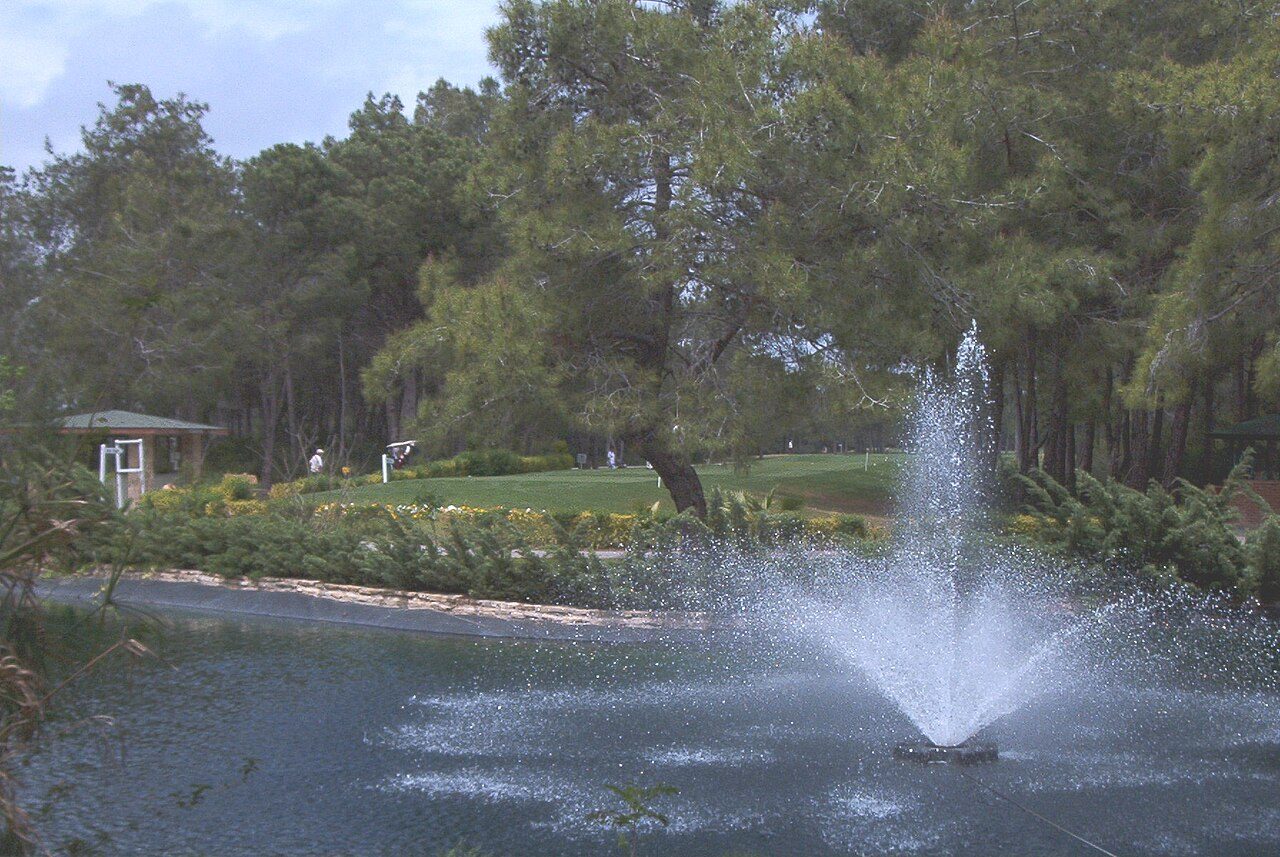
Belek, just east of Antalya on Turkey’s south coast, is the most efficient golf resort town in or near Europe: more than a dozen courses on a strip of pine forest and beach, with big all-inclusive hotels in between. Strictly speaking it’s in Asia, but it’s sold as a European golf destination and priced like one. It’s a winter and spring favorite of British, German and Scandinavian golfers, and the courses are better than the package pricing suggests.
Carya, a heathland-style course that opened in 2008, is fully floodlit, so you can tee off after dark. It hosted the Turkish Airlines Open that Justin Rose won in 2017. The Montgomerie Maxx Royal has an unusual card of six par 3s, six par 4s and six par 5s.
Most golfers buy Belek as a package: room, meals, drinks and a set number of rounds for one price. That’s what makes it cheap for Europeans, who fly in for a few hours from London or Frankfurt. For Americans the arithmetic changes. Turkish Airlines flies nonstop to Istanbul from more than a dozen US cities, about 10 hours from New York, and then it’s a domestic flight of about 90 minutes to Antalya and a 30-minute transfer to the hotels. US citizens don’t currently need a visa for tourist stays of up to 90 days, since Turkey dropped the requirement in late 2023, but check the State Department’s Turkey page before you go.
Belek is worth it as a golf week attached to a few days in Istanbul, or for a group that wants one price and no decisions. As a straight swap for the Algarve, the extra travel day is hard to justify. Our Belek golf guide covers the courses and how the packages work, and the all-inclusive golf resorts guide compares the model around the world.
Beyond the big six: Italy, Greece, Iceland and the north
Europe’s other golf countries make better second trips or add-ons than first trips.
- Italy. Golf is a minority sport there, but Marco Simone outside Rome hosted the 2023 Ryder Cup, and there’s good golf around Lake Como, in Tuscany and in Sicily. Treat it as a round or two on an Italy vacation rather than the point of one.
- Greece. Costa Navarino in the Peloponnese has built a small golf destination around two courses, The Dunes (Bernhard Langer with European Golf Design) and The Bay (Robert Trent Jones Jr.), and has added more since.
- Iceland. In June and July the sun barely sets, and the Arctic Open at Akureyri Golf Club, held around the June solstice since 1986, has players teeing off around midnight. Reykjavík is roughly five and a half to six hours from the East Coast, and Icelandair connects a long list of US cities.
- The Netherlands, Denmark and Sweden. Real links and heathland golf, with Kennemer and Noordwijk within 40 minutes of Amsterdam and Falsterbo in southern Sweden about 45 minutes from Copenhagen across the Øresund bridge. Both pair well with a city break.
How much does a golf trip to Europe cost?
For a seven-night trip with five rounds, most American golfers spend about $3,000 to $5,000 each for a value week in Portugal or Spain, flights included, and $5,000 to $8,500 for a premium Algarve week or a week on England’s famous courses. Green fees, not airfare, decide which end you land on.
Here’s how that breaks down in our estimates: per golfer, two golfers sharing a room, economy flights from the East Coast in spring or fall, and 2026 prices.
| Per golfer, 7 nights, 5 rounds | Algarve value | Algarve premium | England: London + Golf Coast |
|---|---|---|---|
| Round-trip economy flight | $800–$1,200 | $800–$1,200 | $750–$1,200 |
| Hotel, sharing a room | $600–$1,000 | $1,800–$3,500 | $1,100–$1,900 |
| Five rounds of golf | $600–$1,000 | $1,200–$1,750 | $1,900–$2,650 |
| Buggies, caddies, range balls | $100–$250 | $0–$200 | $250–$500 |
| Car share, fuel, tolls, trains | $150–$250 | $150–$300 | $250–$400 |
| Food and drink | $450–$700 | $800–$1,400 | $650–$1,050 |
| Clubs (fly or rent) | $0–$350 | $0–$350 | $0–$300 |
| Typical total | $2,700–$4,750 | $4,750–$8,700 | $4,900–$8,000 |
A few notes on those numbers. Flights from the West Coast typically cost a few hundred dollars more, and lie-flat business class can add several thousand, which on a value week roughly doubles the bill. The premium Algarve column assumes a five-star resort and rounds at places like Monte Rei and Quinta do Lago. The England column assumes a famous name every day. Swap Birkdale for Formby and Sunningdale for a day at Pennard, and each golfer saves more than $600.
The cheapest golf trips to Europe from the US look like this: the Algarve or the Costa del Sol in July, August or midwinter, when green fees drop; an apartment instead of a resort; twilight rates; and courses outside the Golden Triangle. Belek’s all-inclusive deals look absurdly cheap on British websites, but once you add flights from the US, they rarely beat Portugal. Our golf trip cost guide breaks down every line item for trips anywhere, if you want to compare Europe with a week at home.
When is the best time to golf in Europe?
For Portugal, southern Spain and Turkey, go in spring (March to May) or fall (late September to November), when highs sit in the 60s and 70s °F. For England, Wales and France, May to September is best. July and August are hot but cheaper in the south; winter suits the Algarve and Canaries.
Europe’s golf seasons run in opposite directions. In the south, summer is the off-season because it’s too hot. In Britain, winter is the off-season because it’s too dark. Month by month:
- January and February. The Algarve and Costa del Sol are mild, with highs around 60°F, and quieter and cheaper, though rain is more likely. The Canaries are warmest. England’s heathland stays playable, but it’s dark soon after 4:30 p.m. Our winter golf destinations guide sets Europe’s winter sun against the warm-weather options closer to home.
- March to May. Peak season in Portugal and Spain, with firm courses, wildflowers and the highest green fees. Book tee times and hotels early, especially around Easter. England’s courses come into their best shape in May.
- June. Long days everywhere. London stays light past 9 p.m., and Iceland barely gets dark at all. The Algarve starts to heat up.
- July and August. Iberia and Turkey are hot, with Seville and Antalya regularly above 90°F, so tee off early and enjoy the lower green fees. These are the best months for England, Wales, France and Iceland. Much of Europe takes its vacation in August, so beach resorts are busy and some city restaurants close for part of the month.
- September and October. The sweet spot. Iberia has its second peak season, and Britain’s courses are firm and fast into early October.
- November and December. The Algarve is still pleasant, with highs in the mid-60s, but wetter. Britain’s days get very short, and inland courses turn soft.
Should you bring your golf clubs to Europe or rent?
Bring your clubs if your fare includes a checked bag and you’ll play four or more rounds; the big US airlines treat a golf bag as a standard checked bag. Rent if you’re playing once or twice, adding golf to a city trip, or flying a basic economy fare that doesn’t include luggage.
Flying your own. On most transatlantic economy fares the first checked bag is included, so the golf bag can simply be that bag, with a carry-on for clothes. Check your airline’s weight limit (usually 50 pounds in economy), put shoes and balls in a suitcase rather than the golf bag, and book connecting flights on one ticket so the clubs are checked through to your final airport. The trap is the short European hop. Low-cost airlines such as Ryanair, easyJet and Vueling charge separately for sports equipment, so a cheap Lisbon-to-Málaga flight can cost more for the clubs than for you.
Renting. The big Algarve and Costa del Sol resorts rent current-model sets, usually somewhere around €40 to €80 a round, and specialist rental companies deliver sets to your hotel by the week, which works out cheaper if you’re playing five or more rounds. Traditional English clubs are less set up for rentals, so ask when you book the tee time. Either way, bring your own shoes, glove and balls; shoes are the one thing a rental set can’t fix.
Our flying with golf clubs guide has the bag rules for the major US airlines, plus travel cases and shipping.
One more thing: European rental cars are smaller than you think. Four golfers with four golf bags and four suitcases need a van or a large station wagon, which Europeans call an estate. Book it early, and book an automatic if anyone in the group can’t drive a manual.

How is golf in Europe different from golf at home?
Mostly in the details. On the continent you’ll usually ride a buggy (golf cart), show a handicap certificate and pay a tax-inclusive fee. In England and Wales you’ll walk with a trolley (pull cart), play faster and meet stricter dress codes. Old clubs have small ranges, and caddies are rare on the continent.
The differences worth knowing before you go:
- Handicap certificates. Many clubs in Spain, Portugal and Britain ask to see one, and some set a maximum handicap. Bring your GHIN handicap index on your phone and on paper.
- Buggies and trolleys. In Spain, Portugal and Turkey most visitors ride. Some courses include the buggy in the green fee, others charge extra, and many keep buggies on the paths. At traditional clubs in Britain, buggies are limited and sometimes allowed only with a medical certificate, so you’ll walk, pulling a hired trolley, often an electric one.
- Pace and formats. British club golf moves quickly. Two-balls (twosomes) and foursomes (alternate shot, two players sharing one ball) are common, and some clubs restrict four-balls at certain times. A “fourball” is just the British name for your normal game: four players, each playing their own ball.
- Dress codes. Collared shirts everywhere. At traditional English clubs, some rooms still expect a jacket and tie, so pack one.
- Booking. Spanish and Portuguese courses book online or through your hotel, often at a discount for guests. British clubs take visitor bookings by email or online, often with a deposit, on set visitor days.
- Prices. European prices include VAT, their sales tax, so the number on the rate card is the number you pay.
- Tipping. Caddies and forecaddies expect a tip. Elsewhere, tipping is lighter than at home: round up or leave about 10% for good service in restaurants, and check whether an English bill already includes a service charge.
- Meal times. In Spain, lunch starts around 2 p.m. and dinner after 9 p.m., so a morning round followed by a long lunch is the local rhythm. In England, lunch between two rounds is part of the ritual.
Flights, passports and driving
The main gateways from the US, with approximate nonstop flight times from New York:
- Lisbon: about 6½ to 7 hours on TAP, United, Delta or American. The gateway for Portugal, and a decent one for southern Spain.
- Faro: about 7 hours on United’s seasonal Newark nonstop. Otherwise, connect in Lisbon for a 45-minute hop.
- London Heathrow: about 7 hours, with nonstops from dozens of US cities. The gateway for England and Wales, and a connection to everywhere else.
- Madrid and Barcelona: about 7 and 8 hours. From Madrid you can connect to Málaga or take the high-speed train, which takes about 2½ to 3 hours.
- Paris: about 7½ hours, with nonstops from most big US cities.
- Istanbul: about 10 hours on Turkish Airlines, then 90 minutes on to Antalya for Belek.
Open-jaw tickets, flying into one city and home from another, often cost little or nothing extra on the big airlines and save a day of backtracking: into Lisbon and home from Faro, or into London and home from Manchester.
Passports and entry. US citizens can visit the Schengen area, which includes Portugal, Spain, France, Italy, Greece and Iceland, for up to 90 days in any 180 without a visa. Your passport should be valid for at least three months beyond the date you leave and have been issued within the last 10 years. Since October 2025, the EU’s Entry/Exit System has recorded travelers’ fingerprints and photos at the border on first entry, so allow extra time at passport control. ETIAS, the EU’s new travel authorization, isn’t live yet; when it starts it will cost €20 and last three years, and the EU says it will give months of notice, so you don’t need it for current trips. England, Wales, Scotland and Northern Ireland are a different matter: US citizens need a UK ETA, £20 ($27) on gov.uk, valid for two years or until your passport expires. Apply on the official site, not through lookalike agencies that charge more.
Driving. You drive on the right on the continent and on the left in England and Wales, where roundabouts are everywhere and country lanes are narrow. Rental cars are manual by default; automatics cost more and sell out, so reserve early. Spain and Italy require an International Driving Permit alongside your US license; AAA issues them for about $20, and one is cheap insurance in the other countries too. The Algarve’s A22 highway has electronic tolls only, so take the rental company’s transponder. Speed cameras are common, and rental companies pass on the fines with an admin fee attached.
Trains. Between regions, trains are often faster and calmer than driving: London to Liverpool takes about 2¼ hours, Lisbon to Faro about three, Madrid to Seville or Málaga 2½ to 3, and Paris to Bordeaux about two. Rent a car at the far end.
Golf and a city: four one-week itineraries
Each of these is a seven-night trip with five rounds and time for a city. Swap courses to fit availability; the routing is what matters.
Lisbon and the Algarve, Portugal. The one we’d book first.
- Day 1: Fly overnight to Lisbon, pick up the car and check in at Cascais. Walk the seafront, eat grilled fish, go to bed early.
- Day 2: Oitavos Dunes in the morning, then a long lunch in Cascais.
- Day 3: Penha Longa, then an afternoon in Sintra’s palaces and gardens.
- Day 4: West Cliffs, about an hour north, and dinner in Lisbon.
- Day 5: Drive about 2½ hours south to the Algarve. Beach or a late nine.
- Day 6: Quinta do Lago South or Vale do Lobo’s Royal Course.
- Day 7: Monte Rei, 40 minutes east.
- Day 8: Fly home from Faro, nonstop to Newark in summer or through Lisbon.
Seville and the Costa del Sol, Spain. Fly into Madrid and take the high-speed train to Seville for two nights of the Alcázar, the cathedral and the tapas bars. Drive about two hours to Sotogrande for three nights: Valderrama on a weekday if you’ve secured a time, then Real Club de Golf Sotogrande and La Reserva. Finish with two nights in Marbella, playing Finca Cortesin on the way and one of the Marbella courses on the last day, then fly home from Málaga through Madrid or Lisbon.
London heathland and the Golf Coast, England. Land at Heathrow and stay three nights near Ascot or Windsor for Sunningdale and either The Berkshire or Walton Heath. Take the train north to Liverpool (about 2¼ hours from London Euston) for four nights: Royal Birkdale, Hillside or Formby, and Royal Liverpool, with a spare day for Royal Lytham or the Beatles. Fly home from Manchester.
Paris and Normandy, France. Two nights in Paris with a round at Le Golf National, then drive about three hours to Bayeux for three nights: Omaha Beach Golf Club, the American Cemetery and the landing beaches, then Golf d’Étretat on the way back east. Finish with two nights at Le Touquet for the links before the drive of about 2½ hours back to Paris.
European golf trip packages vs booking it yourself
Most european golf trip packages you’ll find online are sold by British operators, priced in pounds and built around flights from UK airports. Take the flights out and they can still be useful for Americans: a hotel, a rental car and pre-booked tee times at one price, sometimes with better access to busy courses than you’d get by emailing the clubs yourself. US-based operators sell Europe too, usually with transfers, a driver and someone to call when it rains, at a premium.
A package or operator makes sense when you want guaranteed times at courses with tight visitor access (Valderrama, Royal St George’s, the Open venues), when your group is eight or more, or when nobody wants to drive on the left. For Portugal and Spain, four golfers with a credit card can usually do as well on their own, because the courses take online bookings and the hotels sell discounted golf to guests.
If you book it yourself, do it in this order:
- Pick one country and one or two bases. The most common mistake is trying to fit three countries into a week.
- Fix your dates around the hard tee times. Royal St George’s takes visitors on set weekdays, Valderrama Monday to Thursday, and the Open venues fill weeks or months out. Request those first.
- Book flights next, open-jaw if it saves a drive, such as into Lisbon and home from Faro.
- Book hotels close to the courses, and ask whether the hotel’s golf rates include a buggy.
- Fill the rest of the tee sheet with courses that book online, leaving one day free for weather or sightseeing.
- Reserve a car big enough for the bags, an automatic if you need one, or hire a driver.
- Decide on clubs. Fly them or reserve rentals, and buy travel insurance that covers golf equipment.
- Sort the paperwork: passport validity, the UK ETA if you’re going to Britain, and an International Driving Permit for Spain or Italy.
Planning for a group? Our buddies golf trip guide covers organizing and paying for a group trip, and how to plan a golf trip walks through the whole process from the first group chat to the last tee time.
Every guide to golf trips in Europe
This page is the hub. Each guide below goes deeper on one part of a European golf trip.
Portugal
- Golf trip to Portugal: the Algarve vs Lisbon vs Comporta for Americans
- Algarve golf courses: the best courses, with 2026–27 green fees and tee-time tips
- Golf near Lisbon: Oitavos Dunes, Troia, West Cliffs and Comporta
Spain
- Golf trip to Spain: the Costa del Sol, Catalonia, Mallorca and the Canaries
- Costa del Sol golf courses: Valderrama, Finca Cortesin, Sotogrande and Marbella
England and Wales
- England golf trip: heathland, the Golf Coast and the Open venues
- Golf courses near London: Sunningdale, Walton Heath, The Berkshire and Swinley Forest
- Golf in Wales: Royal Porthcawl, Pennard, Royal St David’s, Aberdovey and Celtic Manor
France and Turkey
- Golf in France: Le Touquet, Normandy, Paris and Cabot Bordeaux
- Belek golf: all-inclusive resorts and floodlit night golf
Frequently asked questions
Is Portugal or Spain better for a golf trip?
Portugal is better for a first trip: shorter flights from the US, courses closer together and, Valderrama aside, similar prices. Spain is better for variety and for one bucket-list round at Valderrama. If you want a city as well, Lisbon is the easier pairing, though Seville makes a strong two-night add-on to a Spanish week.
How much is a round of golf in Portugal?
Most of the well-known Algarve and Lisbon-area courses charge roughly €100 to €300 ($115 to $350) for 18 holes in high season, and less in summer, midwinter and at twilight. Booking sites list Monte Rei, often rated Portugal’s best course, at about €220 ($255) with a shared buggy. Hotel golf rates are often cheaper than rack rates.
Can visitors play Valderrama?
Yes, on a limited basis. Visitor tee times run Monday to Thursday and are very limited in summer. The 2026 fee reported by Golf in Spain is €600 ($700), plus a mandatory forecaddie at €70 and a cash tip. Book months ahead and build the rest of your Costa del Sol week around the date you get.
Do I need a handicap certificate to play golf in Europe?
At many courses, yes. Top clubs in Spain, Portugal and England ask to see one, and some set a maximum handicap; Monte Rei and Royal Birkdale both ask for a certificate. Bring your GHIN handicap index on your phone and on paper. Resort courses tend to be more relaxed.
Do Americans need an ETA or ETIAS for a golf trip to Europe?
For England, Wales, Scotland and Northern Ireland, yes: the UK ETA costs £20, lasts two years and should be bought on gov.uk. For the EU, no: ETIAS isn’t live yet, and the EU says it will announce a start date months ahead. You will still give fingerprints and a photo at the border under the Entry/Exit System.
Are golf carts allowed in Europe?
Yes, and in Spain, Portugal and Turkey they’re the norm. They’re called buggies, and some courses include one in the green fee. In England and Wales, traditional clubs limit buggies, some allow them only with a medical certificate, and most golfers walk with a hired trolley (pull cart).
What is the cheapest country in Europe for a golf trip?
For Americans, usually Portugal or Spain outside peak season. Green fees drop in July, August and midwinter, and food and lodging cost less than in Britain or France. Turkey’s all-inclusive packages are cheap for Europeans, but the longer flights from the US eat most of the savings.
Where can you play golf at night in Europe?
At Carya in Belek, Turkey, which is fully floodlit. In Iceland in June and July the midnight sun does the job instead, and the Arctic Open at Akureyri tees off around midnight near the solstice. Full-length night golf is otherwise rare in Europe.
Is it worth taking golf clubs to Europe?
For a golf-focused week, usually yes. Most transatlantic economy fares include a checked bag, and the big US airlines treat a golf bag as one. For one or two rounds on a city trip, rent. Watch the short European hops, where low-cost airlines charge extra for sports equipment.
Are European golf trip packages worth it?
They’re worth it for big groups, for guaranteed times at hard-to-book courses, and for anyone who doesn’t want to drive. Most packages online are British, so check what’s included once UK flights are removed. Groups of four heading to Portugal or Spain can usually book the same hotels and tee times themselves for less.
Which European golf destination is best for non-golfers?
Lisbon, Paris and Seville, in that order, in our view. Each puts a great city within easy reach of good golf, so non-golfers aren’t stuck at a resort all week. The Algarve works well for beach people, and Belek suits anyone happy with a pool and an all-inclusive buffet.
Is England a good golf trip for Americans?
Yes, especially for golfers who’ve already done Scotland or Ireland. London’s heathland courses are unlike anything in the US, and the Golf Coast near Liverpool has Open venues within an hour of each other. It isn’t cheap: summer 2026 fees at the famous clubs ran £350 to £495 ($475 to $670).
Sources
Primary sources and official pages, checked September and October 2026.
- UK Government, Electronic Travel Authorisation: gov.uk
- Royal St George’s Golf Club, visitor booking and visitor days: royalstgeorges.com
- Arctic Open, Akureyri Golf Club: arcticopen.is
- Also consulted: National Club Golfer, green fees for top courses in Britain and Ireland in summer 2026; Golf in Spain, Real Club Valderrama 2026 rates; the 1golf.eu booking listing for Monte Rei; United Airlines’ summer 2026 transatlantic schedule as reported by The Points Guy; exchange rates from x-rates.com (January 1, 2026: 1 EUR = $1.161, 1 GBP = $1.353, rounded to $1.16 and $1.35).
Image credits
| Image | Credit and license |
|---|---|
| GOLF DE PENHA LONGA Portugal (1413021987) (featured) | Photo by lele3100, CC BY 2.0, via Wikimedia Commons. |
| Praia de Vale do Lobo – Portugal (4099163024) | Photo by Vitor Oliveira from Torres Vedras, PORTUGAL, CC BY-SA 2.0, via Wikimedia Commons. |
| Miguel Ángel Jiménez in 2008 | Photo by Pablo Herrero, CC BY 2.0, via Wikimedia Commons. |
| Sunningdale Golf Club – geograph.org.uk – 5805546 | Photo by Des Blenkinsopp, CC BY-SA 2.0, via Wikimedia Commons. |
| Royal Porthcawl Golf Club geograph-5660185-by-Alan-Hughes | Photo by Alan Hughes, CC BY-SA 2.0, via Wikimedia Commons. |
| Golf national 2011 06 | Photo by Lionel Allorge, CC BY-SA 3.0, via Wikimedia Commons. |
| 2005-04 Belek (22) | Photo by R-E-AL (German Wikipedia), CC BY-SA 3.0, via Wikimedia Commons. |
| Golf bag and clubs | Photo by Alejandrocuadro, CC0, via Wikimedia Commons. |