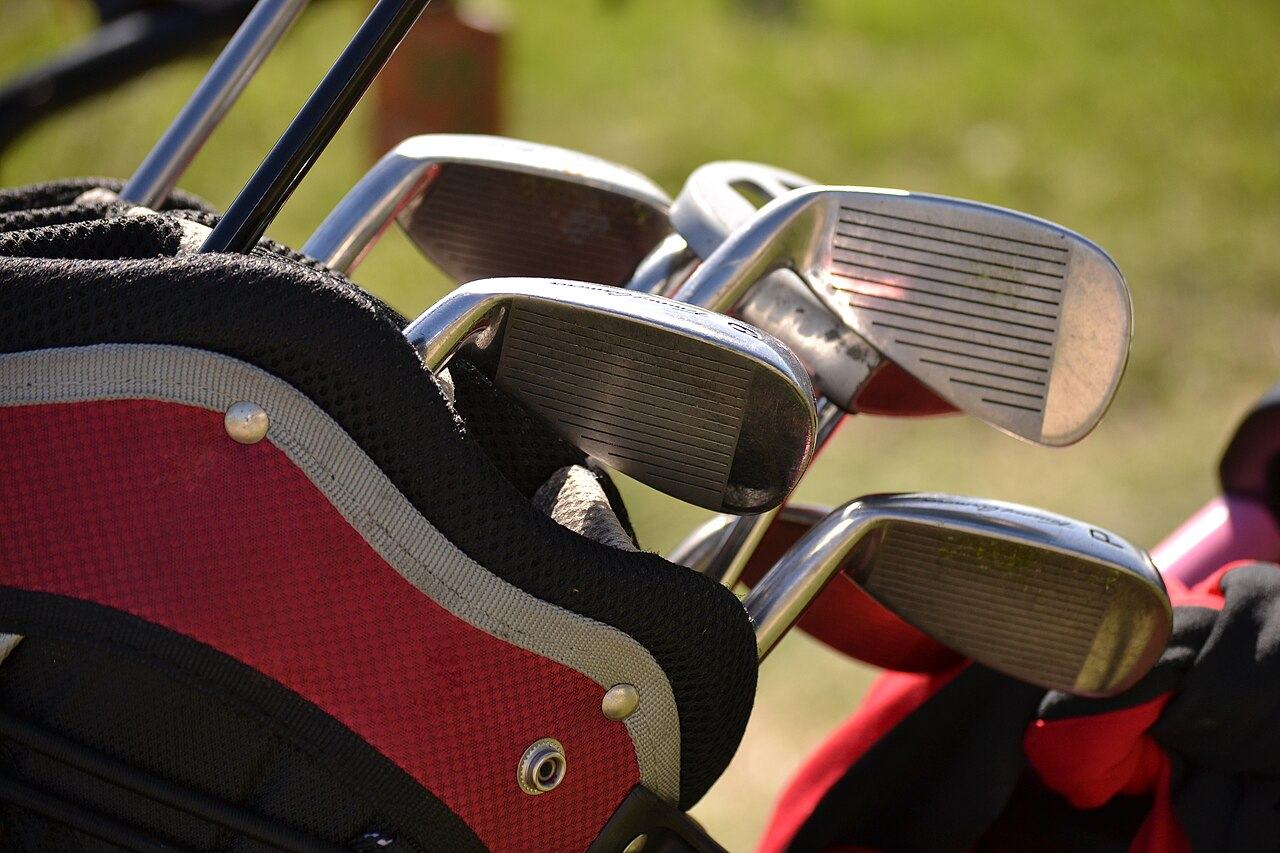
Flying with golf clubs in 2026 means paying for a checked bag. You can’t take clubs through security, but on every big US airline a golf bag counts as one ordinary checked bag with the oversize fee waived. That’s usually $45 for a first bag and $55 for a second, each way. Shipping starts around $49 and renting costs a set fee per round.
That’s the short answer. The longer one is where the money goes. Two years ago you could fly Southwest with your clubs for nothing and most traveling golfers never thought about shipping. Then Southwest ended free checked bags in May 2025, and in the first half of 2026 nearly every major US carrier raised its bag fees again. A lot of the advice still ranking in search results predates both changes. Some of it still says airlines charge $150 to $200 “oversize” fees for golf bags, which hasn’t been true on the big US carriers for years. Some still says bags fly free on Southwest.
This page is the hub for everything we publish on traveling with golf clubs. It covers what the airlines actually charge now, the weight limit that catches people out, when shipping beats flying and when renting beats both. It also walks through packing a travel bag so the driver arrives in one piece, and what to do when it doesn’t. Every fee below was checked in September 2026 against the airline’s own pages or recent reporting, and we flag the ones we couldn’t confirm directly. Airline fees change at least once a year, so treat the table as a starting point and check the airline’s page the week you book.
At a glance
- Carry-on? No. The TSA only allows golf clubs in checked baggage.
- What it costs to fly: $45 first bag / $55 second bag each way on American, Delta, United and Southwest in economy. JetBlue runs $39–$49 for a first bag depending on the date.
- Oversize fee: waived for golf bags on the major US carriers. The 50 lb weight limit is not.
- Overweight fee: usually $100 or more each way once a bag passes 50 lb.
- Shipping: door to door from about $49 each way with the big services; most domestic routes land between $60 and $230 per bag, each way.
- Renting: cheapest for one or two rounds; rarely cheapest for a five-round trip.
- Our default: fly with them when the golf bag is your only checked bag or rides free on status or a credit card. Look hard at shipping when it’s your second bag, you’re connecting, or the trip has more than one stop.

Airline golf bag fees in 2026: the master table
Here’s what the main airlines US golfers use charge to check a golf bag, for a standard economy ticket on a domestic flight, paid online in advance. Paying at the airport usually adds $5. Premium cabins and elite status change the picture completely, and we cover those further down.
| Airline | 1st checked bag | 2nd checked bag | Oversize fee for golf? | Weight limit (economy) | Golf-specific notes |
|---|---|---|---|---|---|
| American Airlines | $45 online ($50 airport) | $55 online ($60 airport) | Waived | 50 lb; overweight fee from 51–70 lb | Basic Economy adds $5 per bag on tickets issued from May 18, 2026 |
| Delta Air Lines | $45 | $55 | Waived | 50 lb | Hard case recommended; a soft bag is accepted after you sign a limited release of liability |
| United Airlines | $45 prepaid ($50) | $55 prepaid ($60) | Waived | 50 lb | New fees apply to tickets issued from April 3, 2026; United recommends a hard case |
| Southwest Airlines | $45 | $55 | Waived | 50 lb | Bags stopped flying free on May 28, 2025; current fees apply to bookings from April 9, 2026; free bags for A-List, cardholders and some fare types |
| Alaska Airlines | $45 (reported) | $55 (reported) | Waived | Golf gets a more generous weight allowance than normal bags | Golf counts as its own checked bag; confirm 2026 fees and weight rules on alaskaair.com |
| JetBlue | $39 off-peak / $49 peak | $59 off-peak / $69 peak | Standard sports rules | 50 lb | Fees in effect from March 31, 2026; add $10 if you pay within 24 hours of departure or at the airport |
| Aer Lingus (transatlantic) | Within your standard allowance | Depends on fare | Not charged as oversize if within allowance | 23 kg (50 lb) | Sports equipment counts toward the normal checked allowance; confirm when booking |
| British Airways | Counts as one checked item | Depends on fare | Not charged as oversize if within limits | 23 kg (50 lb) in economy | Drop sporting equipment early, around three hours before long-haul departures |
A few notes on reading this:
- The golf bag is just a bag. On all six big US carriers, a golf bag within the normal weight limit is treated as one standard checked bag. If it’s the only thing you check, you pay the first-bag price. If you also check a suitcase, one of them is your second bag, and the airline doesn’t care which.
- Third bags get expensive fast. Southwest charges $150 for a third bag, JetBlue $200, and United and Delta land in the $150–$200 range depending on the route. If you’re tempted to check a golf bag, a suitcase and a shoe bag, don’t.
- International fares are different. Most transatlantic economy fares include at least one free checked bag, which is why a golf bag often flies to Dublin or Edinburgh for less than it flies to Phoenix.
- Alaska and the UK/Irish airlines are the rows to double-check. We couldn’t load their official pages when we updated this in September 2026, so those rows lean on recent reporting and on the policies as they stood earlier in the year.
Each airline has its own guide, with the fine print on weight, fare types and what they’ll refuse to accept: American Airlines, Delta, United, Southwest and Alaska Airlines. For the full list, including budget carriers, see our airline golf bag fees comparison.
Can you bring golf clubs on a plane?
Yes, but only in the hold. The TSA does not allow golf clubs in carry-on bags, so the whole set, putter included, has to be checked. Once checked, a golf bag is treated as a normal piece of luggage by the major US airlines, which waive the oversize fee but still apply weight limits.
The TSA’s own page is blunt about it: clubs are a no for carry-on and a yes for checked bags, and the officer at the checkpoint has the final say on anything else. People do occasionally ask about sneaking a putter or a single wedge on as a “walking stick”. Don’t. You’ll lose it at the checkpoint or hold up the line arguing, and the few dollars you’d save aren’t worth a missed flight.
The things that can go in your carry-on are the things you’d least like to lose: your rangefinder, GPS watch, golf shoes if the travel bag is tight on weight, a glove, a few balls, and any prescription medication. Anything with a lithium battery, such as a rangefinder, a speaker or a spare battery pack, is better off in the cabin anyway. Airlines restrict loose lithium batteries in checked bags, and electric push-cart batteries have their own rules, which vary by battery size.
We go deeper on the TSA side, including what happens at screening and what to pull out of the bag before you check it, in can you bring golf clubs on a plane.
Do golf clubs count as a checked bag?
Yes. On American, Delta, United, Southwest, Alaska and JetBlue, a golf bag counts as one of your standard checked bags and is charged the normal first- or second-bag fee. The big carriers waive the oversize surcharge for golf equipment, so length isn’t the issue. Weight is.
This is the single most misunderstood point in golf travel, mostly because it used to be different. Through the 2000s and early 2010s, several airlines charged golf bags as oversize or “special items”, with fees that could top $100 each way. That’s where the lingering $150–$200 figures come from. On the major US carriers today, a golf travel bag is simply accepted as golf equipment, whatever its length, provided it actually holds golf gear and stays within the weight limit.
“Golf equipment” has a fairly specific meaning to the airlines. It usually means one golf bag containing up to 14 clubs, a dozen or so balls and one pair of golf shoes. Most airlines are relaxed about some clothing or a towel inside the travel bag to pad the clubs. Some agents are less relaxed if the bag is obviously doubling as a suitcase, and a bag stuffed with jeans and a toiletry kit is no longer “golf equipment” on paper. Pack a rain jacket and a couple of sweaters as padding, sure. Pack a week of clothes and you’re inviting both an overweight fee and a conversation.
Budget airlines are the exception to the “just a bag” rule. Spirit, Frontier and Allegiant price bags dynamically and can charge considerably more at the airport than online, so the golf bag question on those carriers is really a question of when you pay.
What is the weight limit for a golf bag on a plane?
On most major US airlines the limit is 50 lb (23 kg) in economy, the same as any other checked bag. Go over and you’ll usually pay an overweight fee of $100 or more each way, on top of the bag fee. Premium cabins and elite status often raise the limit to 70 lb (32 kg).
This is where golfers get burned. A soft travel bag weighs about 4 to 5 lb empty and a hard case closer to 9 lb or more, according to manufacturer figures. Add a full cart bag (5 to 7 lb), 14 clubs (roughly 12 to 16 lb depending on the set), a dozen balls (about 1.25 lb), shoes (2 to 3 lb) and a couple of sweaters, and you’re into the high 30s before you’ve thought about it. Throw in a second pair of shoes, rain gear, a bag of tees and a sleeve of practice balls, and the scale at the check-in desk suddenly reads 53.
Some rough guidance, based on typical weights:
- Soft travel bag + stand bag + full set + shoes: usually 30–38 lb. Comfortable.
- Hard case + cart bag + full set + shoes + clothes as padding: often 42–52 lb. Borderline.
- Hard case + staff bag + anything: weigh it at home. Tour-style staff bags can weigh 10 lb or more on their own.
American’s overweight fee kicks in at 51 lb and runs to 70 lb, above which the bag may not be accepted at all. Alaska has historically been generous with golf bags, allowing heavier bags without the usual overweight charge, which is part of why it’s popular with West Coast golfers. Confirm the current limit on its site before relying on it.
The cheapest fix is a $10 luggage scale. Weigh the bag at home, then weigh it again after you pack on the way home, because that’s when the souvenir headcovers, the two dozen logo balls and the wet rain gear go in. We cover weight tactics airline by airline, and how to shave 8 lb off a travel bag without leaving anything important at home, in our guide to how to pack golf clubs for a flight.
Fly, ship or rent: the real cost maths
Here’s where most advice goes vague. “It depends” is true, but it depends on a handful of numbers you already know: how many bags you’re checking, how many flights, how many rounds, and whether anyone in the group has airline status.
Take a typical four-night buddies trip to Scottsdale from Dallas: four rounds of golf, a checked suitcase each, and the golf bag on top. We priced three ways of getting one golfer’s clubs there, using the September 2026 figures above and in our golf trip cost breakdown.
| Option | What you pay | Round-trip cost per golfer | The catch |
|---|---|---|---|
| Fly, golf bag as 2nd checked bag | $55 each way | $110 | Up to $100+ each way if the bag passes 50 lb; you haul the bag through two airports and a rental car lot |
| Fly, golf bag as only checked bag (carry-on for clothes) | $45 each way | $90 | Living out of a carry-on for four nights; still subject to the weight limit |
| Fly, bag free via status or airline credit card | $0 | $0 | Only works if your card or status covers the golfer who is checking |
| Ship door to door (regional route) | About $60–$90 each way | About $120–$180 | Needs to be sent 3–5 business days ahead (less if you pay for faster service); someone has to be home or at the office for pickup |
| Ship door to door (coast to coast or expedited) | About $160–$230+ each way | About $320–$460+ | Hard to justify unless you’re going for a week or more |
| Rent at the course | Typically $50–$100 per round for a decent set, more for premium brands | $200–$400 for four rounds | Unfamiliar clubs; quality varies; sets can sell out on busy weeks |
What that table says, plainly:
- If the golf bag is your only checked bag, or it flies free, fly with it. Nothing else comes close on cost.
- If it’s your second checked bag on a domestic trip, flying and regional shipping are close. Shipping costs perhaps $10–$70 more per golfer, and in return you skip the overweight risk, the oversized-baggage counter and the rental-car Tetris. For some people that’s worth it. For others it isn’t.
- If you’re connecting through a hub, the calculation tilts toward shipping. Every connection is another chance for the bag to miss the plane, and a golf bag that arrives a day late costs you a round.
- Renting only wins on short trips. At $50–$100 a round, two rounds of rentals cost about the same as flying the bag. By the fourth round, renting is the most expensive option. It also involves hitting a strange driver off the first tee.
The number that swings everything is the overweight fee. A golfer who checks a 54 lb golf bag as a second bag pays $55 plus an overweight fee of $100 or more, each way. That’s $300+ round trip, and at that point shipping is cheaper on almost every domestic route.
We go through more scenarios, including a four-person group trip and a two-week winter trip, in shipping golf clubs vs flying with them.
How to avoid paying golf bag fees
Plenty of golfers never pay to fly their clubs. They aren’t gaming the system. They’ve just lined up one of these:
- An airline co-branded credit card. Most US airline cards include a free first checked bag for the cardholder, and often for a few companions on the same reservation. On a trip with four golfers, one card can wipe out $360 or more in round-trip bag fees. This is the single biggest saving available to most people. Read the card’s terms, because the benefit usually requires paying for the ticket with that card and booking in the same reservation. (We don’t give personal financial advice; this is simply how the benefit usually works.)
- Elite status. Southwest A-List members get one free bag and A-List Preferred members two. American, Delta and United elites get free bags at most tiers, plus higher weight limits at the top tiers.
- Fare type. Southwest’s higher fare types include free bags, and premium cabins on every airline include at least one or two. When the fare difference is under $90 round trip, the upgrade can pay for itself on bags alone, with a better seat thrown in.
- Active-duty military. Several airlines, Southwest included, waive bag fees for active military on personal travel. Carry ID.
- Transatlantic economy. Most economy fares to Ireland and the UK include one free checked bag. If you can fit your clothes in a carry-on, the golf bag goes free.
- Pay online, not at the airport. It’s only $5 per bag, per direction, on most airlines, and $10 on JetBlue inside 24 hours. For a group of eight on a round trip, that’s $80 to $160 for doing something at home instead of at the counter.
- Stay under 50 lb. Not avoiding the fee exactly, but avoiding the second fee, which is usually the bigger one.
What doesn’t work: calling the golf bag “sporting equipment” and hoping it goes free, packing clothes into the golf bag to skip a suitcase and then getting caught at 58 lb, or booking Basic Economy to save $40 and paying more in bag fees than you saved.
Hard case or soft travel bag?
A travel bag is non-negotiable if you fly with clubs. A naked cart bag with a rain hood zipped over the irons is how you end up with a snapped driver shaft and a claim form. The only question is which kind.
Soft travel bags are padded nylon covers with wheels, usually with extra padding around the top where the clubheads sit. They weigh around 4 to 5 lb and fold flat for storage. Retail prices have historically run from about $50 for basic covers to around $300 for well-padded, wheeled models. A soft bag won’t stop a crushing blow on its own, but paired with a support rod (more on that below) it handles normal baggage handling fine. Most golfers who fly a few times a year use one.
Hard cases are rigid plastic shells, often in two halves that clip together. They weigh roughly twice as much, around 9 lb or more, and have typically cost $200 to $350. They protect better against crushing and puncturing, and both Delta and United recommend hard cases. The downsides are weight (that extra 4 or 5 lb eats into your 50 lb allowance), storage at home, and fit: some hard cases won’t fit in a midsize SUV with three other bags. Delta’s rule matters here too. If you check clubs in a soft bag, Delta accepts them only after you sign a limited release of liability, which weakens a damage claim.
Our honest view: for most golfers flying a few times a year on domestic routes, a well-padded soft bag with wheels and a support rod is the better trade. The weight saving is real and the protection is adequate. If you fly with an expensive set several times a year, especially with connections, or if the clubs are custom-fit and hard to replace, a hard case earns its keep.
The detailed comparison is in hard vs soft golf travel bags, and our picks by budget and type are in the best golf travel bags.
How to pack golf clubs for a flight
Most airline damage to golf clubs is one of three things: a snapped driver or fairway-wood shaft, a cracked head, or a bent iron shaft. Almost all of it happens because something heavy lands on the top of the bag where the woods stick up above the irons. Packing is mostly about spreading that impact.
- Take the head off your driver and fairway woods if they’re adjustable. Wrap each head in a sock or towel and pack it in the side pocket or among your clothes. A detached head is almost impossible to damage. Put the torque wrench in your checked bag or leave it in the golf bag. It’s a small tool and TSA generally allows it, but don’t risk losing it at security.
- Use a support rod, or a “stiff arm”. It’s an adjustable pole that sits in the golf bag and stands an inch or two taller than your longest club, so any weight dropped on the bag hits the rod and not a shaft. They cost about $20–$30. If you don’t have one, turn the driver upside down so the shaft sits taller than the heads.
- Put headcovers on everything that has one, then bundle the irons together with a towel wrapped around the heads and a rubber band or velcro strap holding it tight. Loose irons clattering together cause more nicks than the baggage handlers.
- Fill the gaps with soft stuff. A rain jacket, a sweater or two, and a towel around the top of the bag stop the clubs shifting. Keep it to padding, not a week’s wardrobe.
- Put shoes and balls at the bottom of the travel bag, below the golf bag, where the weight helps keep the bag upright on its wheels.
- Take out everything valuable. Rangefinder, GPS device, speaker, anything with a lithium battery and anything you couldn’t replace at a pro shop goes in your carry-on.
- Weigh the packed bag. Aim for 45 lb or under on the way out, which leaves room for what you buy.
- Photograph the clubs and the packed bag before you zip it. If you need to make a damage claim, a dated photo of undamaged clubs is the most useful thing you can have.
- Label the outside and the inside. Name, phone number and destination address on a tag, and a card inside the golf bag too, in case the outer tag is torn off.
- Drop a tracker inside. A Bluetooth tracker such as an AirTag in a side pocket won’t get your bag delivered any faster, but it ends the argument about where it is.
One more tip that sounds fussy but saves grief: don’t lock the travel bag with a non-TSA lock. If TSA needs to inspect it, they’ll cut the lock.
Is it cheaper to ship golf clubs than fly with them?
Usually not, if the golf bag is your only checked bag or rides free. Shipping door to door costs roughly $60 to $230 each way per bag in 2026, against $45 to $55 each way to fly. Shipping gets competitive when the clubs are a second bag, overweight, or on a trip with connections.
Shipping works like this. You book a pickup online with one of the specialist golf shipping services. Ship Sticks is the biggest, and Fairway Freight and Luggage Forward also operate. The carrier (usually UPS or FedEx behind the scenes) collects the bag from your home or office, and it’s delivered to your hotel, resort or the course’s bag room. At the end of the trip you do the same thing in reverse. The specialist services advertise prices “from $49” for their slowest ground option on short routes. Most real-world domestic shipments, based on the rate cards we’ve seen for 2026, land somewhere around:
| Route type | Typical 2026 price per bag, each way | Transit time |
|---|---|---|
| Regional (e.g., Atlanta to Myrtle Beach) | About $60–$90 | 2–3 business days by ground |
| Mid-distance (e.g., Chicago to Scottsdale) | About $90–$160 | 3–5 business days by ground |
| Coast to coast, or expedited | About $160–$230+ | 4–5 business days by ground, 1–2 days expedited |
Prices move with distance, speed and how late you book, so treat these as ranges, not quotes.
The things that make shipping worth the money are mostly not about price. You skip lugging a 45 lb travel bag through two airports and into a rental car. There’s no overweight fee and no risk of a connecting flight leaving the bag behind in Charlotte. For a multi-stop trip, such as three courses in three cities, shipping can move the clubs between stops while you drive or fly light. Resorts like Pebble Beach, Pinehurst and Bandon Dunes handle shipped bags constantly, and your clubs are usually waiting in the bag room when you arrive.
The things that make it annoying: you have to plan it a week ahead, somebody has to be around for pickup (or you drop it at a UPS or FedEx location), and if you want to hit balls the weekend before the trip, you can’t.
Our full guide to shipping golf clubs covers booking, packing and insurance. Route-by-route prices are in what it costs to ship golf clubs, and our Ship Sticks review weighs up the biggest service.
Renting golf clubs instead
Renting has a reputation problem. For years, a rental set at a resort meant a mismatched bag of ten-year-old cavity-backs with a driver that had seen things. That has changed at most serious golf destinations. Big resorts increasingly stock current-model sets from the major brands, often with a choice of shaft flex and left-handed options. Rental delivery businesses in Myrtle Beach, Scottsdale, Las Vegas, Orlando and Hawaii will drop a set at your hotel.
What to expect on price: resort and course rental sets usually run somewhere between $50 and $100 per round, with premium sets and delivery services at the top end or above. As one published example, the Caribbean golf courses partnered with Sandals list club rental at $75. Delivery companies generally price by the day or week, which is better value for a longer trip. Prices vary a lot by destination and season, so call the pro shop or check the rental company’s rate card before you rule it out.
Renting makes sense when:
- You’re playing one or two rounds on a trip that isn’t really a golf trip, such as a family vacation, a work trip or a wedding.
- You’re flying a budget airline where bag fees are high and unpredictable.
- You’re flying internationally with a tight connection or a long rail leg at the other end.
- You’re a high handicapper who won’t notice the difference, or you’re between sets anyway.
It makes less sense when you’re playing four or more rounds, when you play a lot and the feel of your own clubs matters, or when it’s peak week somewhere busy and the good sets are gone by 8 a.m.
One middle path that works well: bring your own putter and wedges in your checked suitcase (a putter often fits diagonally in a large suitcase) and rent the rest. You keep the scoring clubs you trust and leave the long clubs, the ones most likely to break, at home.
Our guide to renting golf clubs covers rental services by destination, what to ask for and how to spot a bad set before you tee off.
Flying internationally with golf clubs: Ireland, Scotland and beyond
Transatlantic golf trips turn the domestic maths upside down. Most economy fares from the US to Ireland and the UK include one free checked bag of up to 23 kg (50 lb), and the airlines flying those routes treat a golf bag as part of that allowance. If you can live out of a carry-on, or pay for a second bag, the golf bag goes free.
Aer Lingus, the airline most American golfers use to get to Ireland, has historically included sports equipment within the standard checked allowance on North American routes, at 23 kg (50 lb). British Airways treats a golf bag as one checked item and asks passengers to drop sporting equipment early, about three hours before long-haul flights. Confirm both when you book, because allowances vary by fare. Our Aer Lingus golf clubs guide covers Aer Lingus, BA and Virgin Atlantic in detail.
A few things are specific to international golf trips:
- Watch the connecting flight. Many transatlantic trips connect onto a regional flight in Europe, and some short-haul airlines charge separately for sports equipment even when the long-haul airline didn’t. If the whole trip is on one ticket, the first airline’s allowance usually applies. If you booked separately, it probably doesn’t.
- The car is often the bigger problem. Scottish and Irish rental cars are smaller than American ones, and four travel bags won’t fit in anything short of a large van. Book the vehicle around the bags, not the passengers.
- Links golf is mostly walking. A travel bag with a stand bag inside is more useful than a cart bag, because you’ll be carrying it or putting it on a trolley (the British word for a push cart).
- Shipping internationally is possible but pricier. It involves customs paperwork and more lead time. It’s worth it mostly for long trips or golfers who can’t carry a heavy bag. We cover it in shipping golf clubs internationally.
- Renting abroad is easier than you’d think. Many Scottish and Irish courses, and specialist rental firms at Dublin, Shannon and Edinburgh airports, rent good sets. For a first trip with lots of train travel, renting is worth a hard look.
If you’re planning Scotland specifically, our golf trip to Scotland guide covers regions, costs in dollars, the Old Course ballot and how to get around with clubs.

What happens if an airline damages or loses your golf clubs?
Report it before you leave the airport, get a written file reference, and photograph the damage. Airlines are liable for checked bags up to a legal cap, but they often exclude or limit claims for items not packed properly, and time limits for written claims can be as short as seven days.
Nobody plans for this part, which is why it goes badly. Here’s how it usually plays out.
If the bag doesn’t arrive, go to the airline’s baggage service office at the arrival airport before you leave, file a report and get the reference number. Ask what the airline will pay toward interim expenses such as club rentals. Most will reimburse reasonable costs for a delayed bag if you keep receipts, but policies vary and you need to ask. Golf bags are often delivered to your hotel or course within a day. A tracker in the bag makes that conversation much shorter.
If the clubs arrive damaged, don’t leave the baggage hall. Open the travel bag, photograph the damage, and file the report there. Airlines are much more sceptical of damage reported a day later. Keep the damaged clubs until the claim is settled.
Know the limits. On domestic US flights, airlines’ liability for checked bags is capped by federal rules at a figure the Department of Transportation adjusts for inflation every few years. It’s several thousand dollars per passenger, and the current number is on the DOT’s air consumer pages. On international trips, the Montreal Convention applies. Its cap is roughly 1,500 Special Drawing Rights, an IMF unit, which works out to a little over $2,000 at recent exchange rates. It also sets strict deadlines: a written complaint within 7 days of receiving a damaged bag, and within 21 days for a delayed one.
Watch the exclusions. Airlines commonly limit liability for damage to items packed without adequate protection, and some make you sign a release for soft cases, as Delta does. A snapped driver in a hard case with a support rod is a much stronger claim than a snapped driver in a cart bag with a rain hood.
Check your other cover. Credit cards used to buy the ticket sometimes include baggage delay or damage protection. Homeowners and renters insurance often covers personal property away from home, subject to the deductible. Travel insurance may cover equipment up to a per-item limit. Collect the airline’s final answer in writing first, since other insurers usually pay only the difference.
Step-by-step claim scripts, deadlines and example letters are in golf clubs damaged by an airline.

Do you need golf travel insurance?
For a domestic long weekend with an $800 set of clubs, probably not. Between the airline’s liability, your homeowners or renters policy and any card benefits, you’re reasonably covered. For an expensive international trip with prepaid tee times, it’s worth a proper look.
Golf-specific travel insurance, or standard plans with golf add-ons, mainly covers three things beyond normal trip cancellation: equipment (loss, damage or theft), equipment delay (rental costs while your clubs are missing), and in some plans, green fees you prepaid but couldn’t use. According to MoneyGeek’s May 2026 comparison, plans for a seven-day international trip costing $2,500 ranged from about $74 to $178. Equipment cover on those plans is typically capped at $1,000–$1,500 per policy, with per-item limits of $250–$500. That per-item cap matters if your driver alone cost $600.
The “lost golf days” benefit gets a lot of attention and is narrower than it sounds. AXA’s Platinum plan, for example, pays up to $500 for prepaid green fees lost when weather closes a course, but only with a confirmed reservation and deposit made at least 48 hours ahead, a closure of three hours or more, no refund from the course, and a few other conditions. It’s a nice extra, not a reason to buy a policy.
Where travel insurance clearly earns its cost is on a big-ticket trip abroad: a week in Ireland with $3,000 of nonrefundable golf, or a trip built around one Old Course tee time. What pays out there is the cancellation cover, not the golf extras.
We compare the plans, the exclusions and when the add-ons are worth it in golf travel insurance.
A traveling-with-clubs checklist
Everything above in the order you’ll actually need it.
When you book flights
- Check the golf bag fee for your fare, not just the airline, and decide whether it’s your first or second checked bag.
- If someone in the group has an airline credit card or status, book on their reservation and pay with that card.
- On international trips, confirm whether every leg is on one ticket.
- Price shipping for the same dates. If shipping is within $30 of flying, weigh the hassle, not just the fee.
Two weeks out
- If shipping, book the pickup now and confirm the resort’s receiving address and bag-room hours.
- If renting, reserve the set now, especially for peak weeks.
- Find the travel bag, check the wheels and zips, and buy a support rod if you don’t have one.
The night before
- Remove adjustable driver and fairway heads and wrap them.
- Pack the support rod, bundle the irons, pad the top.
- Weigh the bag. Aim for 45 lb.
- Photograph the clubs.
- Put the rangefinder, speaker and anything with a battery in your carry-on.
- Pay the bag fee online.
At the airport
- Arrive early. Some airports send golf bags to an oversized-baggage belt that adds 10 minutes.
- Keep the bag tag receipt.
- On arrival, open the travel bag at the airport if it looks damaged, and report anything before you leave.
Going home
- Weigh the bag again after adding souvenirs and wet gear.
- If shipping home, book the return pickup before you leave the resort, not the morning of checkout.
For the wider planning sequence that surrounds all this, including dates, destination, tee times and budget, start with how to plan a golf trip.

Every guide to traveling with golf clubs
This page is the hub. Each of the guides below goes deeper on one part of getting clubs to the first tee.
Airline golf bag policies
- Airline golf bag fees compared: the full table, including budget carriers
- American Airlines golf bag policy
- Delta golf bag policy
- United Airlines golf bag policy
- Southwest golf bag policy: what changed when bags stopped flying free
- Alaska Airlines golf bag policy
- Flying to Ireland and the UK with golf clubs: Aer Lingus, British Airways and Virgin Atlantic
Security, packing and bags
- Can you bring golf clubs on a plane? TSA rules explained
- How to pack golf clubs for a flight
- Hard vs soft golf travel bags
- The best golf travel bags
Shipping your clubs
- Shipping golf clubs: the complete guide
- How much it costs to ship golf clubs
- Ship Sticks review
- Shipping golf clubs vs flying with them
- Shipping golf clubs internationally
Renting, damage and insurance
- Renting golf clubs on vacation
- Golf clubs damaged or lost by an airline
- Golf travel insurance
Frequently asked questions
How much does it cost to fly with golf clubs in 2026?
On American, Delta, United and Southwest, a golf bag costs the same as any checked bag: $45 for the first and $55 for the second, each way, in economy on domestic flights, paid online. JetBlue charges $39 to $49 for a first bag depending on the date. Overweight fees, usually $100 or more, apply above 50 lb.
Do airlines charge an oversize fee for golf bags?
Not the major US carriers. American, Delta, United, Southwest and Alaska all waive the oversize fee for golf equipment, so a tall travel bag is charged as a normal checked bag. Budget airlines have their own rules, and some international and short-haul European airlines charge sports equipment fees, so check those individually.
Can I carry my putter onto the plane?
No. The TSA doesn’t allow golf clubs in carry-on bags, and that includes putters. Pack the putter with the rest of the set, or lay it diagonally in a large checked suitcase if you’re renting the other clubs at your destination.
Is a golf bag free on Southwest anymore?
Not for most passengers. Southwest ended free checked bags on May 28, 2025, and for bookings from April 9, 2026 it charges $45 for a first bag and $55 for a second. A-List members, Southwest credit cardholders and some higher fare types still get one or two bags free, and active-duty military are exempt.
Should I use a hard case or a soft travel bag?
A well-padded soft bag with wheels and a support rod suits most golfers flying domestically a few times a year, because it saves 4 to 5 lb of weight. A hard case protects better and suits frequent flyers, expensive custom sets and trips with connections. Note that Delta requires a signed liability release for soft bags.
How far in advance should I ship golf clubs?
For ground shipping, book the pickup at least a week before you travel so the clubs can go out 3 to 5 business days ahead of your arrival. Expedited shipping can do it in one or two days, at a much higher price. Always confirm the resort’s receiving address and bag-room hours first.
Is it better to rent golf clubs or bring my own?
Bring your own for trips of three or more rounds, where the fees work out cheaper than rentals and your own clubs will score better. Rent for one or two rounds, on budget airlines, or on international trips with long train or bus legs. Bringing your own putter and wedges and renting the rest is a good compromise.
What should I do if my golf clubs don’t arrive?
File a report at the airline’s baggage office before leaving the airport and get a reference number. Ask what interim expenses, such as club rental, the airline will reimburse, and keep every receipt. On international flights, send a written claim within 21 days of the bag’s eventual delivery. For damage, the deadline is 7 days.
Ireland is where flying with clubs is at its cheapest, because most transatlantic economy fares include a free 50 lb checked bag and US Customs preclearance at Dublin and Shannon makes the trip home easier. The harder part is at the other end: small rental cars, narrow roads and courses where you’ll carry your own bag. Our Ireland golf trip guide covers routes, rental vans, driver-guides and which clubs rent sets if you’d rather leave yours at home.
Continental Europe adds one trap the transatlantic flight doesn’t have: the short hop. Low-cost airlines such as Ryanair, easyJet and Vueling charge separately for sports equipment, so a cheap flight from Lisbon to Málaga can cost more for the clubs than for you. Book connections on one ticket so the bag is checked through, or rent for the leg that doesn’t justify the fee; the big Algarve and Costa del Sol resorts rent current-model sets. Our Europe golf vacations guide covers when renting beats flying for each country.
Sources
Primary sources and official pages, checked September 2026 unless noted.
- TSA, “Golf clubs” (carry-on no, checked yes): tsa.gov
- Southwest Airlines, “Flying with golf clubs”: support.southwest.com
- Delta Air Lines, sporting equipment policy: delta.com
- American Airlines, checked bag policy: aa.com
- US Department of Transportation, air travel consumer information on lost, delayed and damaged baggage: transportation.gov
- Also consulted: United Airlines and Alaska Airlines sports equipment pages (not reachable when we updated in September 2026; figures from April 2026 fee announcements and airline reporting); JetBlue bag fees effective March 31, 2026, as reported by NerdWallet and UpgradedPoints; Aer Lingus and British Airways sporting equipment pages; shipping price ranges from Fairway Freight’s 2026 rate guidance and Ship Sticks’ April 2026 published starting price; travel bag weights and prices from BestReviews (2023) and manufacturer figures; travel insurance costs from MoneyGeek (May 12, 2026); AXA Travel Insurance “lost golf days” benefit terms; Sandals golf inclusions as reported by Caribbean Resort Guide (June 2026).
Image credits
| Image | Credit and license |
|---|---|
| Golf bag and clubs (featured) | Photo by Alejandrocuadro, CC0, via Wikimedia Commons. |
| Lonely golf bag, waiting… (49848623301) | Photo by bluesbby from Mountain View, USA, CC BY 2.0, via Wikimedia Commons. |
| Pyongyang Golf Course (17317627275) | Photo by Uri Tours, CC BY-SA 2.0, via Wikimedia Commons. |
| St Andrews Links-4329279159 9711612a51 o | Photo by flickrtickr2009, CC BY 2.0, via Wikimedia Commons. |
| LAX baggage claim system | Photo by Ptrump16, CC BY-SA 4.0, via Wikimedia Commons. |
| Golf cart on the Red Course, East Potomac Park | Photo by Tim Evanson, CC BY-SA 2.0, via Wikimedia Commons. |