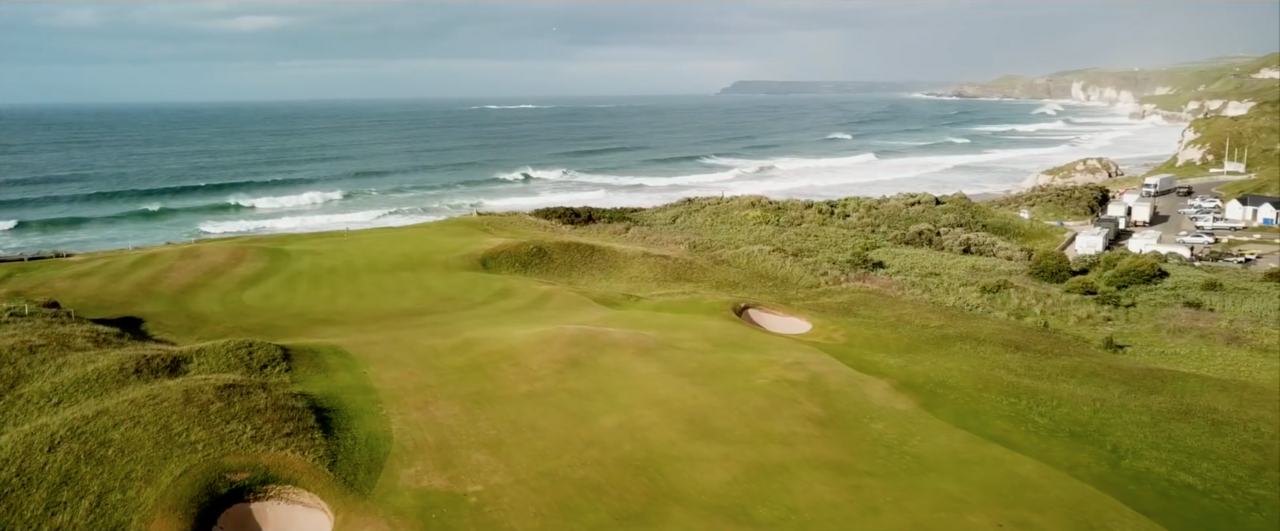
A golf trip to Ireland means links golf on some of the best coastline in the world, a week of driving on the left, and, from 2027, green fees of about €500 ($580) at the famous courses. Plan a week around one region, book 12 to 18 months ahead, and budget roughly $5,000 to $9,000 per golfer including flights.
For a lot of American golfers, Ireland is the trip. It’s a six- or seven-hour flight from the East Coast, everyone speaks English, and the welcome in the clubhouse bar is as good as the golf. The courses are the real thing: Ballybunion and Lahinch on the Atlantic, Royal County Down under the Mountains of Mourne, Royal Portrush on the cliffs of the Causeway Coast. Many golfers who’ve done both will tell you they preferred Ireland to Scotland. Some of that is the golf, and most of it is the people.
It has also got a lot more expensive, very quickly. In August 2026 the Irish Times reported that Lahinch, Ballybunion’s Old Course, Waterville and Tralee will all charge €500 for a round in 2027. Royal County Down goes to £495, up from £255 in 2022, and it sold its visitor tee times for the year in seven hours. The Ryder Cup comes to Adare Manor in September 2027, and tour operators have been booking up the best times for groups who would otherwise be in Scotland for the Open. None of that makes Ireland a bad idea. It does mean the casual “let’s do Ireland next summer” trip needs more planning than it used to.
This page treats the island as one trip: the southwest, the northwest, Dublin and Northern Ireland. It covers what things cost in dollars, which courses you can actually get on, how to route a week, and what’s different about golf there. It’s the hub for all our Ireland guides, so each section points to a deeper page when you need one.
A note on money. We convert at $1.16 per euro and $1.35 per pound, the rates published on January 1, 2026. Northern Ireland uses pounds; the Republic of Ireland uses euros. Green fees below come from club websites where we could reach them, the National Club Golfer 2026 fee table, and the Irish Times report on 2027 prices (August 19, 2026).
At a glance
- Best time: May to September. June to August is peak, with daylight past 10 p.m. in June; May and September are a little cheaper and quieter.
- Top green fees: €450–€500 in 2026 at Ballybunion, Lahinch, Tralee and Old Head; €500–€550 in 2027. Royal County Down £495 and Royal Portrush £475 in 2027.
- Value links: Carne €195, County Sligo €320, Ballyliffin €330 (2026).
- What a week costs: roughly $5,000–$9,000 per golfer with flights, five or six rounds, shared cars and good hotels. Premium and operator-run trips cost more.
- Booking: 12–18 months ahead for Royal County Down, Portrush and the Kerry/Clare classics. Earlier still for 2027.
- Paperwork: a passport for the Republic; a UK Electronic Travel Authorisation (ETA, £20) for Northern Ireland.
- Caddies: required per group at Lahinch and Ballybunion; senior caddies cost about €110 per bag plus tip.
- Flights: nonstop to Dublin and Shannon from many US hubs, with US Customs preclearance before you fly home.
Is Ireland or Scotland better for a golf trip?
Both are superb, so it comes down to the trip you want. Ireland suits groups who want bigger dunes, a warmer welcome and a road trip. Scotland suits golfers chasing history and the Old Course. Scotland is easier to base in one town; Ireland’s best courses are more spread out, so expect more driving.
The more useful comparison is practical.
Golf. Ireland’s southwest links, especially Ballybunion, Lahinch and Waterville, run through bigger, wilder dunes than most Scottish courses, and many golfers find them more dramatic. Scotland has more depth of historic championship golf in a small area, plus the Old Course, which Ireland can’t match.
Access. Scotland’s biggest barrier is the Old Course ballot. Ireland’s is scarcity: a handful of clubs with limited visitor times, now sold out a year or more ahead. Royal County Down’s allocation went in seven hours for 2027.
Price. Both have climbed fast. In 2027 the top Irish courses cost €500–€550 ($580–$640) and Royal County Down £495 ($670). The Old Course, Carnoustie and Kingsbarns are in the same range, and Turnberry’s Ailsa costs more.
Getting around. In Scotland you can base yourself in St Andrews and play a week of great golf within 45 minutes. Ireland doesn’t work that way. The classic southwest loop from Lahinch to Old Head covers about 250 miles, much of it on narrow country roads.
The rest of the trip. Ireland wins on pubs, music and non-golfers’ days out, in our view. Scotland wins on whisky, castles and cities.
If you can’t decide, our golf trip to Scotland guide gives the same treatment to the other half of the argument.
Ireland’s golf regions: where to base your trip
Ireland is small, but the roads are slow, and a week of golf that zigzags across the island spends more time in the car than on the course. Pick one or two regions.
The southwest: Clare, Kerry, Limerick and Cork. This is the classic first trip, and the most expensive. Lahinch in County Clare, Ballybunion and Tralee in north Kerry, Waterville on the Ring of Kerry and Old Head of Kinsale in Cork are the headline courses, with Adare Manor and Trump Doonbeg alongside. Shannon Airport is the natural gateway, with Dublin about three hours away. See our southwest Ireland golf trip guide.
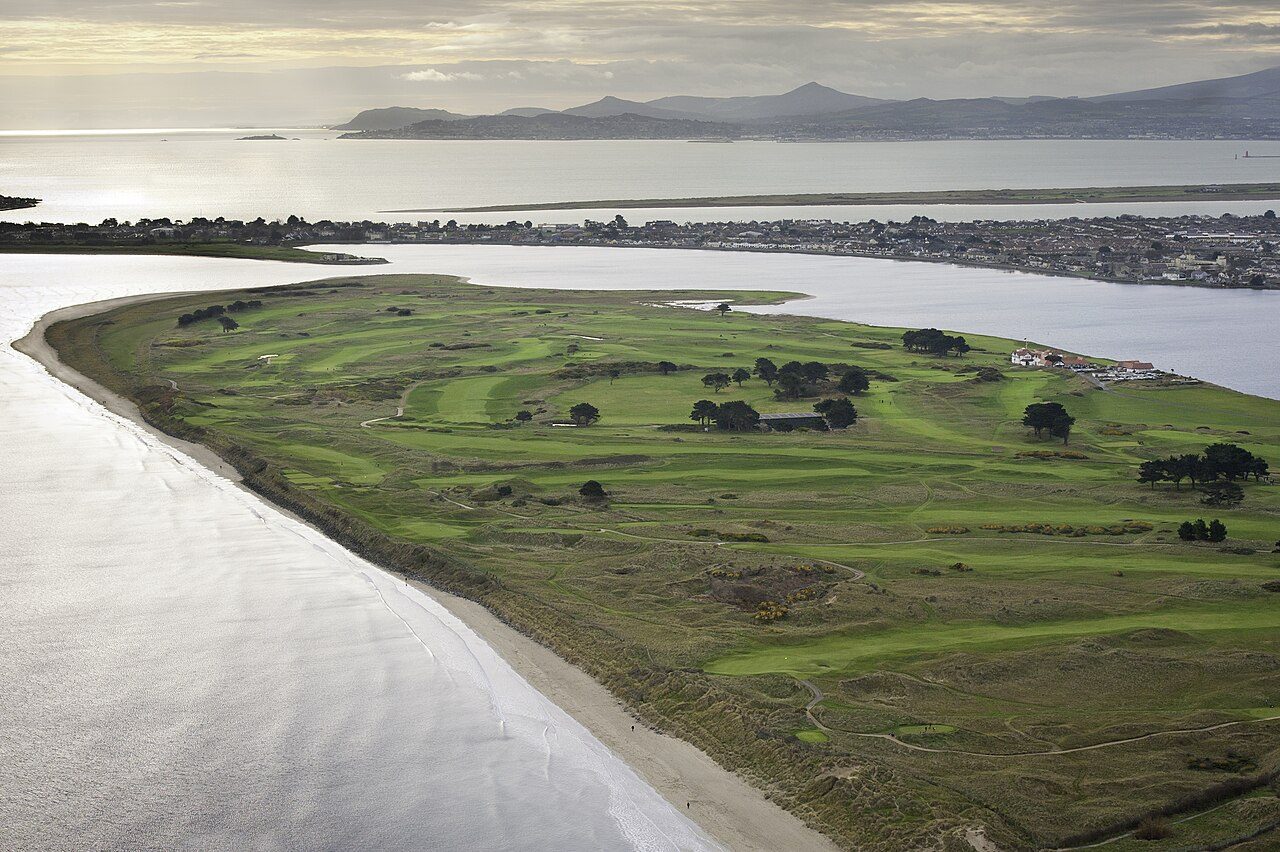
Dublin and the east coast. An underrated option, especially for a shorter trip or a group with non-golfers. Portmarnock, The Island and Royal Dublin are all within 30 minutes of the airport. The European Club and County Louth (Baltray) are within about an hour, and there’s a whole city to explore in the evenings. See golf courses near Dublin.
Northern Ireland. Royal County Down in Newcastle and Royal Portrush on the north coast are the two best courses on the island by most rankings, and Portstewart and Castlerock are next to Portrush. Belfast has two airports, and Dublin is about 90 minutes from Royal County Down. You’ll need a UK ETA. See our Northern Ireland golf trip guide.
The northwest: Sligo, Mayo and Donegal. The value region, and the one people come home raving about. County Sligo (Rosses Point), Enniscrone, Carne, Rosapenna and Ballyliffin are superb links at half the southwest’s prices, with far fewer tour buses. It’s remote, the drives are long, and Ireland West Airport Knock is the nearest airport with limited service. See our northwest Ireland golf trip guide.
The best golf courses in Ireland for visitors
These are the courses most American golfers build a trip around, with the fees and access rules that matter when you’re planning. Fees are high-season visitor rates. Dollar figures use $1.16/€ and $1.35/£.
| Course | Region | Architect(s) | 2026 fee | 2027 fee | Walking / caddies | Booking and access |
|---|---|---|---|---|---|---|
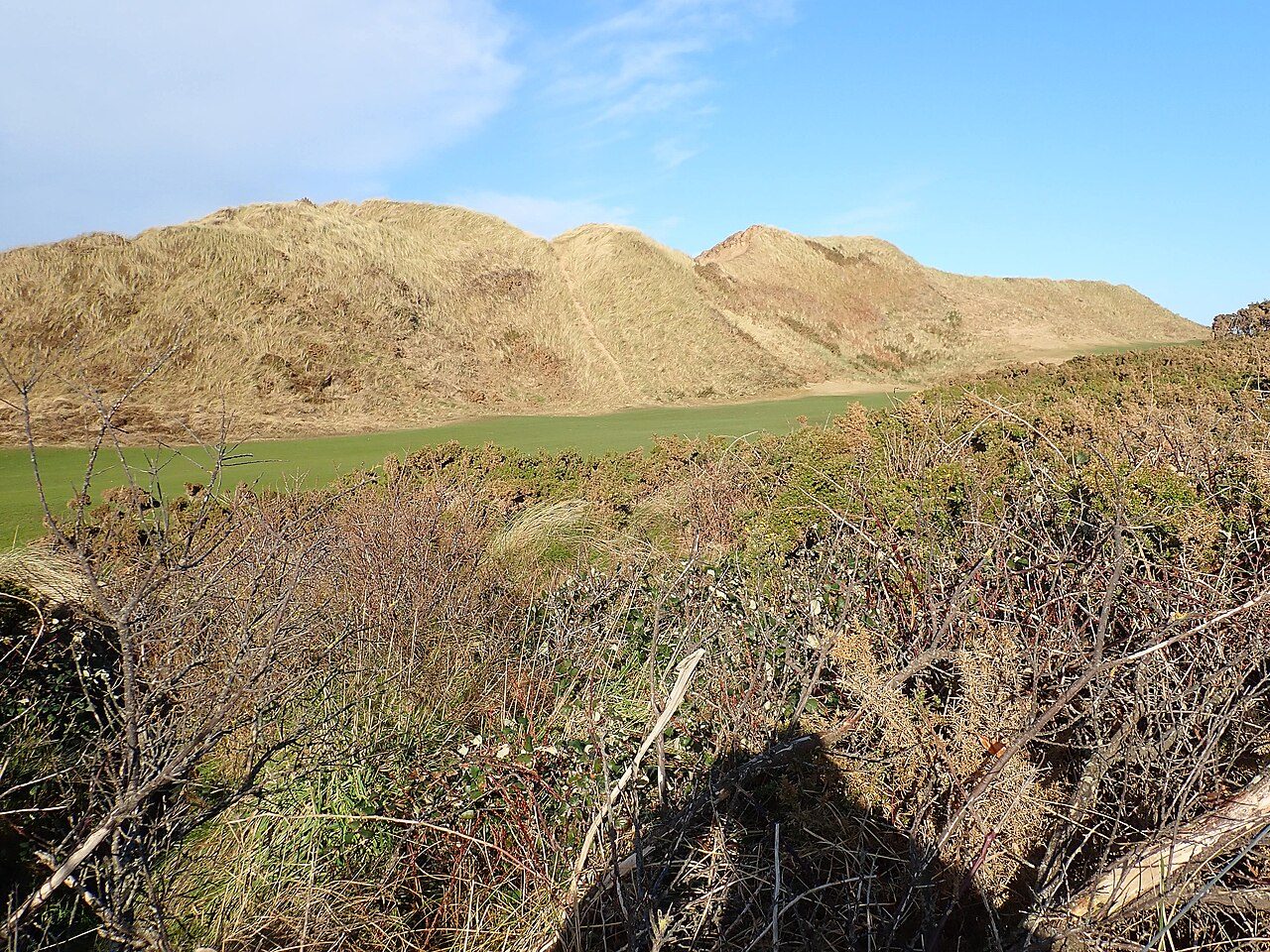
| Royal County Down (Championship) | Newcastle, Northern Ireland | Old Tom Morris, later Harry Colt and others | £450 ($608) | £495 ($668) | Walking; caddies available (Irish Times reported €90–120 nationally) | Limited visitor days; 2027 allocation sold out in seven hours |
| Royal Portrush (Dunluce) | Portrush, Northern Ireland | Harry Colt; updated by Martin Ebert for the 2019 Open | £420 ($567) | £475 ($641) | Walking; caddies available | Paid in full at booking, non-refundable; no visitor times on Wednesdays |
| Ballybunion (Old) | North Kerry | Various, with Tom Simpson’s influence | €450 ($522) | €500 ($580) | At least one caddie or forecaddie per group | Visitors Monday to Friday only; men’s max handicap 24, women’s 36 |
| Lahinch (Old) | County Clare | Old Tom Morris, Alister MacKenzie, restored by Martin Hawtree | €450 ($522) | €500 ($580) | At least one caddie per group; no buggies | Book well over a year ahead for summer |
| Old Head of Kinsale | County Cork | Designed by committee, including Ron Kirby and Joe Carr | €500 ($580) | €550 ($638) | Caddies available | Exposed cliff-top headland; expect wind |
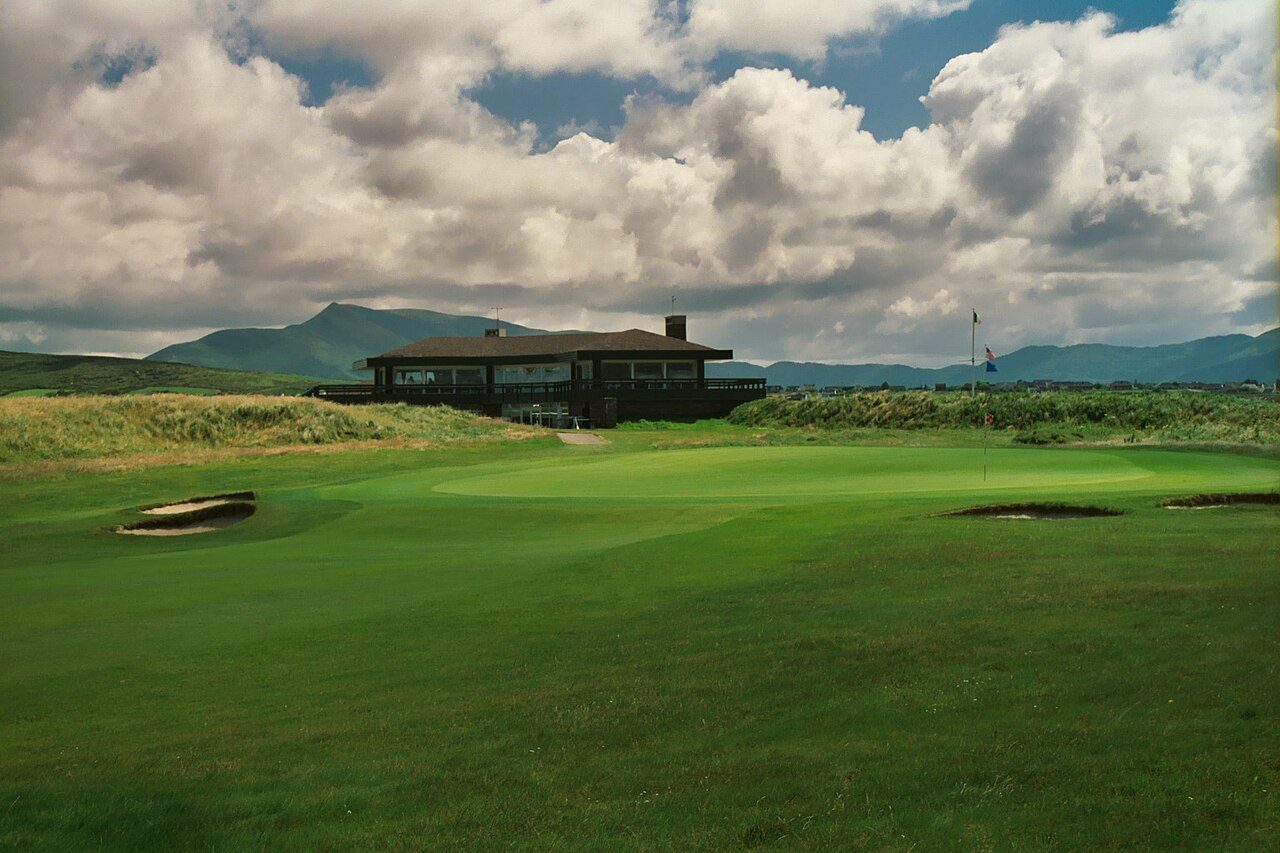
| Waterville | Ring of Kerry | Eddie Hackett, later updated by Tom Fazio | €425 ($493) | €500 ($580) | Caddies available | Remote; plan the drive |
| Tralee | North Kerry | Arnold Palmer (his first design in Europe, 1984) | €450 ($522) | €500 ($580) | Caddies available | Often paired with Ballybunion |
| Portmarnock (Championship) | Dublin | George Ross and W.C. Pickeman (1894) | €475 ($551) | €530 incl. lunch ($615) | Caddies available | Easy from Dublin Airport |
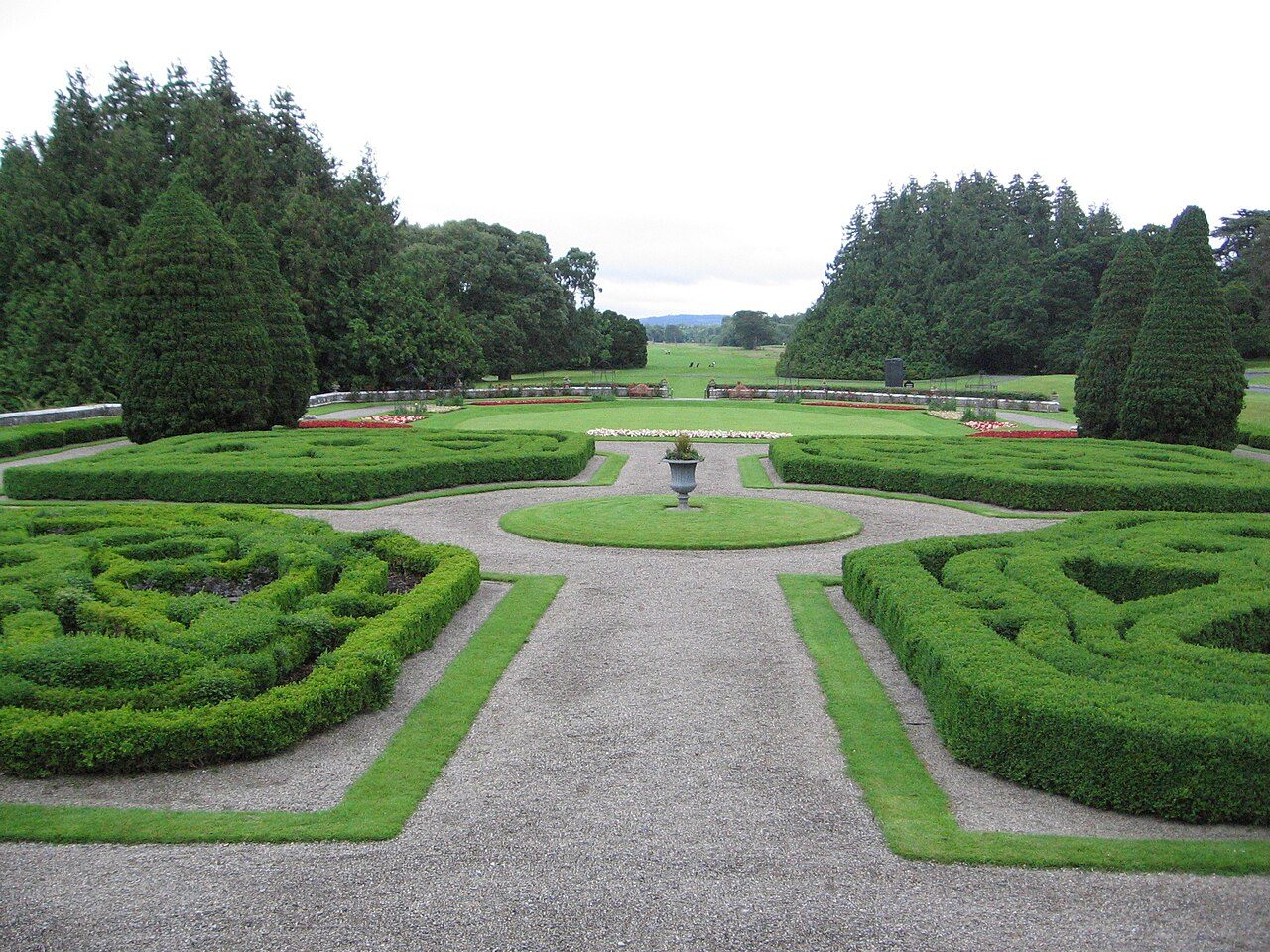
| Adare Manor | County Limerick | Tom Fazio (redesign, 2018) | €550 ($638), hotel residents only | Exclusive packages only, reported around €7,500 | Caddies | 2027 Ryder Cup venue |
| Trump Doonbeg | County Clare | Greg Norman | €550 ($638) listed; €225–€645 by timing | Varies | Caddies available | Resort; dynamic pricing |
| County Sligo (Rosses Point) | Northwest | Harry Colt | €320 ($371) | N/A | Caddies by request | Better availability |
| Ballyliffin (Glashedy) | Donegal | Pat Ruddy and Tom Craddock | €330 ($383) | N/A | Caddies by request | Remote, excellent value |
| Carne | County Mayo | Eddie Hackett | €195 ($226) | N/A | Buggies and trolleys | One of the best-value links in Europe |
“N/A” means we didn’t find a published 2027 figure. The Irish Times also reported County Louth (Baltray) at €385 and The Island at €375 for 2027.
A few thoughts the table can’t hold.
Royal County Down is the course golfers argue is the best in the world, and it’s the hardest to get on. Blind tee shots over heather-topped dunes, the Mourne Mountains behind, and bunkers with ragged “eyebrows” of marram grass. If it’s on your list, it has to be the first thing you book, and for 2027 that ship has largely sailed unless an operator still holds times.
Royal Portrush hosted the Open in 2019 and 2025, won by Shane Lowry and Scottie Scheffler, and now attracts golfers who watched it on TV. Its visitor windows are specific and changeable. When we checked, the club listed Monday from 11 a.m., Tuesday and Thursday mid-morning and after 2 p.m., Friday mid-morning, Saturday after 3 p.m., Sunday after 1 p.m., and no visitor times at all on Wednesdays. The Valley course next door costs £200 and is a very good round in its own right.
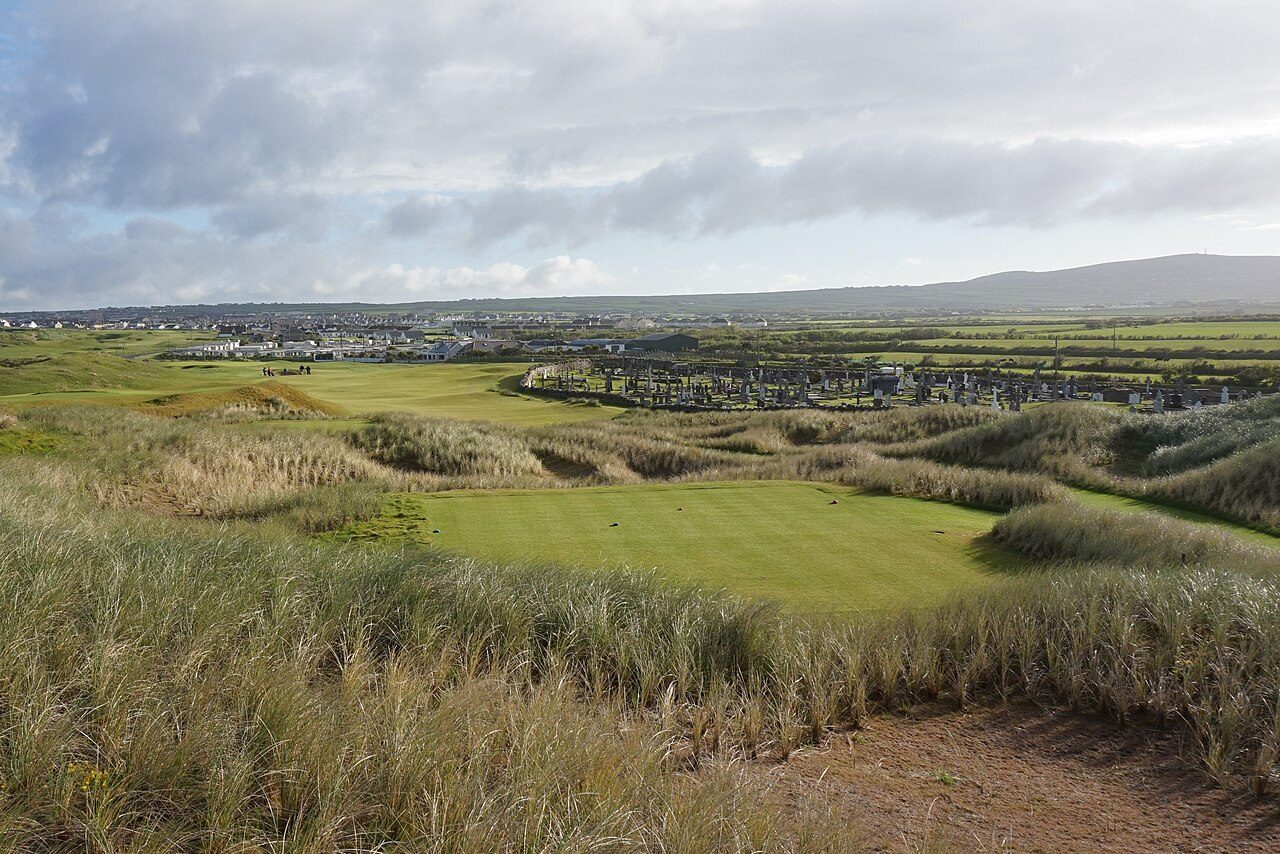
Ballybunion’s Old Course runs through huge dunes right on the Atlantic, starting beside a graveyard, which says something about Irish humour. Tom Watson did a lot to make it famous in the US. The Cashen course next door, closed for upgrades until August 2026, is wilder and harder.
Lahinch is the most fun of the big names. It has two famous blind holes (the Klondyke and the Dell), a history of goats that supposedly forecast the weather, and a town built around golf. Its Castle Course costs €60 and makes an ideal afternoon round.
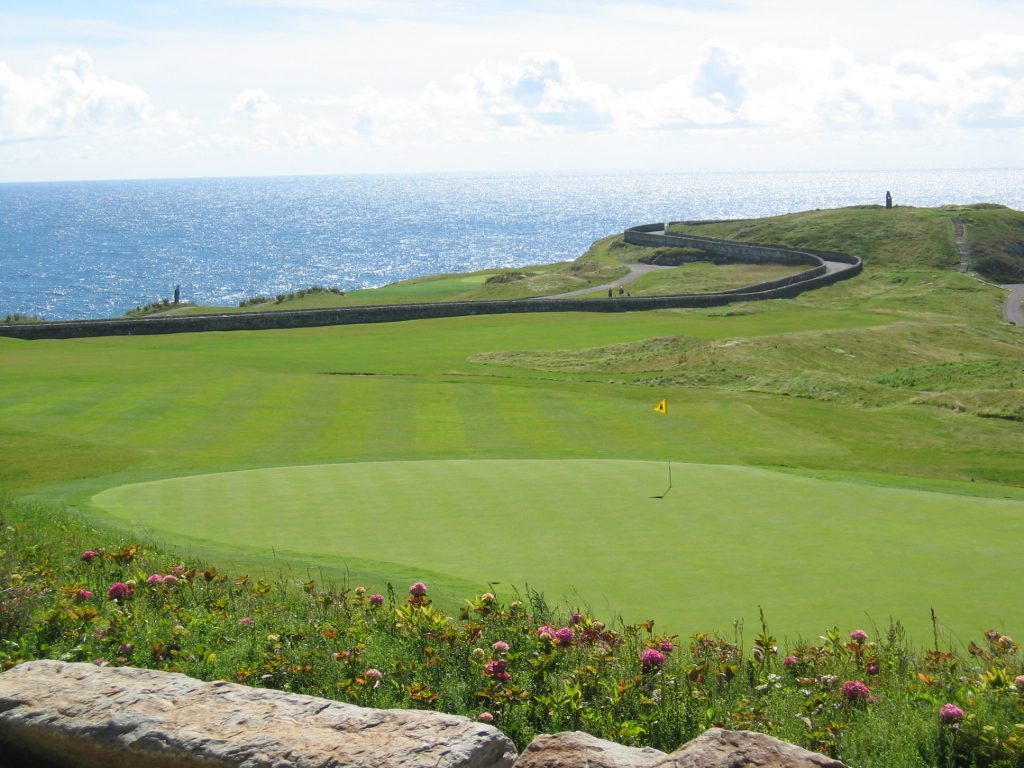
Old Head is the spectacle. A golf course on a cliff-top headland jutting into the Atlantic, with a lighthouse. Purists say the golf doesn’t match the views, and they may be right, but nobody forgets it. At €550 in 2027, decide whether you’re paying for the golf or the photos.
Our full ranking, including courses under €200, is in the best golf courses in Ireland. Detailed visitor guides cover Ballybunion, Lahinch, Royal County Down green fees, Royal Portrush green fees and Adare Manor.
How much does a golf trip to Ireland cost?
For a seven-night trip with five or six rounds at well-known courses, most American golfers spend about $5,000 to $9,000 each, including flights, shared rental cars and good hotels. Green fees at the top courses are the biggest line, at roughly $520 to $640 per round in 2026–27.
Here’s a realistic line-item budget for one golfer on a self-drive, seven-night southwest trip in summer 2027, sharing a room and a car with three friends and playing five rounds.
| Line item | Budget version | Mid-range version | What moves it |
|---|---|---|---|
| Flights, US to Shannon or Dublin | $800–$1,100 | $1,100–$1,600 | Hub, season, nonstop vs connecting |
| Green fees, 5 rounds | $1,600–$2,200 (mix of big names and value links) | $2,700–$2,900 (Lahinch, Ballybunion, Tralee, Waterville, Old Head at €500–€550) | Which courses, and whether you add a second round the same day |
| Caddies (shared or single, plus tip) | $300–$500 | $700–$900 | Mandatory at Lahinch and Ballybunion; senior caddie about €110 per bag at Ballybunion before tip |
| Hotels, 7 nights, shared room | $700–$1,100 | $1,200–$2,000 | Guesthouses vs four-star golf hotels; peak-week premiums |
| Rental car, split four ways | $150–$250 | $250–$400 | Automatic vs manual; van size; insurance |
| Food, drink and fuel | $500–$700 | $700–$1,000 | Pub dinners vs restaurant dinners, and how late the pub goes |
| Golf bag fees | $0–$110 | $0–$110 | Usually one free checked bag on transatlantic economy fares |
| Total per golfer | About $4,000–$5,900 | About $6,600–$8,900 |
Tour operators add a margin, often estimated at around 25% over DIY, in exchange for handling tee times, hotels and usually a driver. For a group of eight in 2027, when the tee times themselves are the scarce thing, that margin can be the only realistic way in at some courses. A driver-guide with a minibus adds a lot to the cost. Split among eight golfers it’s less painful, and it means nobody has to drive on the left after a long day and a few pints.
For comparison, Halcyon Golf Travel estimates €3,000–€7,000 per golfer (about $3,500–$8,100) for a DIY six- to eight-day Irish golf trip, which lines up with our numbers.
The detailed breakdown, with a luxury version and a northwest value version, is in Ireland golf trip cost. For how Ireland compares with a US trip, see our general golf trip cost guide.
When is the best time for a golf trip to Ireland?
May, June and September are the sweet spots: long days, playable weather and courses in good shape. July and August are warmest and busiest. Many top clubs limit visitors outside roughly April to October, and winter golf in Ireland is wet, windy and often on temporary greens.
Irish weather is changeable in every month, so “best” means “least likely to be miserable”, not “sunny”.
- April. Some top clubs open their visitor season in mid-April. Ballybunion’s mid-season rate runs April 13 to 30. It’s cooler, typically highs in the mid 50s°F, and cheaper, and the courses are just waking up.
- May. A favourite with golfers who know Ireland. Highs around 60°F, long evenings and the gorse in bloom. Ballybunion’s high season starts May 1.
- June. The longest days, with daylight until after 10 p.m. You can play 36 and still have dinner in daylight. Highs in the low to mid 60s°F.
- July and August. The warmest months, typically mid to high 60s°F, and the busiest. Irish holidays and European visitors add to the crowds, and prices are highest.
- September. Often the best weather of the year in the west, with fewer tourists. In 2027 it’s also Ryder Cup month, and the southwest will be packed.
- October. Seasons close at many big clubs; Ballybunion’s high season ends October 2 and Lahinch’s peak rate runs to October 16. You’ll find deals, shorter days and rougher weather.
- November to March. Possible, cheap, and not something we’d plan a transatlantic trip around.
Whatever the month, pack a proper waterproof jacket and trousers, a warm layer and a hat. The wind matters more than the rain. A dry, 25 mph day at Ballybunion is harder than a drizzly still one.
Month-by-month weather, daylight and crowds are in the best time to golf in Ireland.
The 2027 Ryder Cup at Adare Manor: what it means for your trip
The 2027 Ryder Cup will be played at Adare Manor in County Limerick from September 13 to 19, 2027, with the matches on Friday to Sunday, September 17 to 19. It’s the 100th anniversary edition of the event and the second Ryder Cup in Ireland, after the K Club in 2006.
For golfers who aren’t going to the Ryder Cup, the practical effects are simple:
- Avoid the southwest in September 2027 unless you’re going to the matches. Hotels from Limerick to Killarney will be full or priced accordingly, and some clubs will restrict or sell tee times as part of hospitality packages.
- Expect Adare Manor itself to be off limits. In 2026 golf there was for hotel residents only, at €550 a round. For 2027 it’s been offered through exclusive packages, reported at around €7,500.
- Book 2027 golf elsewhere in the country now. Some tour groups that would normally head to Scotland in an Open year are heading to Ireland instead, which is part of why Royal County Down sold out so quickly.
- Consider 2028. If your group is flexible, a 2028 trip will be calmer, though nobody expects the green fees to come back down.
If you are going to the Ryder Cup, our golf tournament travel guide covers tickets, lodging and how to plan golf around a major event.
How far in advance should you book a golf trip to Ireland?
For the famous courses, book 12 to 18 months ahead, and for Royal County Down or anything in 2027, as soon as tee times open. Book the scarcest tee time first, then the hotels around it, then flights. Value courses in the northwest and midweek afternoons elsewhere can be found with a few months’ notice.
The booking order is the same as for any bucket-list trip, and it’s the reverse of how most people book a vacation.
- List your must-play courses and check each one’s visitor rules. Visitor days (Ballybunion is weekdays only), handicap limits, caddie rules, and when next year’s tee times open.
- Book the hardest tee time first. Usually Royal County Down, then Portrush, then Lahinch or Ballybunion in peak summer. Pay the deposit. Most clubs demand prepayment, and cancellation terms can be harsh. Ballybunion refunds in full only if you cancel more than six months ahead; after that you forfeit the whole green fee.
- Fit the rest of the route around those times. You want no more than 90 minutes of driving between one day’s round and the next.
- Book hotels next, especially in small towns like Lahinch, Ballybunion and Waterville, which have few rooms.
- Then flights and cars. Flights to Ireland are rarely the limiting factor, and rental automatics and vans sell out before flights do.
Why so early? Irish clubs are members’ clubs first. Visitor times are a limited allocation, and tour operators book large blocks of them months before individual golfers start looking. By the time a group of four starts planning in January for June, the prime slots at the famous courses are often gone.
A tour operator is worth considering if you have eight or more golfers, if you want Royal County Down or Portrush in peak season, or if nobody in the group wants to drive. For a group of four with flexible dates and a willingness to play a morning at one course and an afternoon at another, doing it yourself is very achievable.
Sample itineraries: a week in Ireland
Here are three seven-night routes, each built around one region so you spend more time playing than driving. All assume you arrive on an overnight flight and don’t play a big course on day one.
1. The southwest classic (Shannon in and out)
- Day 1: Arrive at Shannon early morning. Drive about an hour to Lahinch. Walk the town, nap, and play the Castle Course in the evening if you’re up to it.
- Day 2: Lahinch Old Course.
- Day 3: Drive to Ballybunion via the Tarbert–Killimer car ferry across the Shannon estuary. Afternoon round at Ballybunion’s Cashen course, or rest.
- Day 4: Ballybunion Old Course in the morning; drive 40 minutes to Tralee.
- Day 5: Tralee. Drive to Waterville along the Ring of Kerry (about 2 hours).
- Day 6: Waterville.
- Day 7: Drive to Kinsale (about 3 hours). Old Head in the afternoon, or on day 8 before an evening flight from Cork or a longer drive back to Shannon.
2. Northern Ireland and Dublin (Dublin in and out)
- Day 1: Arrive in Dublin. Drive 90 minutes north to Newcastle.
- Day 2: Royal County Down.
- Day 3: Drive about 2 hours to Portrush, with an afternoon at Castlerock.
- Day 4: Royal Portrush, Dunluce Links.
- Day 5: Portstewart; afternoon at the Giant’s Causeway.
- Day 6: Drive back to Dublin (about 3 hours). Evening in the city.
- Day 7: Portmarnock or The Island, then a last night in Dublin.
3. The northwest value trip (Knock or Dublin in and out)
- Day 1: Arrive and drive to Sligo.
- Day 2: County Sligo (Rosses Point).
- Day 3: Enniscrone.
- Day 4: Carne, in Belmullet, is remote but worth it.
- Day 5: Drive to Donegal (about 3 hours). Evening at Rosapenna.
- Day 6: Rosapenna’s St Patrick’s Links (Tom Doak).
- Day 7: Ballyliffin (Glashedy), then head for home the next day.
More routes, including a 10-day southwest-plus-Dublin trip and a two-country trip with Scotland, are in Ireland golf trip itinerary: 7 days.
Getting there, driving and getting around
Flights. Aer Lingus flies nonstop to Dublin from many US cities, and to Shannon from a handful, and the big US airlines add seasonal Dublin and Shannon service. Flying time is roughly six to seven and a half hours from Boston, New York and Chicago. Most transatlantic flights are overnight, arriving early morning. Dublin and Shannon both have US Customs and Border Protection preclearance, so you clear US immigration before you fly home and land in the US as a domestic arrival. That’s a real time-saver on a tired return.
Clubs. Most transatlantic economy fares include one free checked bag of up to 23 kg (50 lb), and a golf bag counts as that bag. If you can fit your clothes in a carry-on, the clubs fly free. Otherwise, a second bag usually costs extra. Our flying with golf clubs guide covers the airlines, and renting clubs in Ireland is easy: Lahinch lists club hire at €75 and Ballybunion at €65.
Driving. Ireland drives on the left, and most rental cars are manual. Automatics cost more and sell out, so book early if nobody in the group is confident with a stick shift on the left. The bigger problem for golfers is space. Irish rental cars are smaller than American ones, and four golf travel bags plus four suitcases need a large van or a minibus. Country roads in Clare and Kerry are narrow, with stone walls and tour buses coming the other way. Plan on averaging 40 to 45 mph on rural routes, not 60.
Driver-guides. A lot of American groups hire a driver with a minibus for the week. It costs more, but it takes care of the driving, the bags and the drink-driving question (Ireland’s limits are strict), and a good driver knows every caddie master and pub on the route. For a group of eight it often costs less per head than people expect.
Paperwork. US citizens need a valid passport for the Republic of Ireland. Northern Ireland is part of the UK, and since 2025 American visitors need a UK Electronic Travel Authorisation. It costs £20 since April 8, 2026, is valid for two years and multiple trips, and should be bought on the official gov.uk site, not a markup site. Rules for crossing the land border from the Republic into Northern Ireland have their own guidance, so check gov.uk before a Dublin-to-Portrush drive. The EU’s ETIAS travel authorisation isn’t live yet, so you don’t need one for Ireland.
Caddies, handicaps and golf etiquette in Ireland
Caddies. Two of the big names require them. Lahinch requires at least one caddie per group on the Old Course, and Ballybunion requires at least one caddie or forecaddie per group. Ballybunion’s 2026 rates were €110 for a senior caddie carrying one bag, €160 for a double bag, €70 for a junior caddie, and €120 to €160 for a forecaddie depending on group size. Other courses offer caddies on request. The Irish Times reported caddies costing €90 to €120 around the country. A tip on top of the fee is expected; ask the caddie master what’s normal at that club, and pay in cash.
Even where caddies are optional, take one at least once. On a blind links course in the wind, a local caddie saves you strokes and lost balls. They also tell the best stories.
Handicaps. Several top Irish clubs set maximum handicaps for visitors. Ballybunion’s are 24 for men and 36 for women, with a certificate shown at the first tee. Bring a printout or screenshot of your GHIN handicap index, and don’t assume every club will take your word for it.
Buggies and trolleys. A buggy is what the Irish call a golf cart, and many links courses don’t offer them, or offer them only with a medical certificate. Lahinch has no buggies for the Old Course, and Ballybunion offers buggies only on the Cashen. Expect to walk. A trolley (push cart) or an electric trolley is usually available for hire; Ballybunion charges €25 for an electric one.
Pace and etiquette. Irish golf is quick. Two-ball and four-ball groups (a fourball is four golfers playing their own ball) are expected to keep up, and nobody hits a provisional ball without saying so. Dress codes are relaxed on the course but can be stricter in some clubhouses; smart casual is safe. And stay for a drink after. It’s half the point.
Links golf: what Americans should expect
If you’ve mostly played American parkland and resort golf, the first round on an Irish links can be humbling. A links course is built on sandy coastal land between the sea and farmland, with firm fairways, few trees, and wind as the main hazard.
A few adjustments help:
- Play along the ground. Firm turf means a bump-and-run with a 7-iron often beats a lofted wedge. Putting from 20 yards off the green is completely normal.
- Club for the wind, not the yardage. Into a 25 mph wind, a 150-yard shot might need three extra clubs. Downwind, it might need two fewer.
- Blind shots are part of it. Aim at the marker post or the caddie’s instruction and trust it.
- Stay out of pot bunkers. Sometimes the only way out is sideways or backward.
- Take your score less seriously. Most visitors score several shots worse than at home. Play match play or Stableford (a points format where a bad hole costs you less) instead of stroke play.
- Bring more balls than you think. The rough is long, and the gorse and marram grass keep what they catch.
What to pack for links golf. The kit list is short but non-negotiable:
- Full rain suit. Jacket and trousers that are actually waterproof, not “water-resistant”. You’ll wear the jacket most days as a windbreaker even when it’s dry.
- Two pairs of waterproof golf shoes, so one pair can dry overnight. Hotel radiators and newspaper stuffing help.
- Layers, not a heavy coat. A thin base layer, a quarter-zip and a vest cover almost every Irish summer day from 50°F to 68°F.
- Winter gloves or rain gloves for the wet days, and a warm hat for the windy ones.
- A lightweight stand bag. You’ll be walking, often carrying your own bag or pulling a trolley, and a 12 lb cart bag gets heavy by the 14th.
- A towel or two and a waterproof bag cover. Wet grips cost more shots than wet feet.
- Ball markers and a pencil. Not every club gives them away, and you’ll want to mark your card for the Stableford.
Money, phones and tips off the course. Cards are accepted almost everywhere, including in most pubs and pro shops, but carry some euros and pounds in cash for caddie tips, which are expected in cash. US phone plans with international roaming work in both the Republic and Northern Ireland, though a local eSIM is often cheaper for a week of navigation. Tipping in restaurants is lower than in the US: around 10% to 12.5% for good table service is normal, and some restaurants add a service charge for groups. You don’t tip for a pint at the bar.
Beyond the famous names: Irish courses worth adding
A week of nothing but €500 rounds is expensive and, frankly, a bit relentless. The best Irish trips mix two or three marquee courses with clubs that charge a third as much and give you just as good a day. These are the ones we’d put on a shortlist, region by region. Fees vary, so check each club’s current visitor page.
Around Dublin
- The European Club, County Wicklow. Built by Pat Ruddy, a golf writer turned architect, and still run by his family. It’s one of the most talked-about modern links in Ireland, with huge dunes along the Irish Sea about an hour south of the city. The atmosphere is refreshingly unstuffy.
- The Island, Donabate. A proper old links on a spit of land north of Dublin. Members once reached it by boat from Malahide. Its 2027 fee of €375 makes it a relative bargain next to Portmarnock across the estuary.
- County Louth (Baltray). A quiet, classic links an hour north of Dublin that hosted the Irish Open in 2004 and 2009. The 2009 winner was Shane Lowry, then an amateur. It’s €385 for 2027.
- Royal Dublin. On Bull Island, 20 minutes from the city center, and long associated with Christy O’Connor Sr. It’s flatter and subtler than the big dune courses, and easy to fit in on arrival or departure day.
Northern Ireland
- Portstewart (Strand course). Next door to Portrush, with a front nine through towering dunes that is as good as anything on the island. It hosted the Irish Open in 2017, won by Jon Rahm, and costs a fraction of the Dunluce.
- Castlerock. Five minutes west of Portstewart, with a railway line and a river alongside. A lovely, underrated second round of a Portrush day.
The southwest
- Dooks, County Kerry. Dating from 1889, one of the oldest clubs in Ireland, on a small links looking across Dingle Bay. Short, quirky and cheap by Kerry standards.
- Ceann Sibéal, Dingle. Often called the most westerly course in Europe. The golf is fun rather than great, and the Dingle Peninsula views make up for everything.
- Lahinch Castle Course. At €60, the best-value afternoon round in the southwest.
The northwest
- Enniscrone. Massive dunes by Killala Bay, with holes added by Donald Steel to Eddie Hackett’s original. On a good day, as dramatic as Ballybunion.
- Carne. Eddie Hackett’s last design, on the Mullet Peninsula in County Mayo. It’s a long way from anywhere, which is exactly why its fee is under €200.
- Rosapenna. Old Tom Morris laid out the first course here in 1893. The resort now has three links, including Pat Ruddy’s Sandy Hills and Tom Doak’s St Patrick’s Links, which opened in 2021.
Mixing in two or three of these can take €800 to €1,000 off a week’s green fees and, in our view, make the trip better, not worse.
A golf trip to Ireland with non-golfers
Ireland is one of the easiest golf destinations to share with people who don’t play, because the best golf regions are also some of the most beautiful places in the country. A few pairings that work:
- Lahinch and the Cliffs of Moher. The cliffs are about 15 minutes’ drive from Lahinch. The Burren, Doolin’s music pubs and the Aran Islands ferries are all close.
- Ballybunion, Tralee and the Dingle Peninsula. Dingle town is about an hour from Tralee, with its harbour, seafood and the Slea Head Drive.
- Waterville and the Ring of Kerry. Skellig Michael boat trips (season and weather permitting), Derrynane House and beaches, and Killarney National Park on the way in or out.
- Old Head and Kinsale. Kinsale is one of Ireland’s best food towns, with Charles Fort and harbour walks.
- Portrush and the Causeway Coast. The Giant’s Causeway is 15 minutes from Portrush, the Old Bushmills Distillery is next door to it, and the Carrick-a-Rede rope bridge is nearby. Belfast’s Titanic museum is about an hour away.
- Dublin. The easiest of all: museums, the Guinness Storehouse, Trinity College and the Book of Kells, and a pub on every corner, with Portmarnock and The Island 25 minutes from the city.
A practical tip: if non-golfers are coming, stay longer in fewer places. Two three-night stays in Lahinch and Kenmare give everyone time to settle in. Six one-night stays mean someone is always packing.
Ireland golf packages and tours: what you actually get
Search “Ireland golf packages” and you’ll find dozens of operators, from big international firms to one-person Irish outfits with a minibus. They mostly sell three kinds of trip.
- Self-drive packages. The operator books tee times, hotels and a rental car, and you do the driving. This is the cheapest packaged option and works well for groups of four who are comfortable driving on the left.
- Chauffeured or driver-guide tours. Tee times, hotels and a private driver with a minibus or coach for the whole trip. This is the classic American group trip, and it removes the two biggest headaches: driving and bags.
- Escorted or hosted tours. A fixed itinerary with a group of strangers, often led by a host. Good for solo golfers and couples, less so for groups of friends with their own ideas.
What a good operator adds, beyond convenience, is access. Operators buy tee time allocations a year or more ahead at the clubs that sell out, which matters a great deal for Royal County Down, Portrush and the southwest in 2027. What they don’t add is transparency: most don’t itemize, so it’s hard to see what you’re paying for the golf versus the margin.
Questions worth asking before you pay a deposit:
- Are the tee times confirmed, or “requested”? A package listing Royal County Down that isn’t confirmed isn’t a package with Royal County Down.
- What happens if a course cancels or the weather closes it? Refunds, substitutes, or nothing?
- Is the driver’s accommodation, meals and tip included? It often isn’t.
- Are caddie fees included? Usually not, and at €110 or more per bag per round, they add up.
- What’s the cancellation schedule? Clubs often demand full prepayment months ahead, and operators pass that risk on to you.
- Is the operator bonded or covered by a travel protection scheme? Irish tour operators and travel agents are generally required to be licensed and bonded for package holidays, but check.
Doing it yourself costs less and gives you control. An operator costs more and gives you access and an easier week. For a group of four going in May, try it yourself first. For eight golfers going to Northern Ireland in July 2027, talk to operators early.
Ireland golf trip mistakes that cost Americans money
- Planning a route that looks short on the map. Ballybunion to Old Head is under 100 miles as the crow flies and about three hours by road.
- Booking flights before tee times. The tee time is the scarce thing, not the seat.
- Scheduling a famous course on arrival day. You’ve paid €500 for it. Don’t play it after an overnight flight.
- Ignoring cancellation terms. Many clubs require full prepayment, with no refunds inside six months. Travel insurance with trip cancellation cover is worth pricing.
- Renting a car that can’t carry the bags. Measure the group, not the passengers.
- Assuming a handicap won’t be checked. It sometimes is.
- Forgetting the ETA for Northern Ireland. It takes minutes online, but do it before you go.
- Playing only the famous courses. Some of the best days on any Irish trip are at clubs you’d never heard of, for €150.
- Packing for American summer. Even July can mean 58°F and horizontal rain.
Every guide to golf trips in Ireland
This page is the hub. Each guide below goes deeper on one part of an Irish golf trip.
Planning an Ireland golf trip
- Ireland golf trip cost: budget, mid-range and luxury trips in dollars
- Ireland golf trip itinerary: 7 days
- The best golf courses in Ireland
- The best time to golf in Ireland: month by month
Regional trips
- Southwest Ireland golf trip: Clare, Kerry and Cork
- Northwest Ireland golf trip: Sligo, Mayo and Donegal
- Golf courses near Dublin
- Northern Ireland golf trip: Portrush, Royal County Down, Portstewart and Castlerock
Course guides
- Ballybunion Golf Club
- Lahinch Golf Club
- Royal County Down green fees
- Royal Portrush green fees
- Adare Manor golf
Frequently asked questions
How much does a golf trip to Ireland cost?
A seven-night trip with five or six rounds typically costs $5,000 to $9,000 per golfer, including flights, shared hotel rooms, a shared car and caddies. Green fees are the largest single expense, at €450 to €550 per round at the famous courses in 2026–27. A northwest value trip can cost much less.
What are the best golf courses in Ireland?
Royal County Down and Royal Portrush in Northern Ireland top most rankings. In the Republic, Ballybunion, Lahinch, Portmarnock, The European Club, Waterville and Old Head are the usual next picks, with County Sligo, Carne and Ballyliffin the best value.
When is the best time to golf in Ireland?
May, June and September offer the best mix of daylight, weather and availability. July and August are warmest and busiest. Many top clubs run visitor seasons from about mid-April to early or mid-October, so avoid planning a trip for winter.
How far in advance should I book an Ireland golf trip?
Book 12 to 18 months ahead for Royal County Down, Royal Portrush, Lahinch and Ballybunion in peak season. For 2027 trips, book as soon as you can: Royal County Down’s 2027 visitor allocation sold out in seven hours.
Do I need a caddie in Ireland?
Only at a few courses. Lahinch requires at least one caddie per group on the Old Course, and Ballybunion requires at least one caddie or forecaddie per group. Elsewhere, caddies are optional but recommended at least once. Expect to pay about €90 to €120 per bag plus a tip.
Can Americans play Adare Manor?
In 2026, golf at Adare Manor was restricted to hotel residents at €550 per round. For 2027, the Ryder Cup year, access has been offered through exclusive packages reported at around €7,500. Check with the resort for 2028 access.
Do I need a handicap certificate to play golf in Ireland?
At some clubs, yes. Ballybunion sets maximum handicaps of 24 for men and 36 for women and asks to see a certificate at the first tee. Bring proof of your GHIN handicap index on your phone and on paper.
Do I need an ETA for a golf trip to Northern Ireland?
Yes. US citizens need a UK Electronic Travel Authorisation to visit Northern Ireland, which includes Royal Portrush and Royal County Down. It costs £20, lasts two years and should be bought on gov.uk. The Republic of Ireland isn’t covered by the ETA and doesn’t require one.
Can you use a golf cart in Ireland?
Often not on the famous links. Lahinch offers no buggies (golf carts) for its Old Course, and Ballybunion offers them only on the Cashen course. Some clubs make exceptions with a medical certificate, and parkland resorts are more flexible. Plan to walk, and hire a push or electric trolley.
How many rounds should I play on an Ireland golf trip?
For a seven-night trip, five or six rounds is right for most groups. One round a day on the big courses leaves time for the drives, the pub and the weather. Add an afternoon at a short or value course, like Lahinch’s Castle Course, when legs and forecasts allow.
Is driving in Ireland difficult for Americans?
Most people adapt within a day, but it’s tiring. Irish drivers stay on the left, most rental cars are manual, and rural roads in Clare, Kerry and Donegal are narrow with stone walls. Book an automatic early, keep daily drives under two hours, or hire a driver-guide.
Is it better to use a tour operator for Ireland?
For groups of eight or more, peak-season trips to the most famous courses, or anyone who doesn’t want to drive, an operator is often worth the roughly 25% premium. Groups of four with flexible dates can do very well on their own.
If the overnight flight to Shannon or Dublin is what’s holding you back, Cabot Links in Nova Scotia is the closest thing to an Irish or Scottish links you can reach without one. Halifax is about 90 minutes from Boston by air and an hour ahead of Eastern time, and Cabot’s 2026 peak rate of CA$450 works out to about $330. It’s two great courses rather than dozens, so it won’t replace Ireland, but our Canada golf trips guide shows why it makes a good first taste of links golf.
Sources
Primary sources and official pages, checked September 2026 unless noted.
- Ballybunion Golf Club, visitor information and 2026 fees: ballybuniongolfclub.com
- Lahinch Golf Club, green fees: lahinchgolf.com
- Royal Portrush Golf Club, visitors: royalportrushgolfclub.com
- Ryder Cup, 2027 dates at Adare Manor: rydercup.com
- UK Government, Electronic Travel Authorisation: gov.uk
- The Irish Times, “Ireland’s soaring green fees” (August 19, 2026): irishtimes.com
- Also consulted: National Club Golfer summer 2026 green fee table for top courses in Britain and Ireland; Halcyon Golf Travel, Ireland golf trip cost estimates; exchange rates from x-rates.com (January 1, 2026: 1 EUR = $1.161, 1 GBP = $1.353, rounded to $1.16 and $1.35).
Image credits
| Image | Credit and license |
|---|---|
| Royal Portrush Golf Club 5th hole (featured) | Photo by The Average Golfer, CC BY 3.0, via Wikimedia Commons. |
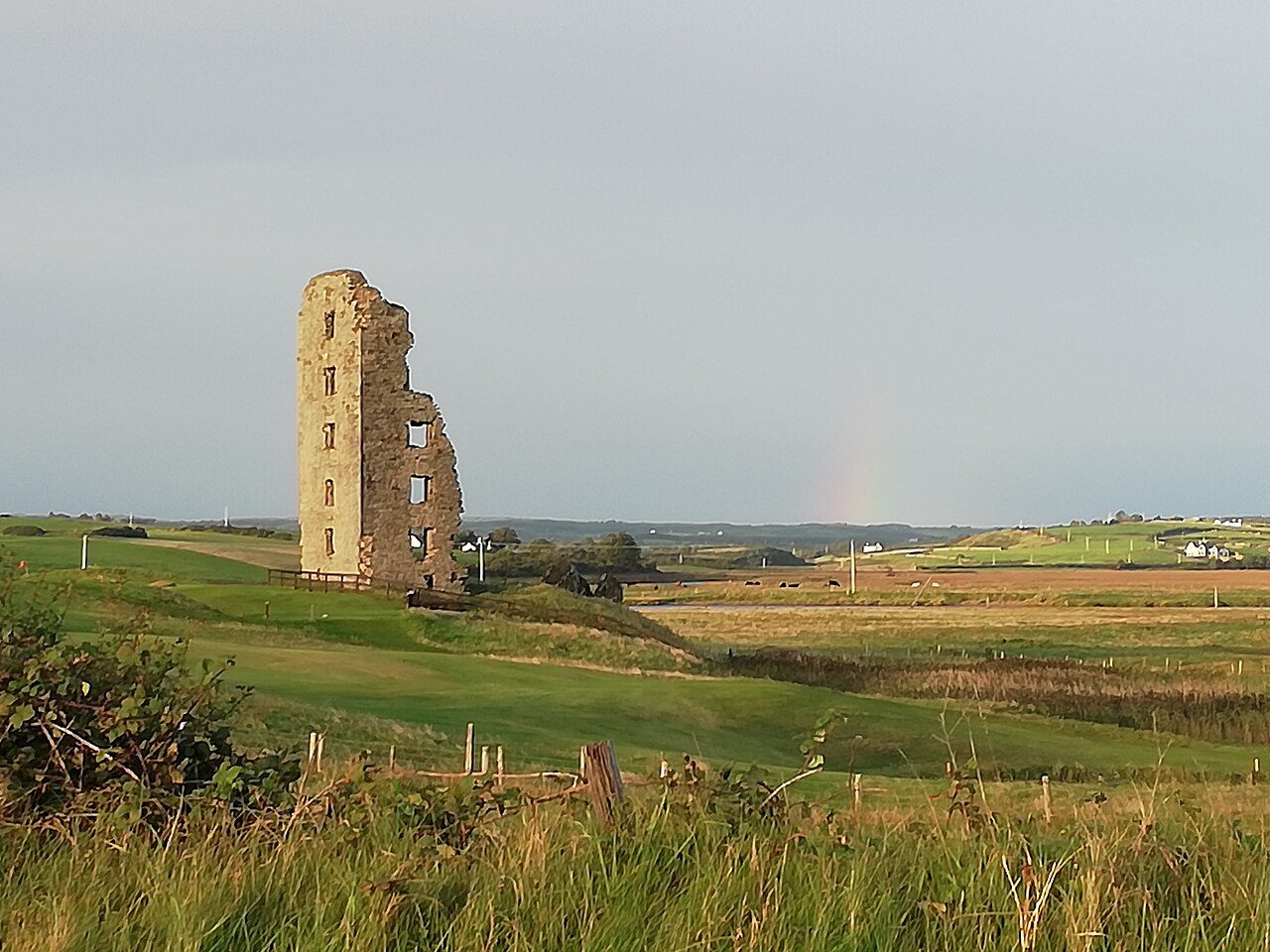
| Castle at Lahinch Golf Club | Photo by Sheila1988, CC BY-SA 4.0, via Wikimedia Commons. |
| Ballybunion Golf Club – 1st hole | Photo by Bernard Gagnon, CC BY-SA 4.0, via Wikimedia Commons. |
| OldHeadGolfLinks | Photo by tiarescott, CC BY 2.0, via Wikimedia Commons. |
| Adare Grounds | Photo by bhenak, CC BY-SA 2.0, via Wikimedia Commons. |
| Aerial View of Portmarnock Golf Club and peninsula | Photo by PGC, CC0, via Wikimedia Commons. |
| Royal County Down Golf -geograph-6057433-by-Eric-Jones | Photo by Eric Jones, CC BY-SA 2.0, via Wikimedia Commons. |
| Waterville Golf Course | Photo by Unknown author, public domain, via Wikimedia Commons. |