A golf trip to Scotland works best as six or seven nights in one or two regions, played between April and October, with June the sweet spot. For a first visit, base yourself in St Andrews and East Lothian, enter the Old Course ballot, and budget roughly $5,700–$8,300 per golfer with flights for five famous rounds, caddies and a hired driver.
Scotland is where the game started, and for most American golfers it’s the trip that sits at the top of the list for years before anyone books it. Part of the delay is money. Part of it is that the planning looks intimidating from the other side of the Atlantic: ballots, handicap certificates, visitor days, driving on the left, and a tour-operator industry that’s happy to sell you a package but rarely prints what the whole thing costs.
It’s less complicated than it looks. The Old Course has a published system for getting a tee time, and it works. Most of the other famous links take visitors by simply booking online or emailing the club, and many of the best courses in the country are ones you’ve never heard of, with green fees under $250. What does take care is the order of decisions, because the courses you want set the dates, the dates set the price, and the price in 2027 is going up.
This guide is written for Americans. Prices are converted to US dollars at $1.35 to the pound (the rate at the start of 2026; check today’s rate before you budget), yardages are in yards (as they are on Scottish scorecards), and everything that couldn’t be confirmed on an official page is flagged. It’s also the hub for our Scotland guides, so each section points to a deeper page.
At a glance
- Best months: May, June and September. June gives up to about 18 hours of daylight.
- First-trip base: St Andrews and East Lothian, both within about 90 minutes of Edinburgh Airport.
- The Old Course: nearly half of tee times go through a daily ballot that closes at 2 p.m. two days before play. The handicap limit is 36.
- 2026 green fees: from about $210 (the New Course) to about $655 (Kingsbarns), and $1,350 for a peak-season morning at Turnberry’s Ailsa.
- Budget: roughly $5,700–$8,300 per golfer with flights for six nights and five famous rounds.
- Paperwork: US citizens need a UK Electronic Travel Authorisation (ETA), £20 (about $27) since April 8, 2026.
- 2027: The Open returns to St Andrews, July 11–18, and several green fees rise, including Carnoustie’s to £450 (about $610).
On this page: at a glance · when to go · regions · the Old Course · The Open 2027 · costs · driver or self-drive · handicaps · caddies and tipping · getting there · where to stay · links golf · tour operators · itinerary · FAQ
Scotland golf at a glance
| What you need to know | Detail |
|---|---|
| Season | April to October; high-season rates mostly May to October |
| Daylight | Up to about 18 hours in June, enough for 36 holes without rushing |
| Weather | Summer afternoons usually in the 60s°F; wind and rain possible any day |
| Main airports | Edinburgh (EDI), Glasgow (GLA), Inverness (INV), Aberdeen (ABZ) |
| Flight from the US East Coast | About 7 hours overnight; you land 5 hours ahead of your body clock |
| Entry | UK ETA required for US citizens: £20, applied for on gov.uk |
| Currency | British pound; this guide converts at $1.35 |
| Old Course access | Daily ballot, advance ballot, singles draw or an operator package |
| Handicaps | Required at some courses (Old Course 36; Carnoustie 28 for men, 36 for women) |
| Caddies | About £100–£120 per bag, per operator estimates; tip in cash |
| Driving | On the left, on narrow roads; many groups hire a driver |
| The big event | The 155th Open, St Andrews, July 11–18, 2027 |
When is the best time for a golf trip to Scotland?
The best time for a golf trip to Scotland is May, June or September. June gives up to about 18 hours of daylight, and May and September are quieter. The season runs from April to October. Winter golf is possible, but it brings fairway mats, course closures and far fewer visitor tee times at the famous clubs.
Scottish weather is famously changeable, and no month guarantees sunshine. What changes through the year is daylight, crowds and price. Here’s how the season runs:
| Month | What to expect | Prices and crowds |
|---|---|---|
| April | Cool and breezy; gorse starts to flower | Low-season rates at some clubs (Carnoustie’s Championship Course is £249 in April 2026 against £360 from May) |
| May | Longer days, often some of the driest weather | High season begins; good availability |
| June | Up to about 18 hours of daylight | Peak demand builds; the classic month |
| July | Warmest month, busiest courses | School holidays; The Open week (St Andrews in 2027) |
| August | Busy; Edinburgh hotels fill for the festivals | Peak pricing |
| September | Still long evenings, quieter courses | High-season rates, lower crowds; a favorite with experienced travelers |
| October | Shorter days, more mixed weather | High season ends October 31 at many clubs |
| November to March | Cold, wet, short days | Fairway mats, closures and very limited visitor access at the top clubs |
Two things matter more than the weather. First, daylight shapes the schedule. In June you can play 18 holes, have lunch and play another 18 before dinner. In October the light runs out in the early evening, so a 36-hole day needs an early start. Second, winter access has largely disappeared at the top Scottish clubs, according to UK Golf Guy’s 2026 survey. If you can only travel in winter, Scotland isn’t the trip.
Our best time to golf in Scotland guide goes month by month, including when the Old Course ballot is easiest to win.
Scotland golf regions: where to go
Scotland has well over 500 golf courses by most counts, but visiting golfers concentrate on seven areas. For a first trip, pick one or two of them. Trying to cover the whole country in a week means spending your trip in a van on the A9.
| Region | Headline courses | 2026 green fees (approx. USD) | Nearest airport | Best for |
|---|---|---|---|---|
| St Andrews and Fife | Old Course, New Course, Castle Course, Kingsbarns, Dumbarnie | $210–$655 | Edinburgh, about 75 minutes | First trips; the ballot |
| East Lothian | Muirfield, North Berwick, Gullane | About $430–$440 at the headliners | Edinburgh, about 45 minutes | Classic links with short drives |
| Carnoustie and Angus | Carnoustie Championship, Burnside, Buddon | $335–$485 (Championship) | Edinburgh or Dundee | The toughest Open venue |
| Ayrshire | Royal Troon, Prestwick, Turnberry | $460–$1,350 | Glasgow or Glasgow Prestwick | Open history on the west coast |
| The Highlands | Royal Dornoch, Castle Stuart, Old Petty, Nairn, Brora | $245–$520 | Inverness | Remote links and new Cabot golf |
| Aberdeenshire | Cruden Bay, Trump International | $295–$755 | Aberdeen | Wild dunes |
| Perthshire | Gleneagles | About $505–$545 | Edinburgh or Glasgow | Inland resort golf |
2026 visitor green fees from the clubs or National Club Golfer’s 2026 table, converted at $1.35 per pound. Where sources differ (Gleneagles, Prestwick, Trump International) we show the range.
St Andrews and Fife
St Andrews is the obvious first stop: a small university town on the Fife coast with the Old Course at its edge, the R&A clubhouse behind the first tee and the West Sands beach running north. St Andrews Links runs seven public courses, including the Old Course, the New Course (laid out by Old Tom Morris in 1895, and at £155, about $210, the best-value classic round in town), the Jubilee and the Castle Course, David McLay Kidd’s clifftop course from 2008. You can walk from your hotel to the first tee of most of them.
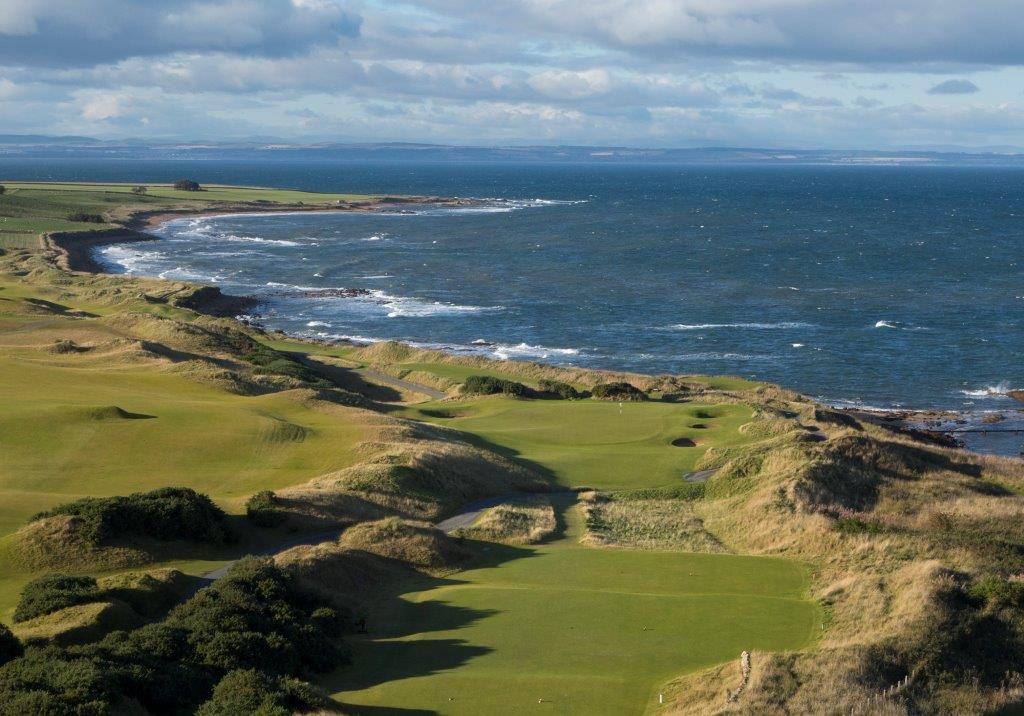
Beyond the town, Kingsbarns, Kyle Phillips’s coastal course from 2000, sits about 15 minutes’ drive south, with the sea visible from every hole. At about £486 (roughly $655) in 2026 it’s one of the most expensive rounds in Scotland, and one of the most photogenic. Dumbarnie, which opened in 2020 at around £350 (about $475), is the modern alternative, and the Balcomie links at Crail, home of a golfing society founded in 1786, is the charming, cheaper one.
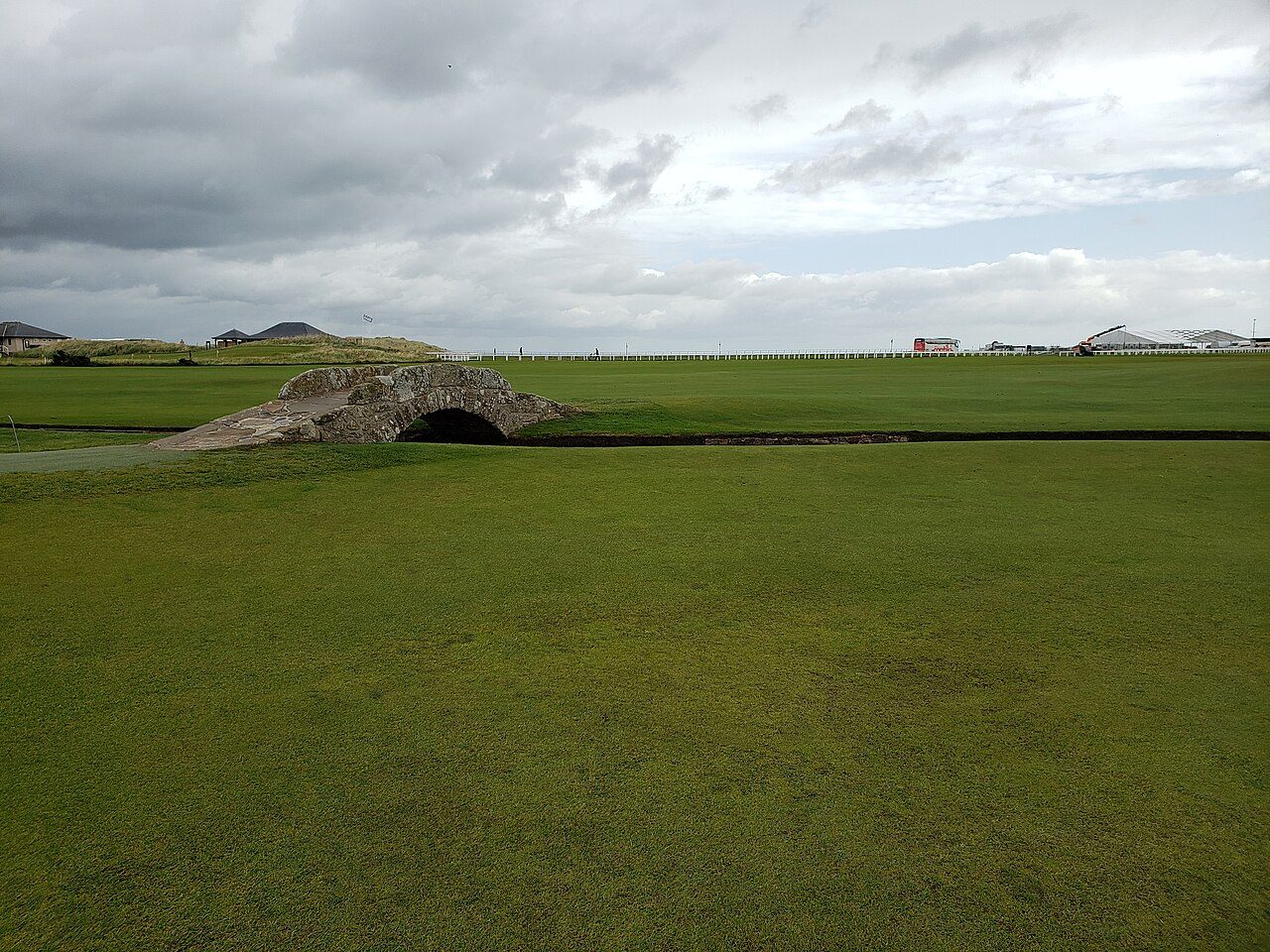
- Our verdict: the right base for almost every first trip. Five or six nights here gives you several shots at the Old Course ballot and three or four other great courses within half an hour. Our St Andrews golf trip guide covers where to stay and how to plan the week.
East Lothian
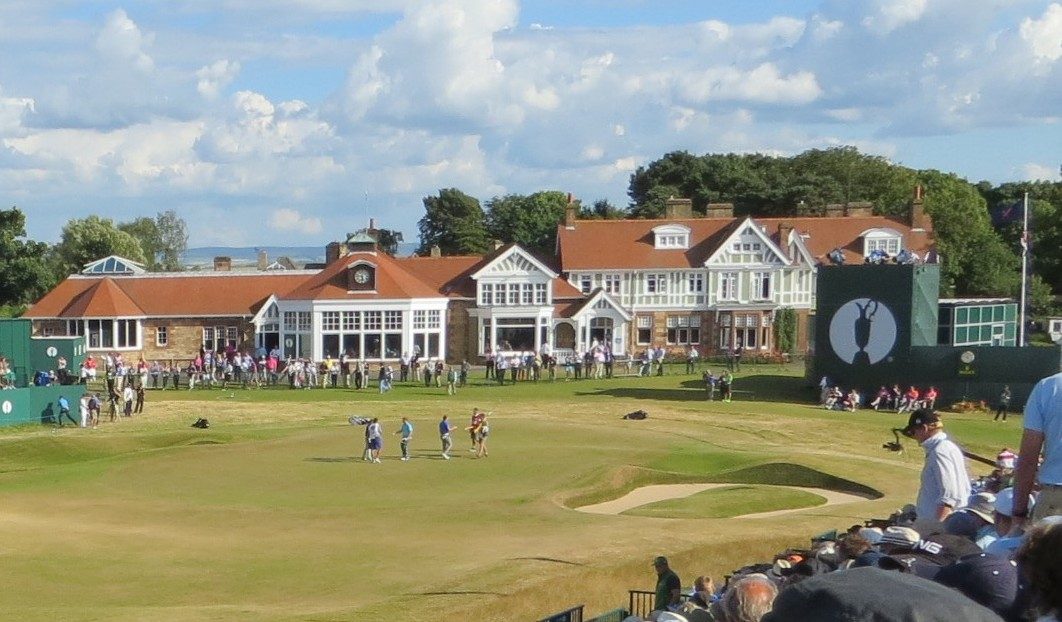
Half an hour east of Edinburgh, East Lothian has more great links in a short stretch of coast than anywhere in the world outside Fife. Muirfield, home of the Honourable Company of Edinburgh Golfers and a 16-time Open venue, takes visitors on Tuesdays and Thursdays only. In 2026 it charges £325 (about $440) per round, or £395 (about $535) for two rounds with lunch in the clubhouse, and you book only through the club’s own website.
North Berwick West Links, at £320 (about $430), is the course that architects love: it has the original Redan (the 15th), stone walls crossing fairways, and holes that play over the beach. Gullane has three courses of its own, and the harbour town of Dunbar adds another strong links.
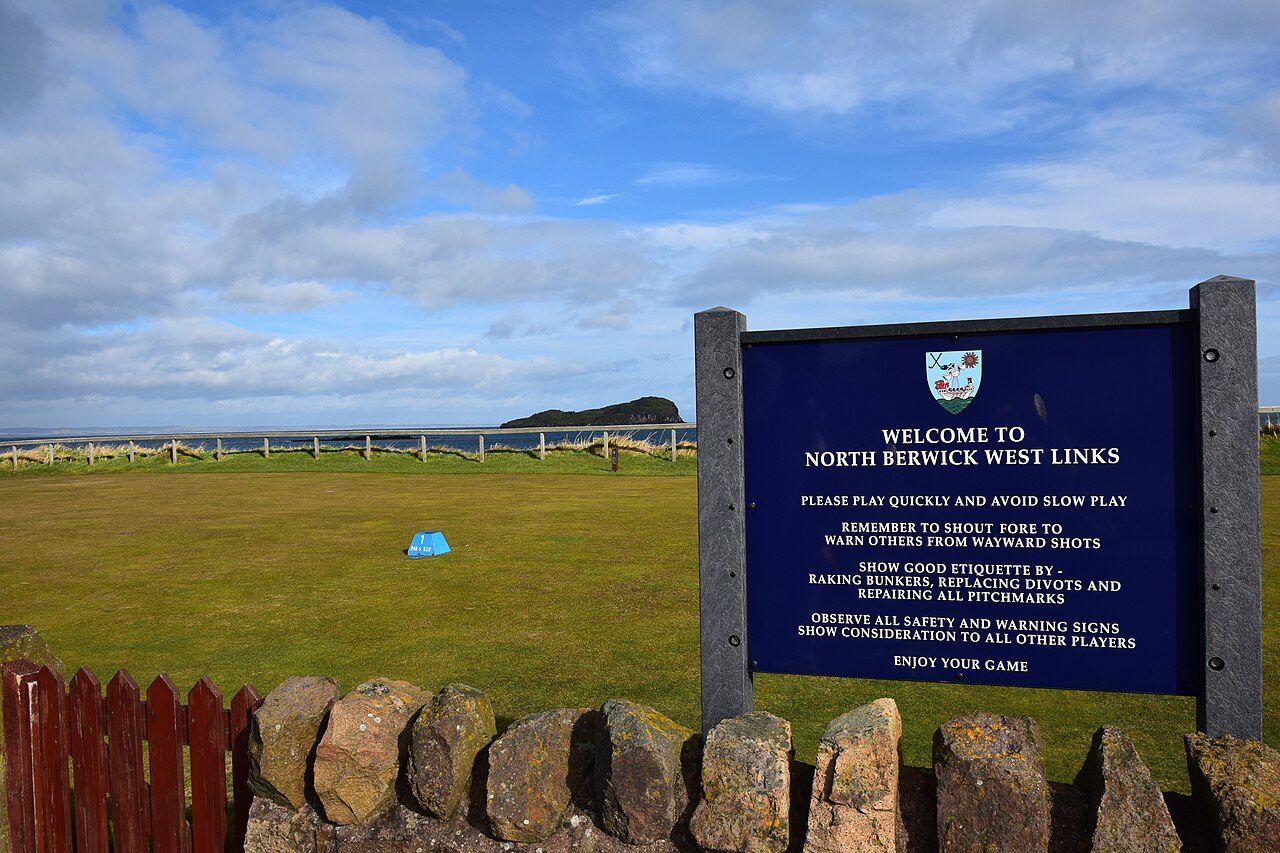
The practical advantage is that everything is close. North Berwick is about 30 minutes by train from Edinburgh, and none of the courses is more than 20 minutes from each other.
- Our verdict: the best region for a trip without a driver, and a perfect pairing with St Andrews. Our East Lothian golf trip guide lists every course and its visitor rules.
Carnoustie and Angus
Carnoustie’s Championship Course has hosted The Open eight times, most recently in 2018, and has a reputation as the hardest course on the rota, earned partly by the Barry Burn and partly by what it did to Jean van de Velde in 1999. It’s about 40 minutes from St Andrews, so it fits easily into a Fife-based week.
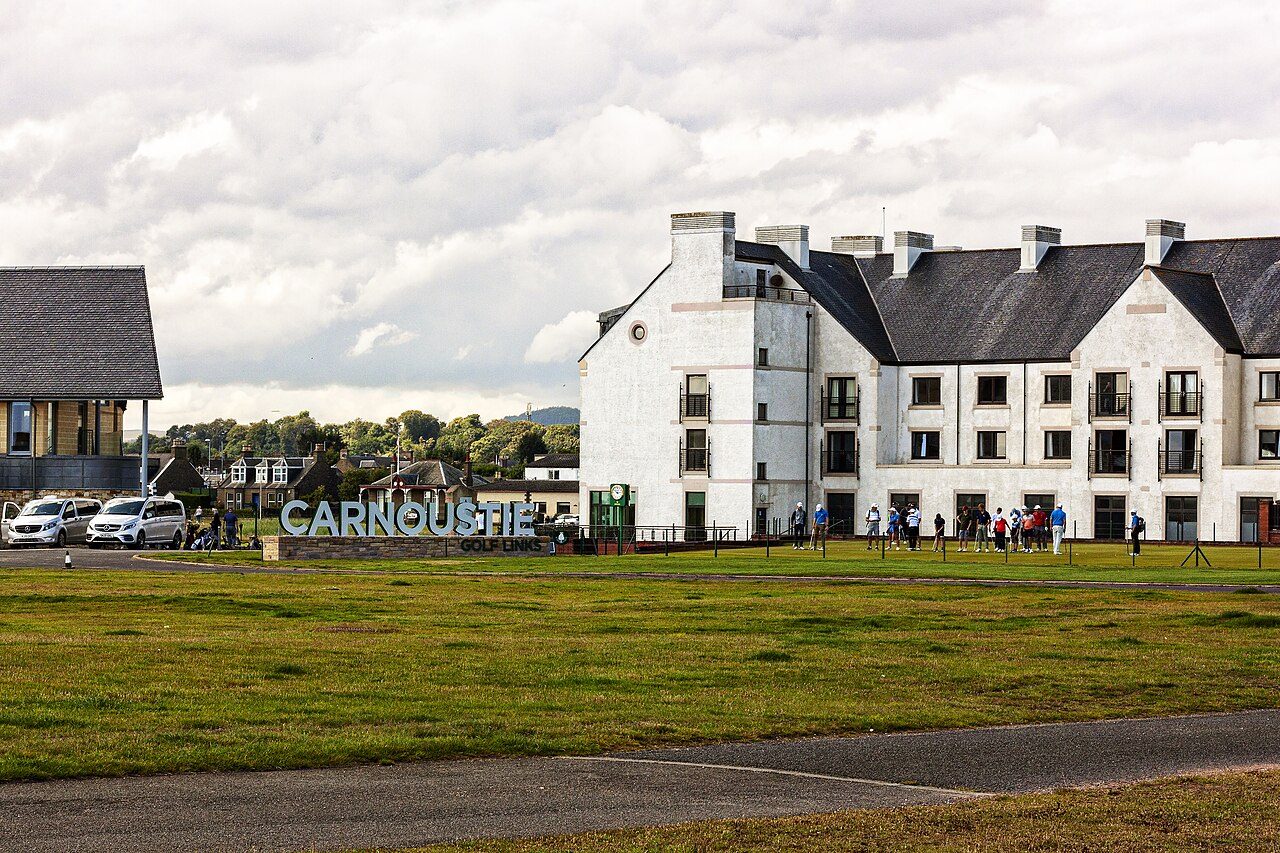
Carnoustie publishes its fees clearly. In 2026 the Championship Course costs £249 (about $335) in April and £360 (about $485) from May 1 to October 31. In 2027 those rise to £342 (about $460) from March 29 to April 30 and £450 (about $610) in high season. The Burnside and Buddon courses cost £99 and £135 in 2026, and a three-course ticket, played within three days, costs £349.50 in low season and £480 in high season. The handicap limit on the Championship Course is 28 for men and 36 for women. See our guide to Carnoustie green fees.
Ayrshire
Scotland’s west coast is the home of The Open itself. The first Open was played at Prestwick in 1860, and the club still takes visitors, at £340–£380 (about $460–$515) depending on the source. Royal Troon, host of the 2024 Open and home of the Postage Stamp, the short 8th, charges £395 (about $535).
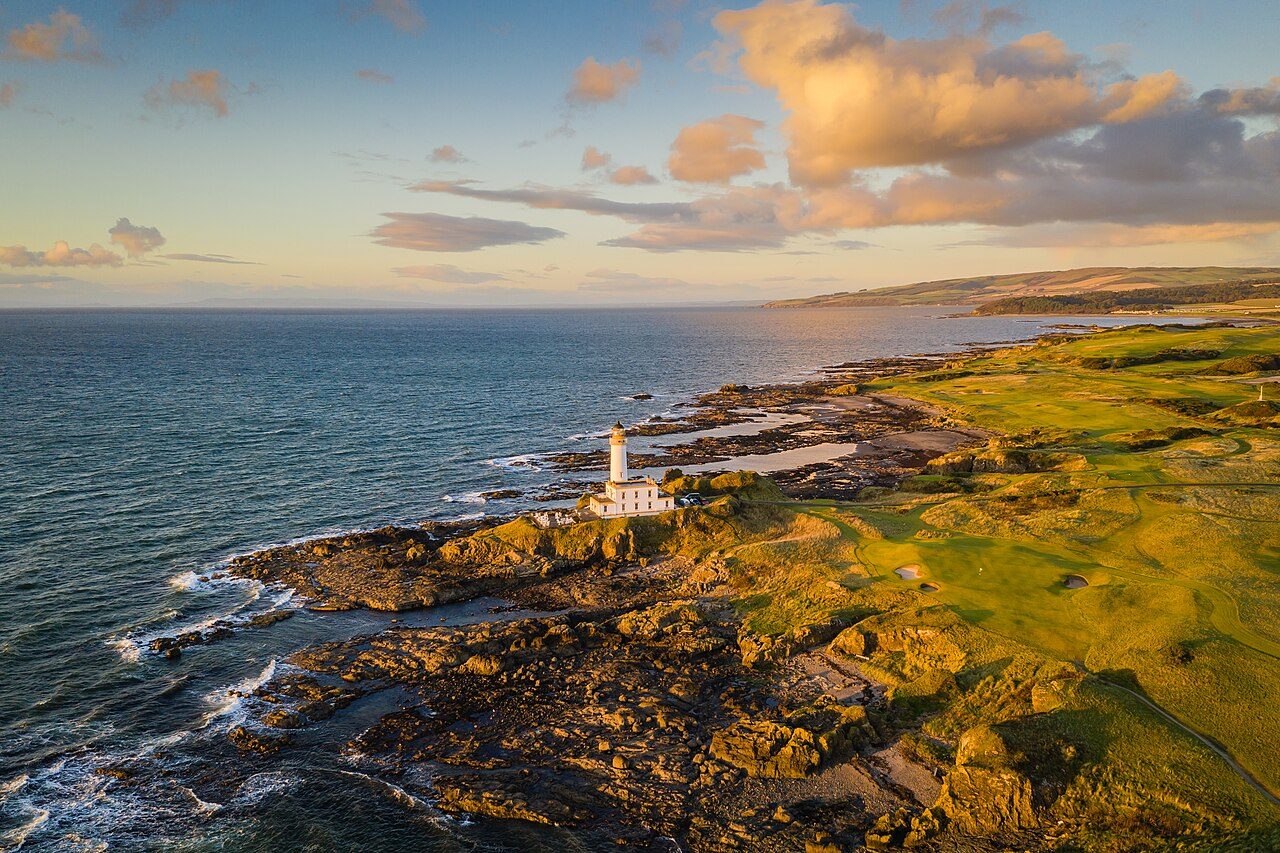
Then there’s Turnberry. The Ailsa course, with its lighthouse and the memory of the 1977 “Duel in the Sun” between Tom Watson and Jack Nicklaus, is one of the most beautiful courses in the world, and in 2026 one of the most expensive. Non-residents pay £1,000 (about $1,350) before 1 p.m. in peak season, a rate introduced in June 2025, according to bunkered and National Club Golfer. Afternoon and hotel-resident rates are much lower, and one source lists a peak rate of £650, so check what you’re being quoted. Turnberry is currently off The Open rota; the 2028 Open goes to Royal Lytham & St Annes instead. Our Turnberry green fees guide explains the tiers and how to pay less.
- Getting there: Glasgow Airport is about 45 minutes from Troon, and Glasgow Prestwick Airport is next door. Turnberry is about two hours from Edinburgh.
The Highlands
The Highlands are where experienced Scotland travelers go on their second trip, and increasingly on their first. Royal Dornoch, about an hour north of Inverness, is the course golf architects rank alongside the Old Course, and it’s where Donald Ross learned the game before emigrating to design Pinehurst No. 2. Its Championship Course costs £360 (about $485) in 2026.
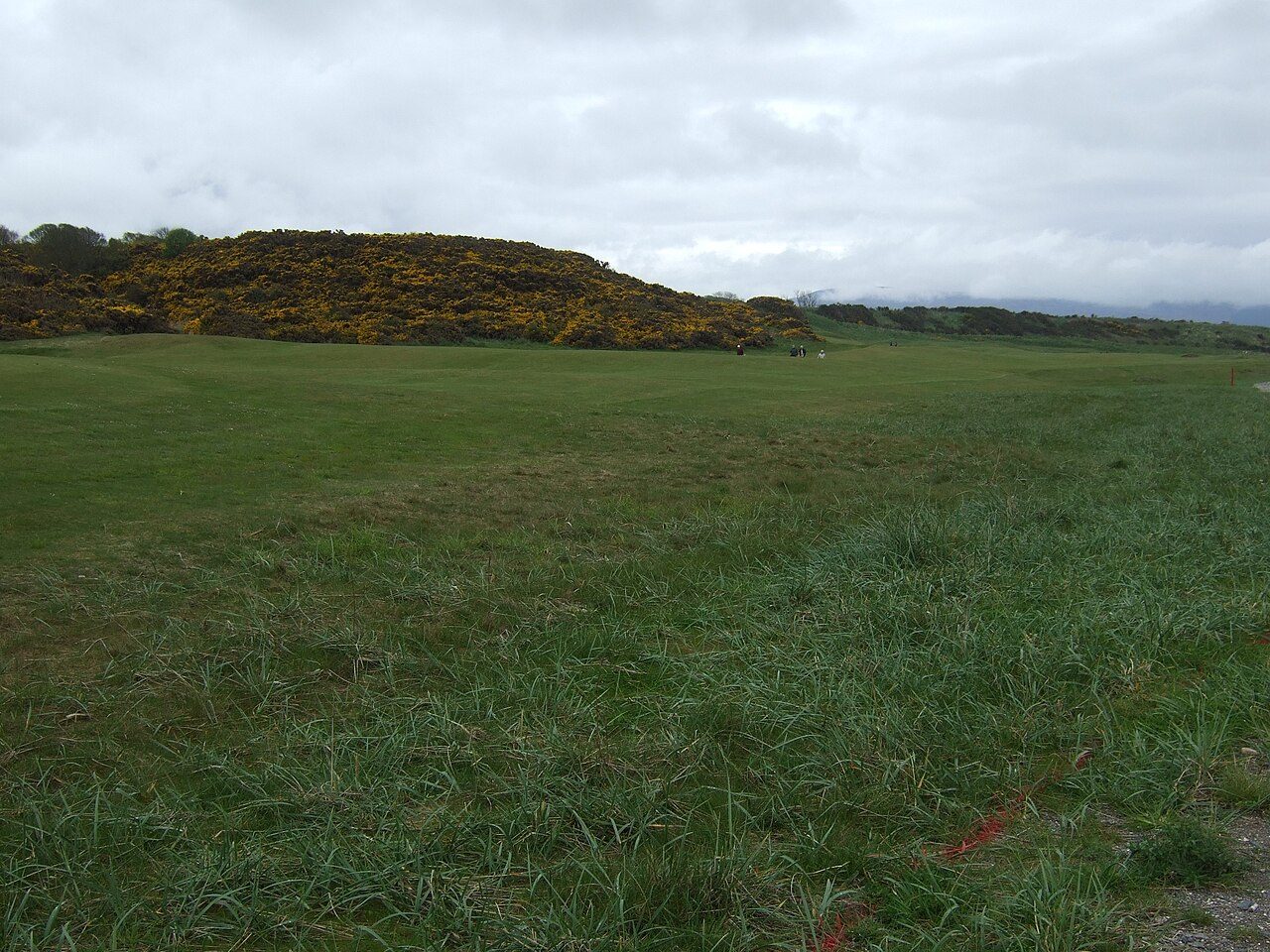
Castle Stuart, beside Inverness Airport, is now part of Cabot Highlands, and costs about £385 (about $520). Its new sister course, Old Petty, designed by Tom Doak with Clyde Johnson, opened on May 15, 2026. Nairn (£350, about $475) and Brora (£180, about $245) complete the classic Highlands circuit. At Brora, sheep and cattle still graze the links, and the greens are protected by electric fences.
- Getting there: Inverness Airport has connections through London and Amsterdam. By road it’s about three and a half hours from St Andrews.
- Our verdict: the best choice for a second trip, or a first trip for a group that values remote, uncrowded links over famous names. Our Royal Dornoch golf trip and Cabot Highlands guides go deeper, and Donald Ross golf courses traces the line from Dornoch to Pinehurst.
Aberdeenshire and Perthshire
North of Aberdeen, Cruden Bay (£220, about $295) is a wild, quirky links in enormous dunes, one of the great bargains in Scottish golf. Trump International nearby is priced at £395–£560 (about $535–$755), depending on the source. Inland, Gleneagles in Perthshire, which hosted the 2014 Ryder Cup, is the country’s grand golf resort, with its King’s course at about £375–£405 (about $505–$545). It’s not links golf, but it’s a good choice for a group with non-golfers, and a comfortable last night before flying home.
How do you get a tee time on the Old Course?
There are three ways: enter the daily ballot, which allocates nearly half of Old Course tee times and closes at 2 p.m. two days before play; win a time in the advance ballot the year before; or buy a guaranteed time as part of a tour operator’s package. Singles enter a separate draw in person. The handicap limit is 36.
The Old Course is a public course, owned by the St Andrews Links Trust, and anyone with a qualifying handicap can play it. The challenge is demand. Here’s how each route works, as described by St Andrews Links and summarized by several operators:
The daily ballot. Groups of two to four golfers enter with names, handicaps and home clubs, online, by phone (+44 1334 466 666) or in person. Entries close at 2 p.m. two days before the day you want to play, and results are published around 4–4:30 p.m. It’s free to enter, and you only pay if you take the time. The Old Course is closed on Sundays, so there’s no ballot drawn on Fridays, and tournament days are excluded. Enter only once per day; duplicate entries are disqualified.
The odds. Halcyon Golf Travel, a Scotland operator, has analyzed the ballot. By its numbers, a group’s chance on a given day is about 20% from April to October, dropping to about 10% in July and August, and historically better than 50% in April. Saturdays run at about 33%. Enter every day for five days and your cumulative chance is about 67%; for eight days, about 83%. These are an operator’s estimates, not official figures, but they explain why the best strategy is simply to stay in St Andrews longer.
Singles. Solo golfers can’t enter the main ballot. Instead, there’s a singles daily draw, entered in person at the Old Pavilion or the Links Clubhouse between 9 a.m. and 5 p.m. the day before play.
The advance ballot. St Andrews Links runs an advance ballot for the following year, which closes the year before. Check the Links website for the current dates.
Guaranteed tee times. Licensed tour operators can sell Old Course times as part of a package that includes several other rounds and lodging. It’s the only way to be certain, and it’s priced accordingly.
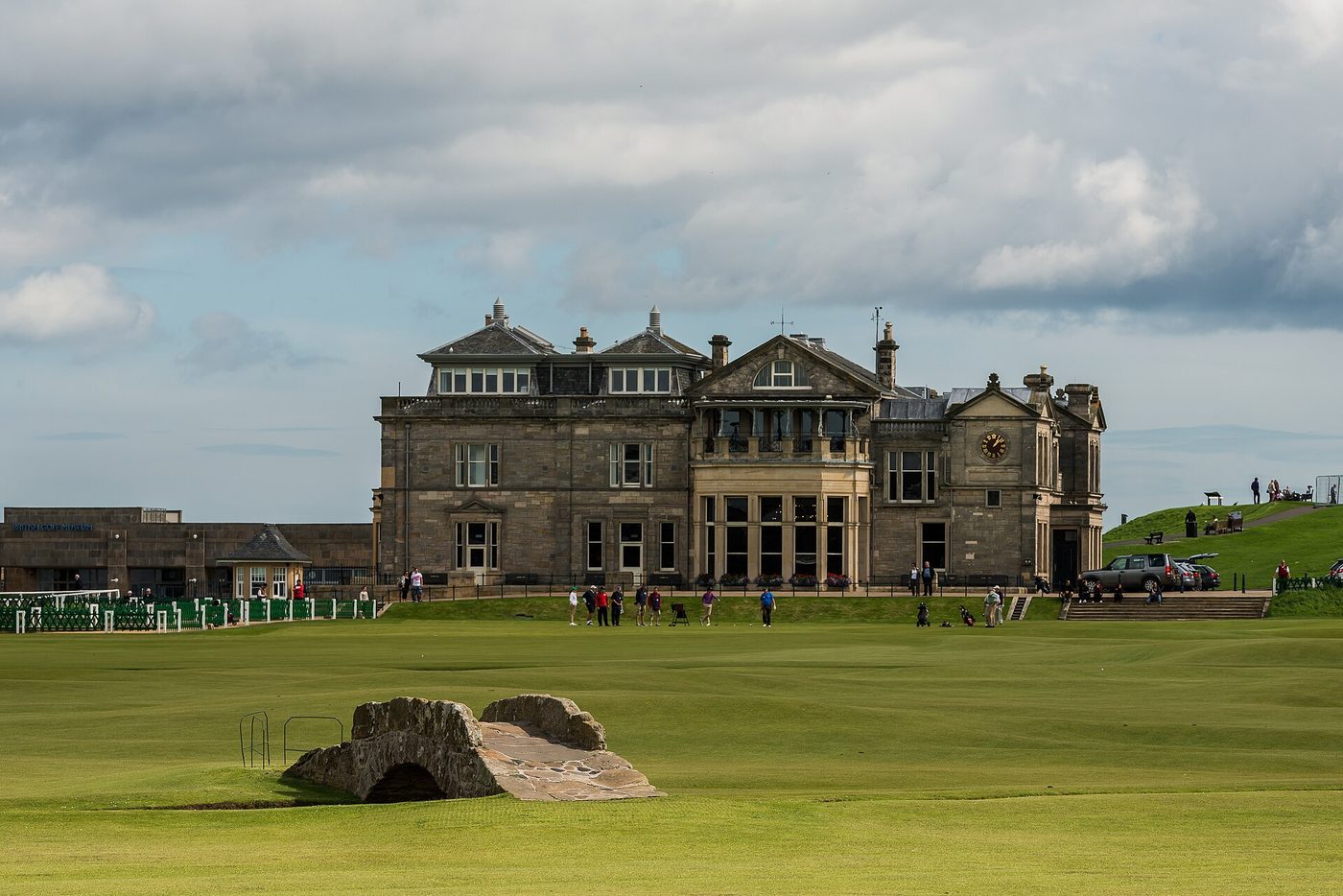
The 2026 high-season green fee is £355 (about $480), according to National Club Golfer’s 2026 table; one other source lists £340, which may be the 2025 rate. For context, the peak fee in 2022 was £270. The 2027 fee hadn’t been published when we checked. You may also read about the “Drive” initiative, which offers heavily discounted Old Course rounds, about £45–£80, but it’s for Scottish residents only.
Our guides to the St Andrews Old Course ballot, Old Course tee times and St Andrews Old Course green fees cover every route in detail.
The Open at St Andrews in 2027
The 155th Open Championship is at St Andrews from July 11 to 18, 2027. It will be the 31st Open played on the Old Course; the last, in 2022, was won by Cameron Smith. (The 2026 Open at Royal Birkdale was won by New Zealand’s Ryan Fox, at 10 under, for his first major.)
For golf travelers, The Open changes 2027 in two ways. If you want to watch, the public ticket ballot has closed, but hospitality and official travel packages are still available. Lodging in and around St Andrews for Open week will be scarce and expensive, so book a package or look at Dundee, Edinburgh or the East Neuk villages. If you want to play, expect the Old Course and neighboring courses to be closed or restricted for several weeks around the championship. St Andrews Links publishes a “busy dates” page each year, and we’d check the 2027 version before fixing dates between mid-June and early August.
Our guides to The Open 2027 at St Andrews and Open Championship tickets cover tickets, packages and where to stay, and our golf tournament travel hub explains how to combine watching and playing.
How much does a golf trip to Scotland cost?
Roughly $5,700–$8,300 per golfer for six nights and five famous rounds with flights, caddies on three rounds and a hired driver, based on 2026 green fees at $1.35 to the pound. A self-drive trip built on less famous courses can cost under $3,000 including flights, and a premium resort week costs $5,000 or more before extras.
Scotland is getting more expensive quickly. UK Golf Guy’s 2026 survey puts the average green fee at the UK’s top 100 courses at £265 (about $360), up 11.4% on 2025, and the average at the top 25 at £407 (about $550). Several of the famous links raise prices again in 2027. Here are the 2026 visitor green fees at the courses most often on an American itinerary:
| Course | 2026 green fee | Approx. USD | Notes |
|---|---|---|---|
| St Andrews, New Course | £155 | $210 | Best-value classic round in St Andrews |
| Brora | £180 | $245 | Highlands; sheep on the fairways |
| Cruden Bay | £220 | $295 | Huge dunes north of Aberdeen |
| Carnoustie, Championship (April) | £249 | $335 | Low season |
| North Berwick West Links | £320 | $430 | The original Redan |
| Muirfield | £325 | $440 | Tuesdays and Thursdays only; £395 for two rounds with lunch |
| Prestwick | £340–£380 | $460–$515 | Sources differ |
| Nairn | £350 | $475 | |
| Dumbarnie | £350 | $475 | Opened 2020 |
| Old Course, St Andrews | £355 | $480 | One source lists £340 |
| Royal Dornoch, Championship | £360 | $485 | |
| Carnoustie, Championship (May–Oct) | £360 | $485 | £450 (about $610) in 2027 |
| Castle Stuart | £385 | $520 | Cabot Highlands |
| Royal Troon | £395 | $535 | |
| Kingsbarns | About £486 | $655 | |
| Turnberry, Ailsa (non-resident, peak morning) | £1,000 | $1,350 | One source lists £650 |
2026 fees from the clubs (Carnoustie) or National Club Golfer’s 2026 table, cross-checked against Top 100 Golf Courses and Golf For Kings. Converted at $1.35 per pound.
Green fees are only part of the bill. Here’s a complete six-night, five-round trip for four golfers, as built line by line in our golf trip cost guide:
| Per golfer | Low | High |
|---|---|---|
| Green fees: Old Course, Kingsbarns, Carnoustie, North Berwick, New Course | About $2,265 | About $2,265 |
| Caddies on three rounds (about £100–£120 per bag) | About $405 | About $485 |
| Lodging, six nights sharing (our assumption) | About $900 | About $1,800 |
| Driver and minibus, five golf days (about £500–£700 a day, split four ways) | About $845 | About $1,180 |
| Food and drink, seven days | About $420 | About $910 |
| Transatlantic flight (our assumption) | About $800 | About $1,300 |
| Travel insurance | About $100 | About $300 |
| Total per golfer | About $5,735 | About $8,240 |
That matches the market’s own framing. Haversham, a Scotland and Ireland operator, describes the choice as “$6,000 versus $12,000” trips. At the other end, Birdie Brae’s mid-range example of a five-day trip for four comes to £1,685 per player including about £680 for flights from the US, roughly $2,275 in total, because it uses fewer famous courses and a self-drive car. Its premium resort week comes to £3,893 per player, about $5,255 before extras.
The best ways to bring the cost down:
- Travel in April or October, when some clubs charge low-season rates. Carnoustie’s Championship Course is £111 cheaper in April 2026 than in May.
- Mix famous and brilliant-but-cheaper courses. The New Course, Brora, Cruden Bay and Crail give you world-class links for a fraction of the Old Course or Kingsbarns price.
- Share rooms. Haversham reckons single rooms add about 50% to the lodging bill.
- Drive yourselves if the group is small and someone is comfortable on the left. By eight travelers, a driver costs little more per head.
- Book 2026-style prices now. Several of the famous links raise fees in 2027. If you’re flexible, a trip this year costs less than the same trip next year.
Our Scotland golf trip cost guide builds budgets for three trip tiers.
Should you drive yourself or hire a driver?
For groups of six or more, hire a driver: at roughly £500–£700 a day for a minibus, the cost per head is close to self-drive by eight travelers, and nobody has to drive on the left after a long lunch. Couples and foursomes who are comfortable on narrow roads can drive themselves and save money.
It’s one of the most debated questions in Scottish golf travel, and the answer mostly depends on group size and how the group spends its evenings.
| Drive yourselves | Hire a driver | |
|---|---|---|
| Cost | A rental van plus fuel and parking | About £500–£700 a day for a chauffeured minibus, per operator estimates |
| Best for | Couples, foursomes, flexible trips | Groups of six or more; first-timers |
| Driving | On the left, with roundabouts and narrow country roads | Someone else’s problem |
| After golf | Someone stays sober | Everyone can have a pint at the 19th hole |
| Local knowledge | Your phone’s map | Drivers who know the clubs, the shortcuts and the pubs |
| Luggage | You need a big van for four golf travel bags | Built for it |
A few practical points if you drive yourselves:
- Book an automatic, and book early. Manual transmissions are the default in the UK, and automatics, particularly big ones, cost more and sell out.
- Mind Scotland’s drink-driving limit. It’s lower than in the rest of the UK and much lower than in most US states: 50 milligrams of alcohol per 100 milliliters of blood, the equivalent of a 0.05 blood-alcohol level. For most people that means no drinks at all before driving.
- Expect single-track roads in the Highlands, with passing places. Pull in to let faster traffic by.
- Allow more time than the map suggests. Scottish roads between the golf regions are slower than US interstates, and a tractor can add half an hour.
Haversham, an operator, points out that by eight travelers the per-head cost difference between self-drive and a driver is minimal. Our Scotland golf trip: driver vs self-drive guide runs the math for four, six and eight golfers.
Do you need a handicap to play golf in Scotland?
At some courses, yes. The Old Course requires a handicap certificate with a limit of 36, and Carnoustie’s Championship Course sets 28 for men and 36 for women. Many other courses, including most pay-and-play links, don’t ask. Carry your GHIN record on your phone and on paper.
The handicap requirement is about pace of play: the famous courses want to be sure visitors can get round in a reasonable time. In practice, starters at the Old Course and Carnoustie do ask to see proof, so don’t assume you’ll be waved through. A few traditional private clubs may also ask for a letter of introduction from your home club, so check when you book.
If you don’t have an official Handicap Index, get one at least two or three months before the trip. You’ll need to post a few scores, and an index that appeared last week invites questions. The Old Course limit here comes from St Andrews Links as summarized by several operators; confirm it when you enter the ballot, since limits change. Our guide to the handicap certificate for golf abroad lists requirements course by course.
Caddies, trolleys and tipping
Walking is the norm in Scotland, and the golf is better for it. The three ways to get your bag round are:
- A caddie. Operator estimates put caddie fees at about £100–£120 (about $135–$160) per bag. Ask the caddie master whether that includes a tip, and if it doesn’t, tip in cash, in pounds, at the end of the round, more for a caddie who read every putt and found every ball. On a first visit to a course like the Old Course or Carnoustie, a caddie is worth several shots and most of the stories.
- A trolley. The local word for a pull cart. Most clubs rent them, and some rent electric trolleys too.
- A buggy. The local word for a golf cart. Many links have few or none, and some restrict them to golfers with a medical need. Book ahead if you need one.
A few other habits worth knowing. Pace is faster than at home. Scottish courses expect rounds in about four hours or less, and “ready golf” (hit when you’re ready, not strictly in order) is normal. Some clubs restrict fourballs (a four-player match of two against two, each playing their own ball) at busy times and prefer two-ball play. And clubhouses have house rules: collared shirts, no denim, hats off indoors, and at some traditional clubs a jacket and tie in the dining room.
Our guides to how much to tip a caddie and golf etiquette for visitors have the details.
Getting there: flights, the ETA and your clubs
The ETA. US citizens need a UK Electronic Travel Authorisation before they fly. It costs £20 (about $27) since April 8, 2026, when it rose from £16. Apply on the official gov.uk site, since third-party sites charge a markup. It’s valid for multiple trips over two years (or until your passport expires, if sooner), for stays of up to six months, and every traveler needs one, including children. It covers the whole UK, including Northern Ireland, but not the Republic of Ireland. It doesn’t guarantee entry, so carry your onward travel details.
Flights. From the East Coast it’s about seven hours overnight to Scotland, and you land five hours ahead of your body clock. Edinburgh and Glasgow have nonstop service from some US East Coast hubs, much of it seasonal; otherwise, connect through London, Dublin or Amsterdam. Keep the first day light and play the best course on day three or later. Our jet lag and golf guide covers what actually helps.
Your clubs. On transatlantic fares, most airlines count a golf bag as one item of your checked allowance, but rules differ. British Airways, for example, counts golf equipment as one checked item and asks you to drop it off at least three hours before a long-haul departure. Confirm your airline’s current policy on its own site when you book. The alternatives are shipping your clubs internationally, which is expensive but easy, or renting at the courses. Our flying with golf clubs guide compares all three.
Where to stay
Where you stay matters more in Scotland than in most golf destinations, because the town is part of the experience.
- In St Andrews, the Old Course Hotel sits beside the 17th (the Road Hole plays over the corner of its grounds), Rusacks overlooks the 18th, and the Fairmont St Andrews, outside town, has two courses of its own. Dozens of guesthouses and B&Bs in town are cheaper and within walking distance of the first tee, which matters when you’re entering the ballot every day.
- In East Lothian, North Berwick’s hotels and guesthouses put you on the edge of the West Links and 30 minutes by train from Edinburgh. Greywalls, next to Muirfield, is the classic country-house option.
- At Carnoustie, the Carnoustie Golf Hotel sits right behind the 18th green.
- In the Highlands, Dornoch’s hotels are a short walk from Royal Dornoch, and Cabot Highlands has lodging at Castle Stuart.
- For groups of eight, a self-catering house near St Andrews or North Berwick is often the best value and the best fun.
Two budgeting points. Haversham reckons single rooms add about 50% to lodging costs, so pair up if you can. And book St Andrews lodging very early for 2027, when The Open takes over the town in July.
Links golf: how it is different
Most American golfers have played a few courses described as “links style.” Real links golf is different enough that it’s worth adjusting before the first tee.
A links is golf on sandy land by the sea, the “linksland” between the beach and the farmland, and that sand is the reason everything else is different. The ground is firm and fast, so the ball runs a long way after it lands, and a 7-iron from 150 yards might land 30 yards short and roll onto the green. Wind is the main hazard: into it, you might take three more clubs than usual; downwind, three fewer. Pot bunkers are small, deep and often impossible to advance from except sideways. Gorse (also called whins) lines many holes, and a ball in it is usually gone.
The best way to play it:
- Keep the ball low. Punch shots and three-quarter swings hold their line in the wind.
- Use the ground. Bump-and-run approaches with a 7- or 8-iron are often better than a lob wedge.
- Putt from off the green. On firm links turf, the putter is often the best club from 20 yards out.
- Take your caddie’s line. Many links have blind tee shots, with an aiming post or a distant spire as the target.
- Pack for four seasons in a day. Waterproofs, layers and a spare glove. The scorecard is in yards, as it is at home.
Our guide to how to play links golf has much more, and what is a links golf course? explains the history.
What to pack for a Scotland golf trip
Packing for Scotland is mostly about staying dry and warm while walking five or six miles a day. The golf clubs are the easy part.
- Proper waterproofs. A genuinely waterproof golf jacket and trousers, not a windbreaker. You may not need them every day, but when you do, nothing else works.
- Waterproof golf shoes, and a second pair. Shoes that are still wet from yesterday’s round are miserable. Two pairs let one dry out.
- Layers. A base layer, a light sweater or quarter-zip, and a vest cover most days. Summer afternoons are usually in the 60s°F, but an exposed links in a sea breeze feels cooler.
- A warm hat and rain gloves. Easy to carry, and the difference between enjoying the back nine and enduring it.
- A carry bag or a light stand bag. You’ll be walking, often with a trolley or a caddie. A big cart bag is awkward on a trolley and hard work for a caddie.
- Cash in pounds for caddie tips, the halfway hut and the honesty box at smaller clubs.
- Your paperwork: passport, the ETA confirmation, your handicap certificate (on paper and in the GHIN app) and a US driver’s license if anyone is driving.
- A UK plug adapter. Britain uses the three-pin Type G plug.
- A rangefinder, if you use one. Distance-measuring devices are allowed under the Rules of Golf unless a club’s local rule says otherwise, and they help on blind links holes.
An umbrella is less useful than you’d think, because the wind turns it inside out. For the full list, see our golf trip packing list, which has a cold-and-wet version.
Should you use a tour operator?
For a first trip with a group of eight or more, or one built around a guaranteed Old Course time, an operator usually earns its fee. Small, flexible groups who can book online, enter the ballot and drive themselves can save substantially by doing it themselves.
Scotland is the destination where tour operators make the strongest case for themselves. They can secure tee times at the famous courses as soon as clubs release them, often in the spring or summer of the year before, and they can sell guaranteed Old Course times inside a package. They also handle the drivers, the caddies and the problems. The cost is a markup that operators rarely publish. Golfbreaks’ US-facing Scotland packages give a sense of the range in September 2026: from $1,045 per person for four nights and three rounds at Royal Dornoch, from $2,045 for four nights and three rounds at St Andrews, and $6,235 for a seven-night, five-round tour of Open venues.
A middle path works for many groups. Book the courses you want directly (most clubs take visitor bookings online or by email), enter the Old Course ballot yourself, and hire a local driver for the days that need one. Our guides to the best golf tour operators for Scotland and Ireland and golf tour operator vs DIY cover how to choose, and our first golf trip to Scotland guide walks through the decisions in order.
A seven-day Scotland golf itinerary
This is the first-timer’s week we’d recommend: two regions, six rounds, short drives and several chances at the Old Course ballot. It assumes you land in Edinburgh on a Sunday morning and fly home the following Sunday.
- Sunday: arrive in Edinburgh and transfer to North Berwick, about 45 minutes. Walk the town, eat early, sleep. No golf today.
- Monday: North Berwick West Links. The perfect introduction to links golf, with the Redan and the walls.
- Tuesday: Muirfield, on one of its two visitor days. Enter the Old Course ballot by 2 p.m. for Thursday.
- Wednesday: transfer to St Andrews, about an hour and three-quarters, and play the New Course in the afternoon. Enter the ballot for Friday.
- Thursday: Kingsbarns (or the Old Course, if the ballot came through). Enter for Saturday.
- Friday: Carnoustie, about 40 minutes away. There’s no Friday ballot for the Old Course, because it’s closed on Sundays.
- Saturday: the Old Course if you’ve won a time (Saturday odds are about one in three by Halcyon’s estimate), or the Castle Course or Crail if not. Walk the Old Course on Sunday, when it becomes a public park, before flying home.
Our Scotland golf trip itinerary guide has itineraries for the Highlands, Ayrshire and a two-week grand tour.
Scotland or Ireland?
It’s the question most American groups ask before their first trip overseas. Both have world-class links, walking culture and long summer evenings, and both are getting more expensive. The differences are in the details:
- Scotland has the densest clusters of famous courses (St Andrews, East Lothian and Carnoustie are all within about two hours of each other) and the Old Course. It’s easier to do without a driver in Fife and East Lothian.
- Ireland has spectacular links spread across longer distances, particularly in the southwest. Lahinch’s Old Course is €450 (about $520 at $1.16 to the euro) in 2026, and Royal Portrush’s Dunluce course, in Northern Ireland, is £420 (about $570). Several of Ireland’s famous links raise fees in 2027, and the Ryder Cup comes to Adare Manor from September 13 to 19, 2027.
Our verdict: for a first trip to the home of golf, Scotland, specifically St Andrews. For a group that has done St Andrews, or wants its links with fewer crowds and a longer drive between them, Ireland. Our Ireland golf trip hub covers the other side, and Scotland or Ireland for a golf trip compares them in detail.
Every guide in our Scotland golf series
This page is the hub for our Scotland golf guides. New guides go live every few days, and each title below becomes a link on the day it publishes.
The Old Course and St Andrews
- St Andrews Old Course ballot: how it works and how to improve your odds
- Old Course tee times: every route onto the Old Course
- St Andrews Old Course green fees
- St Andrews golf trip: where to stay and what else to play
Planning your trip
- Scotland golf trip cost, in US dollars
- Scotland golf trip itinerary: four sample weeks
- The best time to golf in Scotland
- Your first golf trip to Scotland
- Driver vs self-drive
- The best golf tour operators for Scotland and Ireland
- Scotland or Ireland for a golf trip?
- How to play links golf
Courses and regions
- The best golf courses in Scotland
- Carnoustie green fees
- Royal Dornoch golf trip
- Cabot Highlands: Castle Stuart and Old Petty
- Turnberry green fees
- East Lothian golf trip
Related guides
- Ireland golf trip · Flying with golf clubs · Golf tournament travel · Golf trip cost
Frequently asked questions
How much does a golf trip to Scotland cost?
Roughly $5,700–$8,300 per golfer for six nights and five famous rounds, including flights, caddies on three rounds and a hired driver, based on 2026 green fees. A self-drive trip on less famous courses can cost under $3,000, and a premium resort week $5,000 or more before extras.
When is the best time to golf in Scotland?
May, June and September. June has up to about 18 hours of daylight, and May and September are quieter. The season runs from April to October; in winter, many famous clubs close to visitors or use fairway mats.
Can Americans play the Old Course at St Andrews?
Yes. The Old Course is public. Enter the daily ballot (groups of two to four, closing at 2 p.m. two days before play), the advance ballot the year before, or the singles draw in person, or buy a guaranteed time in an operator’s package. You’ll need a handicap certificate; the limit is 36.
Is the Old Course open on Sundays?
Not for golf. The Old Course is closed on Sundays, when it becomes a public park that anyone can walk, which is why there’s no ballot drawn on Fridays. A Sunday walk over the Swilcan Bridge is a free highlight of any St Andrews trip.
Do Americans need an ETA to visit Scotland?
Yes. US citizens need a UK Electronic Travel Authorisation, which costs £20 (about $27) since April 8, 2026. Apply on gov.uk. It’s valid for two years or until your passport expires, covers multiple trips, and is required for every traveler, including children.
How far in advance should I book a Scotland golf trip?
Twelve to eighteen months ahead for a trip built around the Old Course or peak-season tee times at the famous links, which often release visitor times in the spring or summer of the year before. For a 2027 trip, start now, since The Open at St Andrews will restrict availability in July.
Should I hire a driver in Scotland?
For six or more golfers, usually yes. A minibus with a driver costs roughly £500–£700 a day, and by eight travelers the per-head cost is close to self-drive. For couples or a foursome comfortable driving on the left, a rental car works fine; book an automatic early.
How much do you tip a caddie in Scotland?
Caddie fees run about £100–£120 per bag, according to operator estimates. Ask the caddie master whether a tip is included; if it isn’t, tip in cash, in pounds, at the end of the round, and more for a caddie who read every putt.
Can you play Muirfield?
Yes, on visitor days: Tuesdays and Thursdays, excluding public holidays. In 2026 a round costs £325 (about $440), or £395 (about $535) for two rounds with lunch. Book only through the club’s own website.
Is Scotland or Ireland better for a first golf trip?
For a first trip, Scotland, because of St Andrews and the density of famous courses within two hours of it. Ireland suits groups who have done St Andrews or want spectacular links with fewer crowds and don’t mind longer drives between courses.
A golf trip to Scotland rewards planning more than any other trip in golf, and it’s easier than its reputation. Pick one or two regions, enter the ballot every day you can, book the famous courses as soon as they open, and leave room for the brilliant cheaper ones. Do that, and it’s the trip you’ll talk about for the rest of your golfing life.
Scotland holds more of the world’s great playable courses than anywhere else: the Old Course, Carnoustie, Kingsbarns, Royal Dornoch, Muirfield and Turnberry all take visitors, subject to visitor days, handicap rules and, in Turnberry’s case, a peak green fee of £1,000. If you’re weighing a Scottish trip against Pebble Beach, Pinehurst, Royal County Down or Bandon, our list of bucket list golf courses you can actually play compares fees, booking lead times and access rules side by side.
Sources
Official pages checked September 10–11, 2026 unless noted.
- St Andrews Links, Old Course ballot: standrews.com
- Carnoustie Golf Links, 2026 and 2027 green fees: carnoustiegolflinks.com
- Muirfield, visitor information: muirfield.org.uk
- The Open, St Andrews 2027: theopen.com
- UK Government, Electronic Travel Authorisation: gov.uk
- Also consulted: National Club Golfer’s 2026 green-fee table; Top 100 Golf Courses and Golf For Kings fee summaries; Halcyon Golf Travel and Golfbreaks on the Old Course ballot; UK Golf Guy’s 2026 green-fee survey; bunkered and National Club Golfer on Turnberry; GOLF.com on Old Petty and the 2022 Old Course fee; Golf Business News on the Drive initiative; Birdie Brae and Haversham on trip costs; Golfbreaks US Scotland packages (September 2026); British Airways sports-equipment policy. Currency converted at $1.35 per pound and $1.16 per euro (X-Rates, January 1, 2026).
Image credits
| Image | Credit and license |
|---|---|
| Kingsbarns Golf Links, 2nd hole and coastline (featured) | Photo by Iain Lowe, CC BY-SA 4.0, via Wikimedia Commons. |
| Swilcan Bridge, Old Course, St Andrews | Photo by Eddy23, CC BY-SA 4.0, via Wikimedia Commons. |
| Carnoustie Golf Links | Photo by Macieklew, CC BY-SA 4.0, via Wikimedia Commons. |
| North Berwick West Links | Photo by Robertaleotta2020, CC BY-SA 4.0, via Wikimedia Commons. |
| Turnberry Lighthouse | Photo by Ian Dick from Glasgow, UK, CC BY 2.0, via Wikimedia Commons. |
| Royal Dornoch | Photo by JThomas, CC BY-SA 2.0, via Wikimedia Commons. |
| Muirfield clubhouse and 18th green | Photo by alljengi, CC BY-SA 2.0, via Wikimedia Commons. |
| Old Course, St Andrews: first tee and R&A clubhouse | Photo by Optograph, CC BY-SA 3.0, via Wikimedia Commons. |